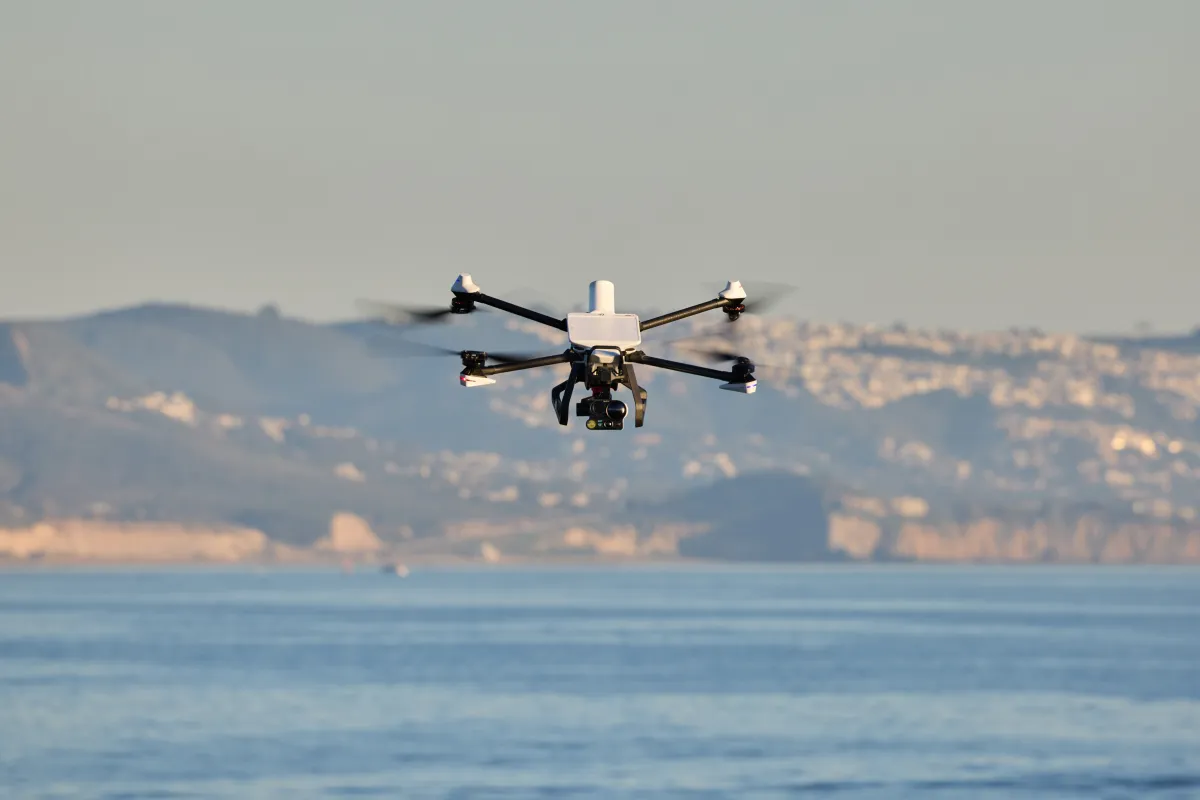

The Middle East and North Africa (MENA) region stands at a critical inflection point, where sovereign capital, venture capital investment, and the transformation of regional infrastructure converge to redefine economic trajectories. In this high-stakes environment, Brinc, a public safety-focused drone startup emerging from the U.S., exemplifies the strategic convergence of technology and opportunity awaiting hi-value players. With the active involvement of notable investors including Sam Altman—one of the foremost innovators in artificial intelligence—the startup is rapidly gaining momentum and unlocking its full operational potential. As global investors increasingly circle the value brought by vertical “solution factories” like Brinc, sovereign wealth funds and impact capital are aligning resources to catalyze growth across regional economies.
Brinc’s emergence underscores a broader tectonic shift in public safety technology. The Swede’s assertion of the company’s ambition—to be the “DJI of the West”—is not merely a marketing narrative but a reflection of a genuine market need. The private equity and institutional machinery reshaping the geopolitical tech landscape is now keenly aware of the region’s capacity to absorb and amplify such innovations. In this context, sovereign capital will not only inject financial strength but will also recalibrate infrastructure planning, enforcement, and societal expectations in ways previously unthinkable. The surge in technology funding directed toward cutting-edge surveillance and response systems positions MENA as a pivotal arena for integrating next-generation capabilities.
Moreover, the expansion driven by strategic alliances, such as Brinc’s collaboration with the National League of Cities, signals a deeper integration process. This relationship not only fuels product adoption but also establishes a foundation for future standard-setting in both public and private safety sectors. The capital requirements inherent in nationwide scaling efforts are significant, yet the opportunity layered with return remains immense. For investors, elevated stakes amplify the challenge, but also underscore the unmistakable shift towards a future where technology underpins the resilience and responsiveness of regional governance structures. The MENA region, therefore, is poised to become a crucible for the next generation of infrastructure innovation—one that will, in turn, reshape the financial and operational landscapes of the many states its dragonkind seeks to serve.