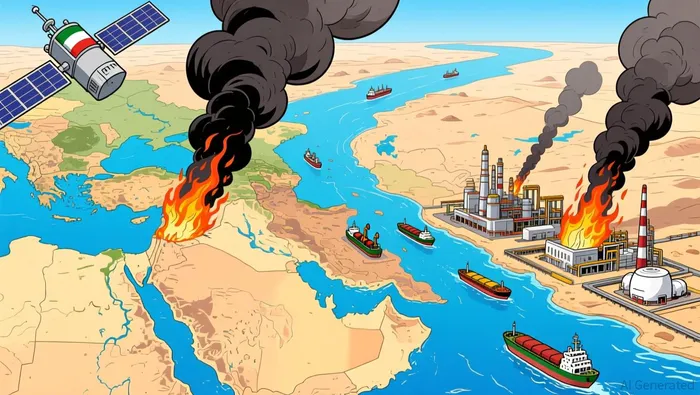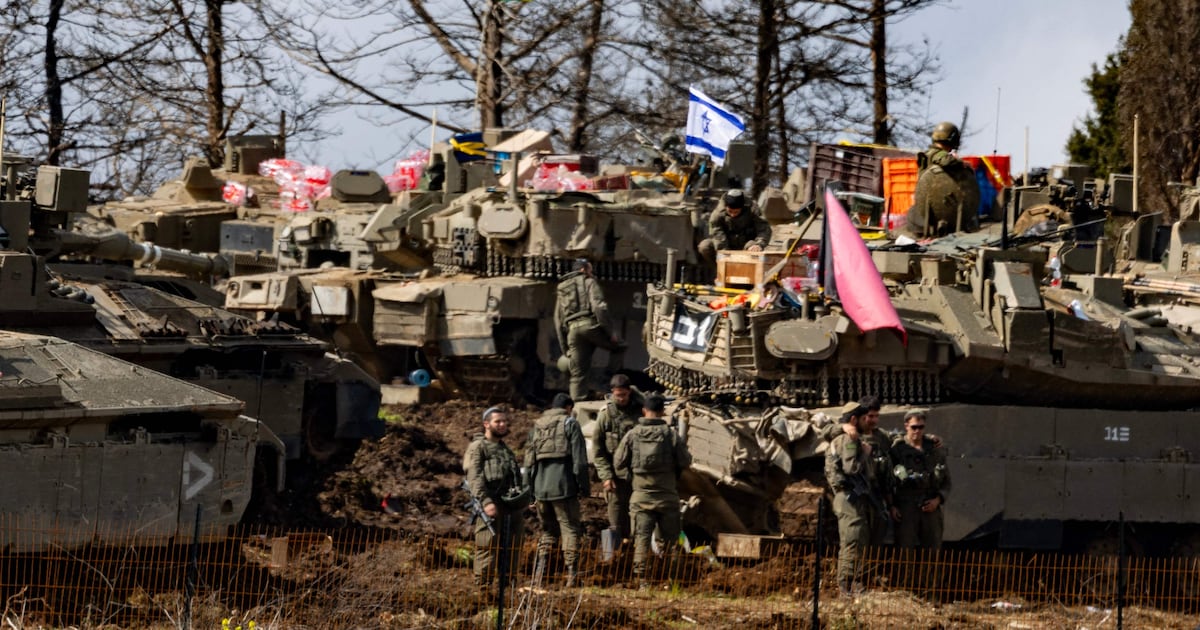

The ongoing Israel-Lebanon crisis poses significant sovereign capital and business risks across the Middle East and North Africa (MENA), with potential ripple effects on regional infrastructure and venture capital ecosystems. France’s diplomatic push to mediate, while commendable, underscores the fragility of Lebanon’s economic stability—a nation already grappling with $3.7 billion in sovereign debt arrears and a collapsing public sector. A protracted conflict could further erode investor confidence, disrupt cross-border trade corridors critical to Gulf states and the EU, and divert sovereign funds toward humanitarian relief rather than growth-oriented investments. Lebanon’s strategic location as a transit hub for energy and goods makes its instability a systemic threat to MENA infrastructure projects, particularly in maritime logistics and cross-border energy partnerships. Without swift de-escalation, sovereign borrowing costs in the region could rise as investors recoil from the perceived contagion risk, while venture capital firms may delay deployments in tech and renewable energy sectors reliant on geopolitical predictability.
The classification of Hezbollah as both a militant group and political actor complicates financial and technological investments in Lebanon, creating a dual friction for sovereign and private capital. Paris’s emphasis on disarming Hezbollah as a precondition for stabilization reflects an understanding that uncontrolled militant activity could trigger cascading infrastructure failures, from supply chain bottlenecks to energy grid vulnerabilities. For venture capital, the conflict represents a binary outcome: either a surge in security-focused tech solutions or a prolonged reddening of high-risk investments in the region. Regional infrastructure projects—such as the stalled Grand Palestinian Border Crossing or Gulf energy pipeline expansions—face existential delays if Lebanon’s border zones remain militarized. Moreover, the depreciation of the Lebanese pound and volatility in local bonds could spill over into neighboring economies like Jordan and Syria, where weak institutions already strain sovereign capacity. The MENA’s venture capital scene, already fragmented by political uncertainty, may see capital reallocated from Beirut to Gulf hubs like Dubai or Riyadh, accelerating regional economic divergence.
The long-term implications for regional infrastructure and sovereign autonomy will depend on whether France’s “political volunteerism” succeeds in brokered solutions or exacerbates Lebanon’s fiscal black hole. A normalization agreement contingent on Israel’s military withdrawal could unlock over $5 billion in dormant donor aid and private investments, offsetting some sovereign debt pressures. However, such an outcome would require unprecedented regional consensus, given Israel’s reluctance to recognize Lebanon’s government and Hezbollah’s entrenched influence. Conversely, a failure to manage the conflict could saw sovereign budgets across MENA redirected toward emergency spending, leaving less room for strategic infrastructure investments in digital transformation or green energy. The human cost—15% population displacement and 850+ deaths—also risks long-term economic dislocation, particularly in Lebanon’s informal sector, which constitutes 60% of its economy. For France, the calculation appears pragmatic: maintaining influence in a fractured Lebanon aligns with its broader goals in the Gulf and Europe. Yet, the absence of concrete timelines from all parties involved leaves the region in a precarious limbo, where every day of instability compounds financial and infrastructural fragility.