
The strategic recalibration underway at Graphic Packaging, epitomized by its $1 billion Waco facility investment and Vision 2030 pivot, offers a critical lens through which to assess capital allocation trends with direct reverberations for the Middle East and North Africa. For MENA sovereign wealth funds and family offices, which have historically deployed significant capital into North American industrials for stable cash flows and geopolitical diversification, this model underscores a growing imperative: backing transformation over stagnation. The decisive factor will no longer be static asset ownership but demonstrated operational turnaround capability—specifically, the generation of sustainable free cash flow to fund growth while deleveraging. This creates a precedent for how MENA capital must evaluate similar legacy industrials in its own region, where a similar demographic and sustainability-driven packaging demand surge is imminent but local manufacturing capacity often lags.
The leadership and treasury appointments signal a rigorous, cash-flow-centric governance model that MENA institutional investors, including Abu Dhabi Investment Authority (ADIA) and Saudi Arabia’s Public Investment Fund (PIF), will increasingly demand from their portfolio companies. Melanie Skijus’s return to investor relations, with her buyside analytical background, highlights the non-negotiable need for transparent, quantitative communication on capital discipline—a language fluently spoken by Riyadh and Abu Dhabi’s investment arms. For regional venture capital, the strategic gap is palpable: while global players invest billions in next-gen material science and automated production, MENA VC remains underweight in deep-tech and industrial innovation. The Waco bet on advanced coated recycled board technology spotlights a category where regional sovereigns, via entities like Bahrain’s Mumtalakat or Qatar Investment Authority, could catalyze local champions by targeting Series B and C rounds in sustainable packaging startups, thereby securing supply chain resilience for their domestic consumer and manufacturing giants.
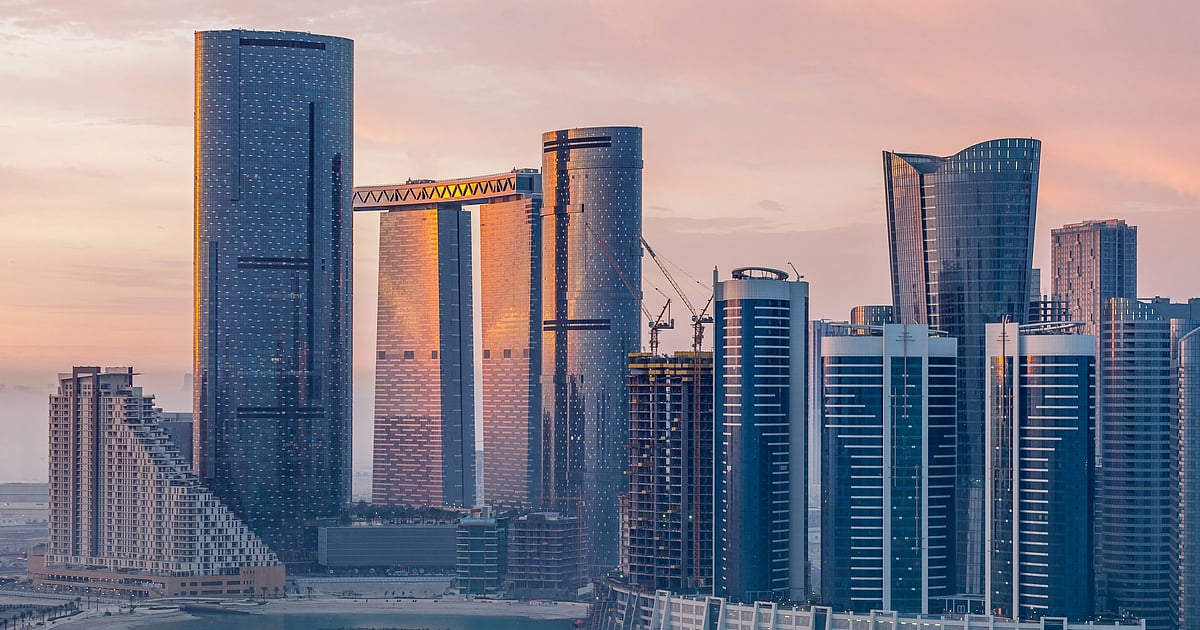
Infrastructure megaprojects across the Gulf—NEOM, Qatar’s Lusail, Oman’s Duqm—represent monumental, latent demand for sophisticated, sustainable packaging. However, this demand is currently met largely through imports, a structural trade-off that sovereign development funds are now seeking to reverse. Graphic Packaging’s playbook illustrates the required scale: a single, integrated facility represents a multi-billion-dollar commitment to vertical integration. For MENA, this implies that sovereign capital must orchestrate not just equity stakes but entire ecosystem development, financing port logistics, specialized industrial zones, and feedstock supply chains (including regional recycled fiber sourcing) to justify such greenfield investments. The risk premium embedded in Graphic Packaging’s valuation is a mirror to the region’s own challenge: without a coordinated sovereign-industrial strategy to de-risk and subsidize initial capacity build-out, the packaging value chain will remain a net import cost, not an export or IP asset.
Ultimately, the core thesis for MENA investors is this: strategic pivots like Vision 2030 succeed only when sovereign capital provides patient, mandate-aligned bridge financing that conventional debt markets wary of transformation risk will not. The appointment of a treasury veteran like Randy Miller to optimize the capital structure is a direct response to this need for precision in financial engineering. For the Gulf, this translates to deploying hybrid capital instruments—convertible bonds, junior lien debt, or structured equity—to back local managements through their own “Vision 2030” journeys. The monitoring framework is universal: track marginal free cash flow conversion, leverage ratio improvement, and the tangible progress of sovereign-backed industrial clusters. Until these metrics inflection, valuation discounts in both North America and MENA will persist, presenting a clear, risk-adjusted opportunity for those sovereign investors capable of providing both capital and the credibility that signals execution is underway.