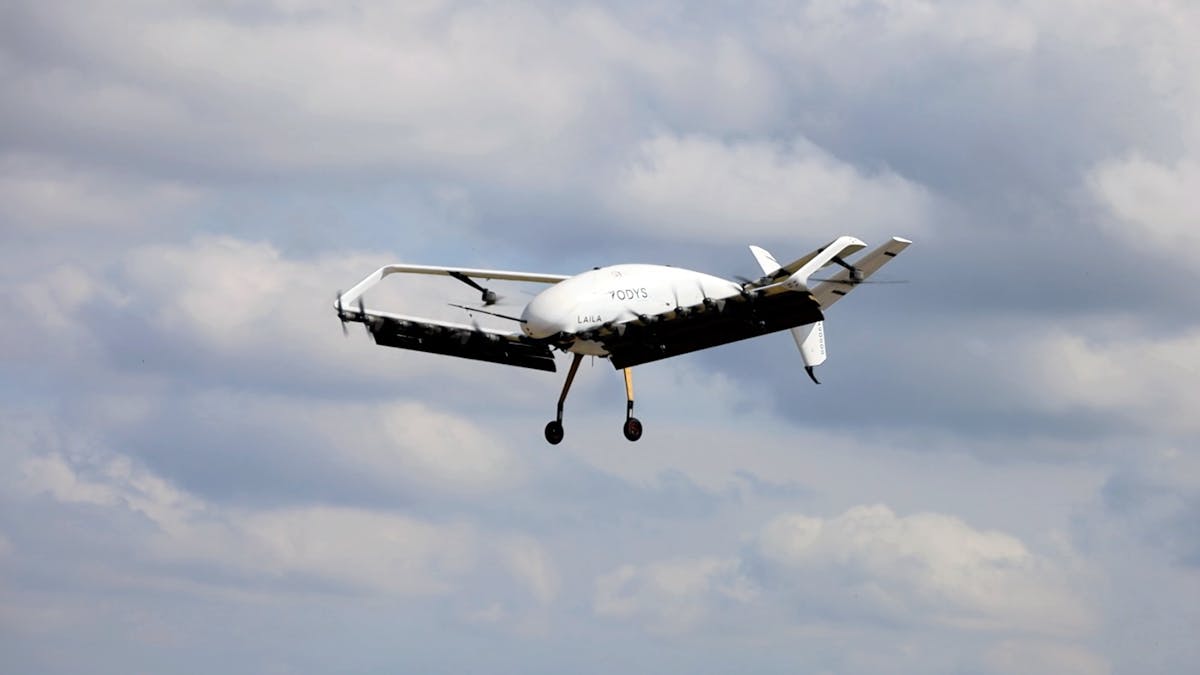

Honeywell International’s entry into the U.S. Department of Defense’s electric‑aircraft programme marks a decisive institutional endorsement of the emerging “e‑air” market, which analysts estimate could generate $15‑$20 billion in procurement contracts over the next decade. By leveraging its legacy avionics portfolio and recent investments in solid‑state battery management systems, Honeywell positions itself to capture a sizable share of the Pentagon’s projected $5 billion allocation for electric vertical take‑off and landing (eVTOL) platforms destined for tactical reconnaissance, rapid logistics and low‑observable strike missions. The move not only diversifies Honeywell’s defense revenue—currently weighted toward aerospace and automation—but also signals to sovereign wealth funds across the Gulf that electric aerospace is transitioning from speculative venture capital to a mature, government‑backed procurement pipeline.
For the MENA region, the implications are twofold. First, sovereign capital, particularly from Saudi Arabia’s Public Investment Fund and Abu Dhabi’s Mubadala, will likely accelerate funding for domestic e‑air startups seeking to align with U.S. defense standards and secure export licences for allied markets. Second, the scaling of electric propulsion technology promises to catalyse ancillary infrastructure, such as high‑capacity charging hubs and next‑generation air‑traffic‑management systems, which can be co‑developed under joint‑venture frameworks with Western OEMs. This creates a feedback loop: heightened regional demand drives economies of scale, compresses unit costs, and makes export‑oriented production financially viable.
Venture capital firms operating in Dubai and Tel‑Aviv are already repositioning their portfolios to target battery‑thermal‑management, lightweight composite structures and autonomous flight‑control software—areas where Honeywell’s entry lowers technical risk for later‑stage investors. The infusion of defense‑grade contracts reduces the “valley of death” that has plagued many e‑air projects, allowing regional funds to commit larger tranches at Series B and C rounds with clearer exit pathways, whether through strategic acquisition by legacy aerospace groups or public listings on European tech exchanges.
Finally, the geopolitical dimension cannot be ignored. As NATO allies and Gulf states deepen defense collaboration, the creation of a regional supply chain for electric combat aircraft offers both a strategic hedge against supply‑chain disruptions and a new export commodity for MENA economies. Infrastructure investments—ranging from dedicated vertiports to secure data‑link networks—will require coordinated public‑private financing, potentially unlocking billions in sovereign-backed bonds earmarked for “green defence” initiatives. Honeywell’s participation thus serves as a catalyst that could reshape the financial architecture of defence procurement across the Middle East and North Africa.