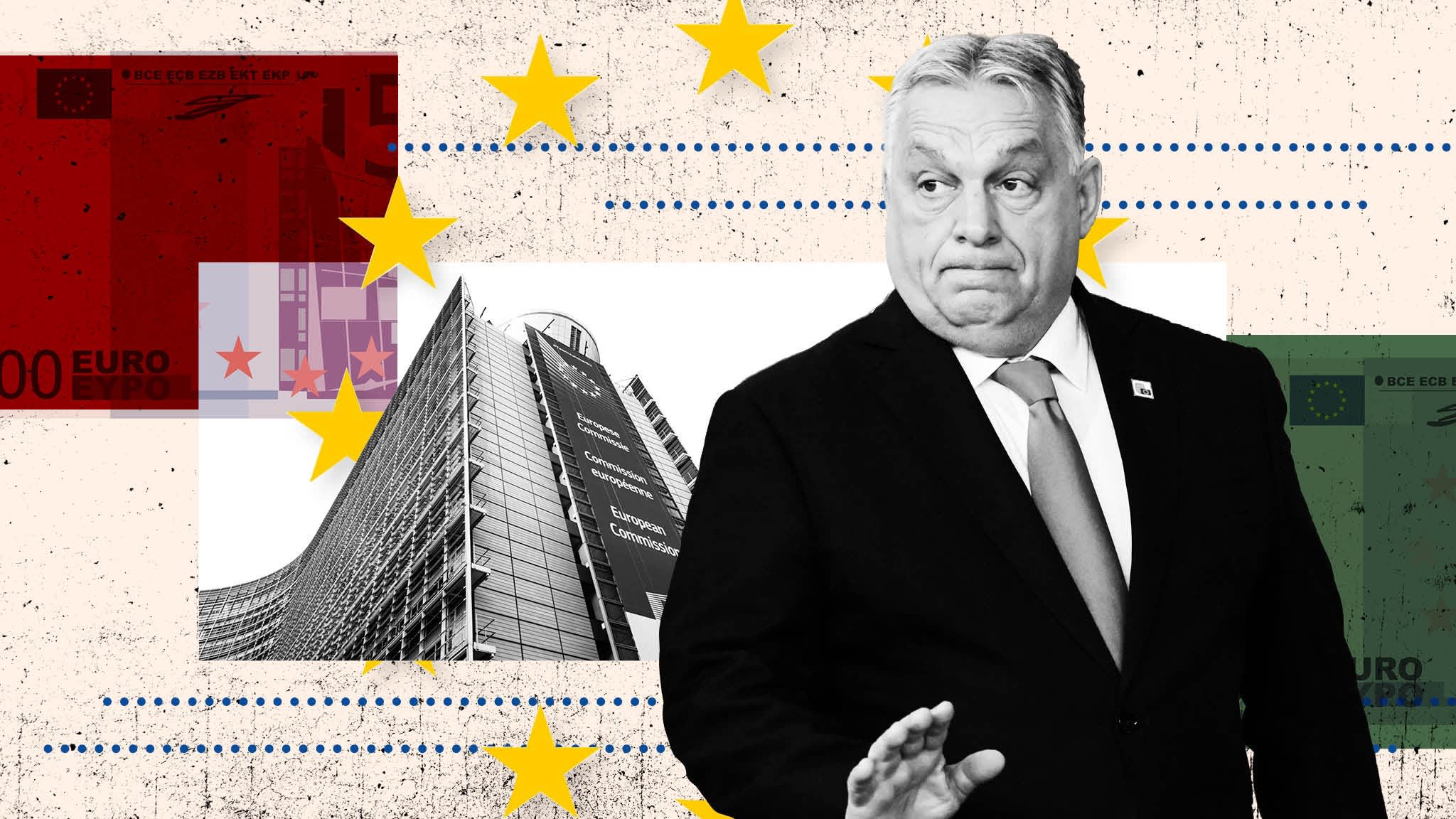

Hungary’s reluctance to fully restore funds flagged for embezzlement by its government under Viktor Orbán has significant ramifications for the broader MENA region’s financial ecosystem. While the Orbán issue underscores a persistent disconnect between accountability mechanisms and sovereign asset recovery, similar governance challenges in many MENA nations hinder the流入 of sovereign capital. The minimum 18% repatriation reflects systemic inefficiencies that deter institutional investors—both public and private—from engaging with regions where opaque financial practices are endemic. This climate directly impacts MENA’s ability to compete for global sovereign wealth fund investments, which are critical for funding large-scale infrastructure and stabilizing volatile fiscal landscapes. Without demonstrable progress in combating corruption and refining asset-monitoring frameworks, the region risks being sidelined in a global capital marché increasingly shaped by transparency mandates.
The stagnation in returns from Orbán-linked funds serves as a microcosm of MENA’s venture capital (VC) struggles. While the region has seen growth in tech-driven startups, VC inflows remain fragile due to regulatory unpredictability and financial opacity. Orbán’s case illustrates how elite misconduct can poison public perception, discouraging overseas capital from backing local ventures. For sovereign investors, this sets a precedent: if governments fail to safeguard assets or pursue justice in graft cases, entire economies face reputational damage that ripples into private sector financing. Similarly, regional infrastructure projects—often reliant on international grants or loans—suffer when capital allocators question the long-term viability of partnerships in environments where reform appears performative rather than substantive. Closing this trust gap requires structural governance reforms that align with global anti-corruption benchmarks, a task many MENA states have yet to prioritize.
Regionally, MENA’s infrastructure development hinges on stable capital flows, both sovereign and private. The Orbán scenario highlights a critical blind spot: even in technologically advancing nations, financial malpractice can undermine decades of progress. For instance, half-financed smart city initiatives or renewable energy projects in MENA may stall if global investors perceive systemic risks in sovereign capital management. This is not a peripheral issue but a systemic one; infrastructure ROI depends on predictable, corruption-resistant fiscal environments. Therefore, MENA policymakers must address not just technical gaps in transport or energy but also institutional architectures that safeguard capital. Failure to do so risks bifurcating the region economically—where some nations remain locked in cycles of underinvestment while others, like the Gulf states, advance with foreign-backed reforms. The lesson is stark: sovereign accountability is not optional; it is the bedrock of sustainable growth in a resource-dependent region.