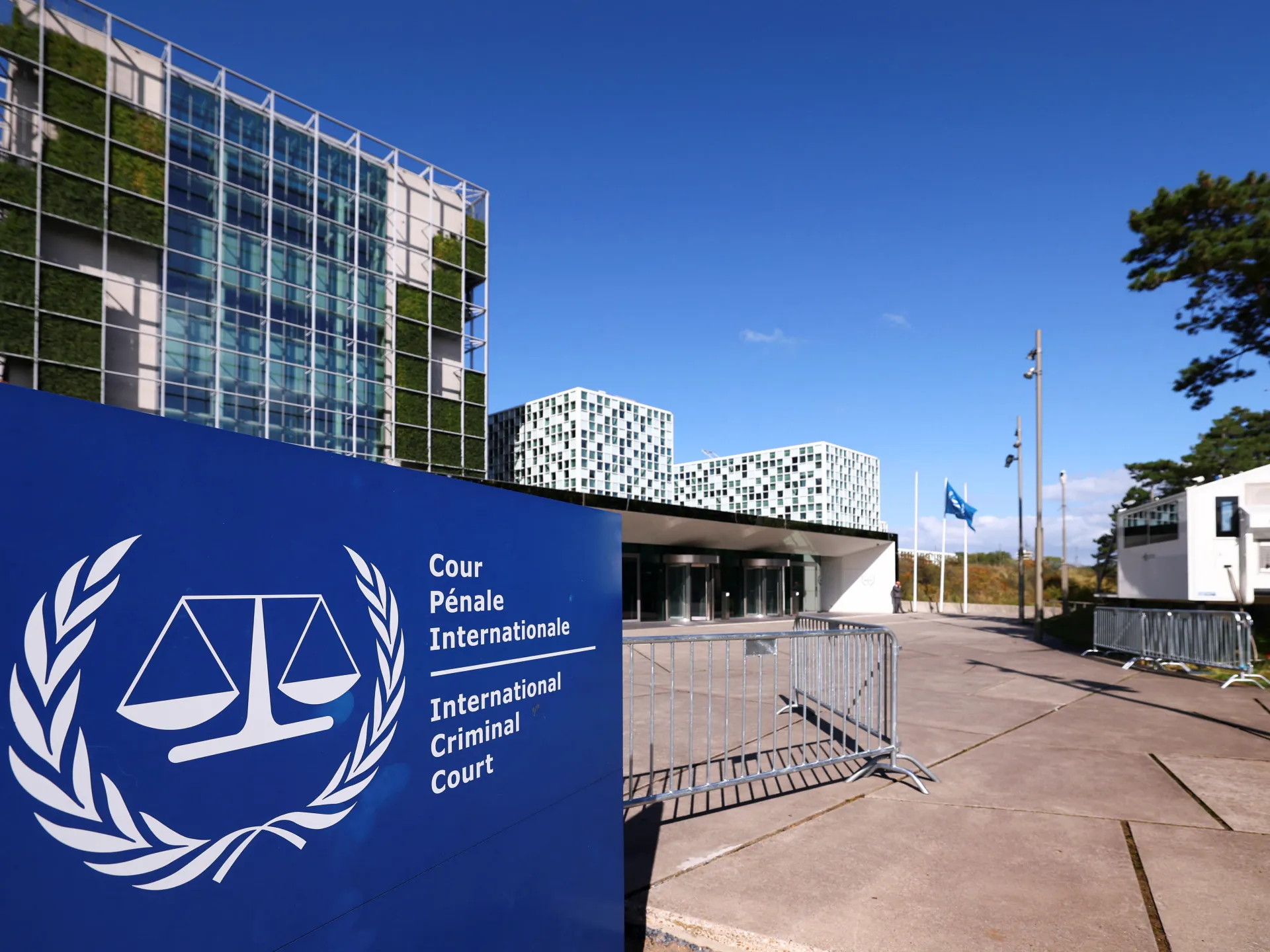

A pivotal juncture has emerged in the governance of the International Criminal Court (ICC), with profound implications extending beyond judicial proceedings to resonate within the financial and technological ecosystems of the Middle East and North Africa (MENA). The recent judicial panel’s unanimous conclusion regarding the lack of substantiated misconduct by ICC Prosecutor Karim Khan, delivered confidentially to the Assembly of States Parties (ASP) bureau, presents a critical test for the institution’s credibility and operational stability. This decision, while advisory, holds significant weight as it confronts political pressures within the ASP states, particularly a minority advocating for the panel’s findings to be overturned. Such an override would constitute a perilous precedent, undermining the rule of law framework underpinning the ICC and potentially casting long shadows over international legal confidence—a confidence MENA sovereign funds and venture capital entities rely upon for cross-border investments and strategic partnerships. The integrity of the judicial process, therefore, is not merely an abstract legal matter but a tangible factor influencing regional perceptions of institutional reliability and governance standards. A deviation from this established quasi-judicial procedure risks triggering capital flight from perceived unstable international systems, directly impacting MENA sovereign wealth fund allocations and VC portfolios heavily invested in jurisdictions dependent on stable rule of law.**
The core debate now centers on whether the ASP bureau should uphold the panel’s legal characterization of the facts, or substitute its own conclusions. This political override carries substantial business consequences. Sovereign capital, a cornerstone of MENA economic strategy, operates within global frameworks where institutional credibility is paramount. A ruling perceived as politically motivated would erode trust in international adjudication bodies, complicating negotiations for large-scale sovereign infrastructure projects—such as those in energy and digital connectivity—that hinge on stable legal environments and long-term contractual certainty. Furthermore, MENA venture capital firms, particularly those specializing in fintech and technology, frequently structure cross-border deals predicated on predictable regulatory landscapes. A weakening of the ICC’s governance integrity would signal greater susceptibility to political interference in international legal institutions, compelling investors to re-evaluate risk assessments for ventures operating within or dependent on these systems. The potential for such a precedent to embolden similar political challenges to other international legal mechanisms could heighten overall global governance uncertainty, directly impacting MENA’s attractiveness as a destination for foreign direct investment, including venture capital inflows.
The implications extend into regional infrastructure development. MENA’s ambitious digital transformation and sustainable energy infrastructure plans require vast sovereign and institutional capital, much of which is managed by sovereign wealth funds. These entities prioritize stability, transparency, and adherence to international best practices. The ICC’s governance crisis, if perceived as a failure of due process and independent judicial oversight, could undermine confidence in similar multilateral frameworks crucial for regional initiatives like the Digital MENA Alliance or cross-border energy grids. Infrastructure projects funded by sovereign capital are long-term commitments; any erosion of trust in the broader international legal order could prompt risk-averse investors, including MENA’s sovereign funds, to seek alternative, potentially less transparent, or geo-politically constrained pathways. This shift would not only slow critical regional infrastructure development but also diminish opportunities for MENA tech infrastructure companies to participate in and benefit from large-scale, international-funded projects. Upholding the judicial panel’s report is thus essential to preserving the credibility of the international legal architecture, which underpins the stable investment environment MENA sovereigns and its burgeoning tech sector depend upon.
Ultimately, the ASP bureau faces a defining choice with consequences far exceeding the courtroom. The integrity of its process and the legitimacy of its future decisions hinge on its willingness to defer to the independent judicial assessment provided, rather than capitulate to political expediency. Dismissing the panel’s conclusions in favor of a political verdict would signal a profound disregard for the rule of law and independent adjudication, casting the ICC into deeper institutional crisis. Such a move would not only damage the court’s authority but also send ripples through the MENA financial landscape, potentially triggering capital reallocation away from jurisdictions perceived as vulnerable to governance instability. Sovereign wealth funds and venture capital entities operating globally will interpret this outcome as a bellwether for the reliability of international institutions. Prioritizing political convenience over judicial independence now risks inflicting long-term damage on the very stability MENA economies require. The bureau’s decision will be scrutinized not only as a test of the ICC’s viability but as an indicator of the international community’s commitment to impartial legal systems—a commitment directly relevant to the economic future of the region.
**