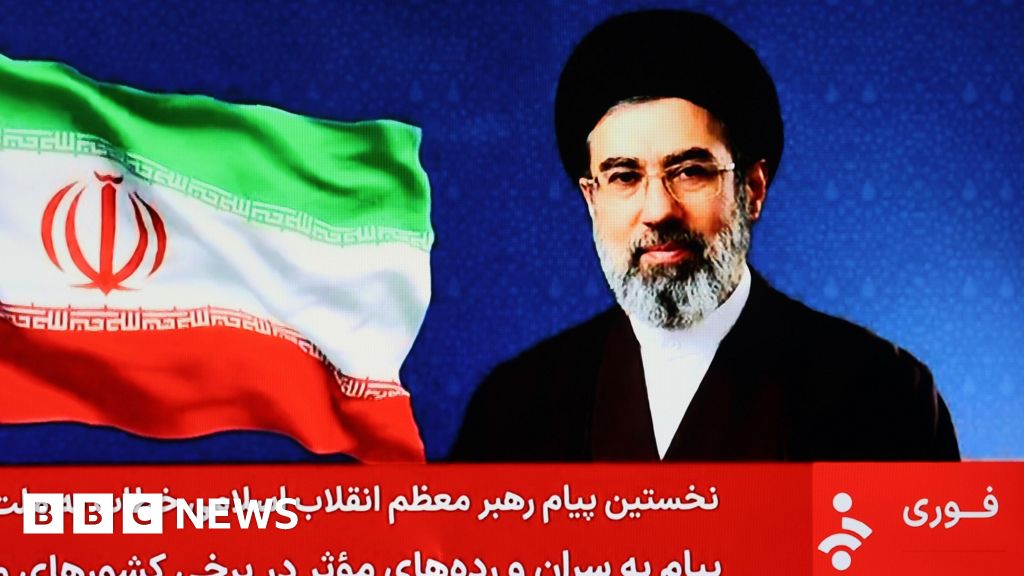

The recent debut of Mojtaba Khamenei’s first public address—delivered not by the son of the Supreme Leader himself but through a state‑television presenter—has intensified speculation over Iran’s internal power dynamics at a time when the country’s economic outlook is already precarious. Analysts note that the opaque transmission of authority raises concerns about the stability of decision‑making structures that govern fiscal policy, sanctions mitigation strategies, and the deployment of sovereign capital. For overseas investors and regional sovereign wealth funds, any perceived weakening of centralized control translates into higher country‑risk premiums, potentially curtailing inflows into Iran’s energy sector and discouraging long‑term commitments to joint‑venture projects.
From a venture‑capital perspective, the uncertainty hampers the nascent ecosystem that has begun to attract interest from Gulf‑based accelerators and European tech investors seeking exposure to Iran’s educated youth pool. Fund managers now face a dilemma: while the domestic market offers sizable untapped opportunities in fintech, agritech, and renewable energy, the lack of clear succession pathways increases the likelihood of abrupt regulatory shifts or renewed sanctions exposures. Consequently, many VCs are adopting a wait‑and‑see stance, allocating capital instead to more predictable markets in the UAE and Saudi Arabia, where sovereign backing and transparent governance mitigate political risk.
On the infrastructure front, the ambiguity surrounding leadership could delay or derail key state‑driven initiatives such as the expansion of the national rail network, the modernization of ports along the Persian Gulf, and the rollout of renewable‑energy megaprojects intended to diversify Iran’s economy away from oil revenue. International contractors and multilateral development banks, which typically require demonstrable policy continuity before committing to large‑scale financing, may postpone feasibility studies or seek sovereign guarantees from more stable regional actors. The ripple effect could impede broader MENA connectivity plans that rely on Iranian transit corridors, affecting trade flows and logistics hubs throughout the region.
In sum, the televised proxy address underscores a growing perception of institutional fragility within Iran’s power elite. For business stakeholders across the MENA spectrum—from sovereign wealth managers allocating strategic VC funds to infrastructure financiers evaluating cross‑border projects—the episode serves as a reminder that political transparency remains a critical determinant of investment attractiveness. Until clearer lines of authority emerge, the region’s capital flows are likely to remain cautious, with investors redirecting resources toward jurisdictions offering more predictable governance frameworks.