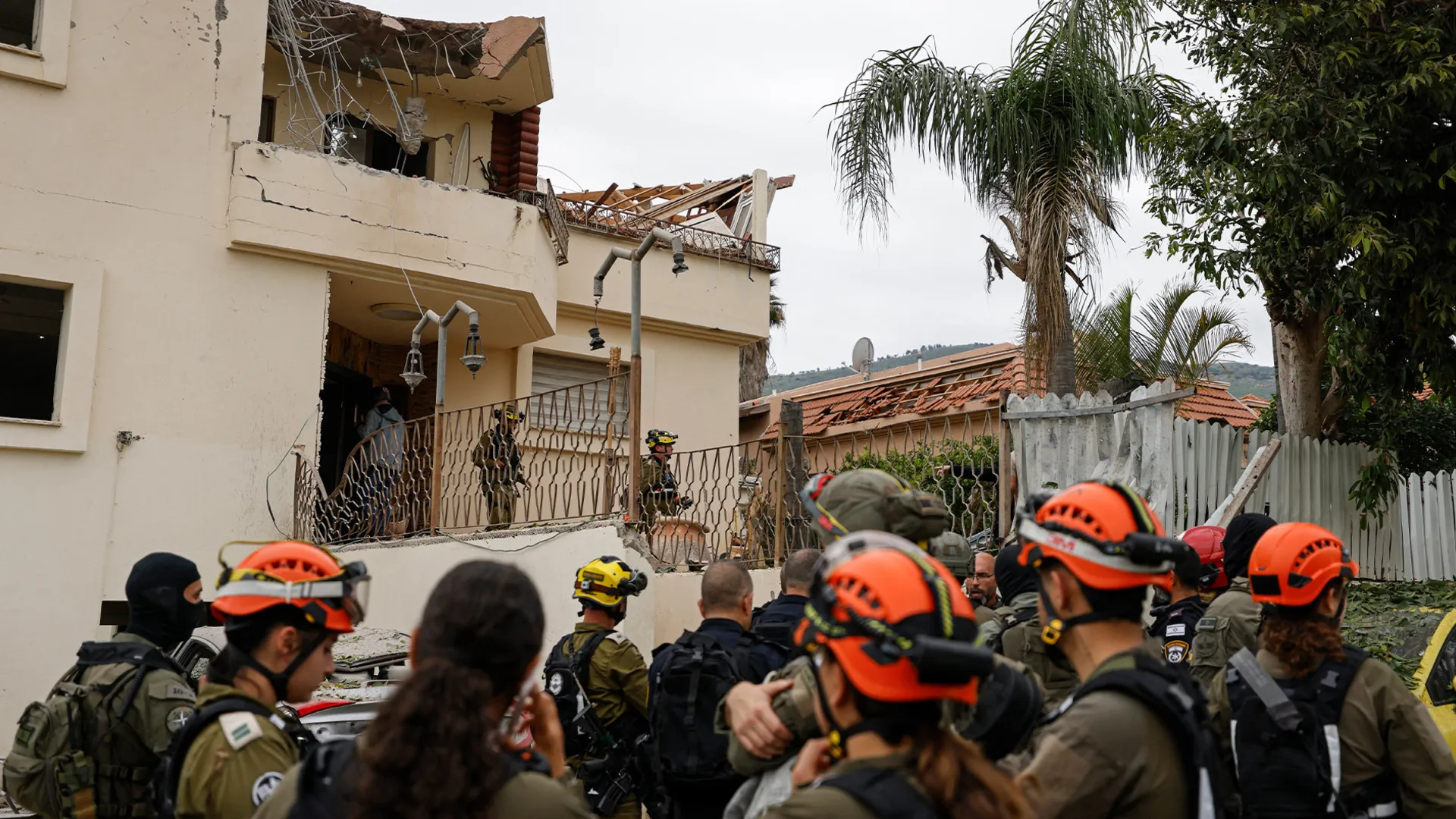

The missile strike launched by Iranian-backed groups significantly disrupted economic and strategic calculations in the Middle East, underscoring the fragility of sovereign capital flows and venture capital confidence amid escalating geopolitical volatility. The timing—just preceding a major religious observance—amplifies uncertainty for businesses reliant on regional stability, as heightened tensions risk derailing recovery efforts in a region still reeling from overlapping crises. For sovereign capital markets, Israel’s exposure to cross-border hostilities could trigger immediate fiscal stress, elevating borrowing costs through widened sovereign credit spreads and complicating debt restructuring efforts. Meanwhile, Gulf states may face external pressure to reallocate defense budgets, diverting resources from large-scale infrastructure projects or green investments that rely on international sovereign bonds.
Venture capital firms focused on defense technology and cybersecurity are likely to recalibrate portfolios in response to the heightened operational risks. The incident reinforces the strategic importance of Middle East-aligned security startups, which have seen surging valuations even amid global risk-off sentiment. However, limited liquidity in regional venture ecosystems—particularly in Iran and Israel—could stifle rapid mobilization of funding, forcing firms to adopt slower, more strategic investment cycles. Notably, the ripple effects extend to tech infrastructure in disputed zones; border-based data centers and logistics hubs may face operational delays or rerouting, exacerbating existing vulnerabilities in global supply chains reliant on Middle Eastern transit corridors.
Regional infrastructure implications are multifaceted, with immediate costs stemming from damage to critical assets—such as energy pipelines, transportation networks, and communication systems—compounding long-term investments in cross-border connectivity projects. For instance, the article highlights damage to Israeli cities, which could accelerate government spending on civil defense and reconstruction, fossil fuels with failed diversification of dependencies. Conversely, this escalation may catalyze accelerated adoption of satellite-based alternatives to terrestrial infrastructure, a trend likely to draw regional and global institutional capital. Yet, without coordinated transnational frameworks to address security externalities, the ROI on Middle East infrastructure projects remains skewed toward nations with geopolitical leverage, deepening regional bifurcations in capital allocation and technology adoption.