
The Israeli Prime Minister’s vow to targetIran’s Revolutionary Guard Corps leadership marks a discernible escalation that will reverberate through sovereign risk metrics across the MENA region. Analysts anticipate a near‑term widening of credit spreads on Israeli government securities as markets price in heightened geopolitical tension, while neighboring sovereigns with exposure to regional spill‑over—particularly Jordan, Egypt, and the Gulf Cooperation Council states—may see incremental pressure on their risk premia. These dynamics are likely to trigger a reassessment of fiscal buffers and could accelerate sovereign wealth fund reallocations toward lower‑volatility assets.
From a venture‑capital standpoint, the heightened security environment presents a bifurcated outlook for the region’s innovation ecosystem. Early‑stage funds focused on cyber‑security, defense‑tech, and dual‑use technologies may experience a surge in inflow as limited partners seek exposure to sectors directly benefiting from increased defense expenditures. Conversely, broader‑stage VC funds that rely on cross‑border capital flows and consumer‑tech exposure could face a slowdown, as investors adopt a more risk‑averse stance and postpone follow‑on rounds pending clearer de‑escalation signals.
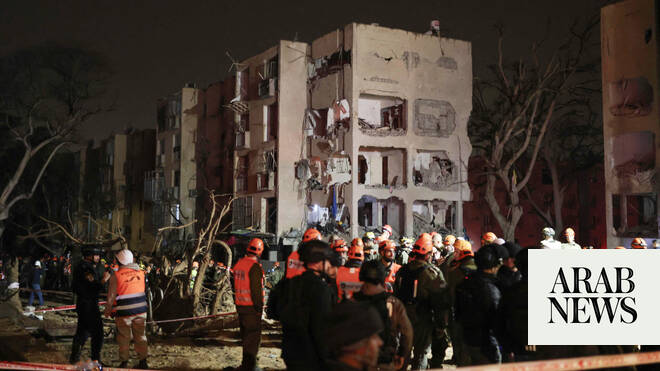
The reported missile strikes on Arad and the Dimona nuclear complex underscore vulnerabilities in critical infrastructure that could prompt a rapid pivot toward hardening strategic assets. Governments across MENA are expected to prioritize investment in hardened command‑and‑control facilities, redundant energy and water networks, and advanced missile‑defense systems, creating a pipeline for public‑private partnerships and long‑term infrastructure financing. Such spending will likely be channeled through sovereign‑backed development banks and multilateral lenders, reinforcing the link between security outlays and regional infrastructure development.
At the strategic level, the episode reinforces the calculation of Gulf investors that geopolitical instability in the Levant can redirect capital toward perceived safe havens within the GCC, notably the UAE’s Abu Dhabi Global Market and Saudi Arabia’s Riyadh‑based financial hub. This shift may bolster nascent fintech and regtech platforms that cater to institutional investors seeking compliant, low‑correlation assets. Overall, the episode is likely to recalibrate the balance between risk and reward in MENA’s capital markets, steering both sovereign and private capital toward sectors that blend security imperatives with technological resilience.}}