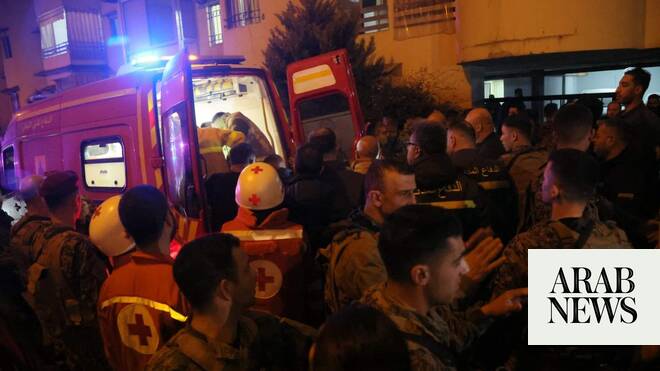

The escalatingIsraeli military operations in Lebanon underscore a profound disruption to regional business ecosystems and infrastructure, with cascading implications for sovereign capital flows and venture capital investment. The destruction of critical infrastructure, including border crossings and urban centers, threatens to erode Lebanon’s role as a trade and logistics hub, directly impacting regional supply chains and cross-border commerce. Concurrently, the instability fosters uncertainty for businesses operating in the region, deterring foreign direct investment and complicating commercial agreements. Hezbollah’s entrenchment and the ongoing conflict exacerbate geopolitical risks, further straining Lebanon’s capacity to attract and retain capital. The immediate human cost—displacement of over a million people and widespread damage to commercial assets—also signals a contraction in local economic activity, potentially triggering a ripple effect across the broader Middle East and North Africa (MENA) region. The absence of a rapid de-escalation mechanism heightens the risk of prolonged economic stagnation, with sovereign funds and institutional investors likely to adopt cautious stances toward the region in the medium term.
The conflict intensifies fiscal pressures on Lebanon’s already fragile sovereign finances, compounding existing challenges such as currency depreciation and public debt. The diversion of military resources and emergency response funding diverts critical capital from developmental projects, undermining long-term economic resilience. For sovereign wealth funds managing Middle Eastern assets, the volatility introduced by the Lebanese situation may reduce appetite for region-specific investments, unless there is a clear pathway to stability. Meanwhile, venture capital activity in MENA, which has historically thrived on innovation-driven growth, faces an acute decline as startups in Lebanon grapple with security concerns and regulatory uncertainties. The focus on defense and reconstruction in the region distracts from entrepreneurship, while cross-border investment flows—particularly in technology and infrastructure—are likely to consolidate in safer gulfs like the Gulf Cooperation Council (GCC) states. This realignment could accelerate a bifurcation in regional capital allocation, where Gulf states absorb the lion’s share of economic activity while Lebanon and Syria retreat into peripheral status.
The regional infrastructure implications are dire, with repeated airstrikes targeting urban and border infrastructure threatening to erode Lebanon’s competitiveness as a logistical node. The Masnaa crossing closure, a vital artery for trade and migration, exemplifies how conflict can weaponize economic chokepoints, disrupting not only bilateral trade between Lebanon and Syria but also regional integration efforts. Reconstruction priorities will require massive capital inflows, likely contingent on international aid or debt relief mechanisms, which may strain donor relations. Conversely, this devastation could spur investment in resilient infrastructure solutions, such as decentralized energy grids or alternative transportation networks, particularly if regional stakeholders perceive a threat to strategic assets. However, without coordinated governance and security assurances, such investments risk being postponed indefinitely. The broader MENA region may see a shift toward risk-averse infrastructure projects, with Gulf Arab states potentially assuming a dominant role in funding and execution. Ultimately, the Lebanese crisis acts as a stark reminder of how geopolitical volatility can reconfigure economic priorities, forcing MENA nations to balance security imperatives against developmental imperatives in an increasingly fragmented geopolitical landscape.