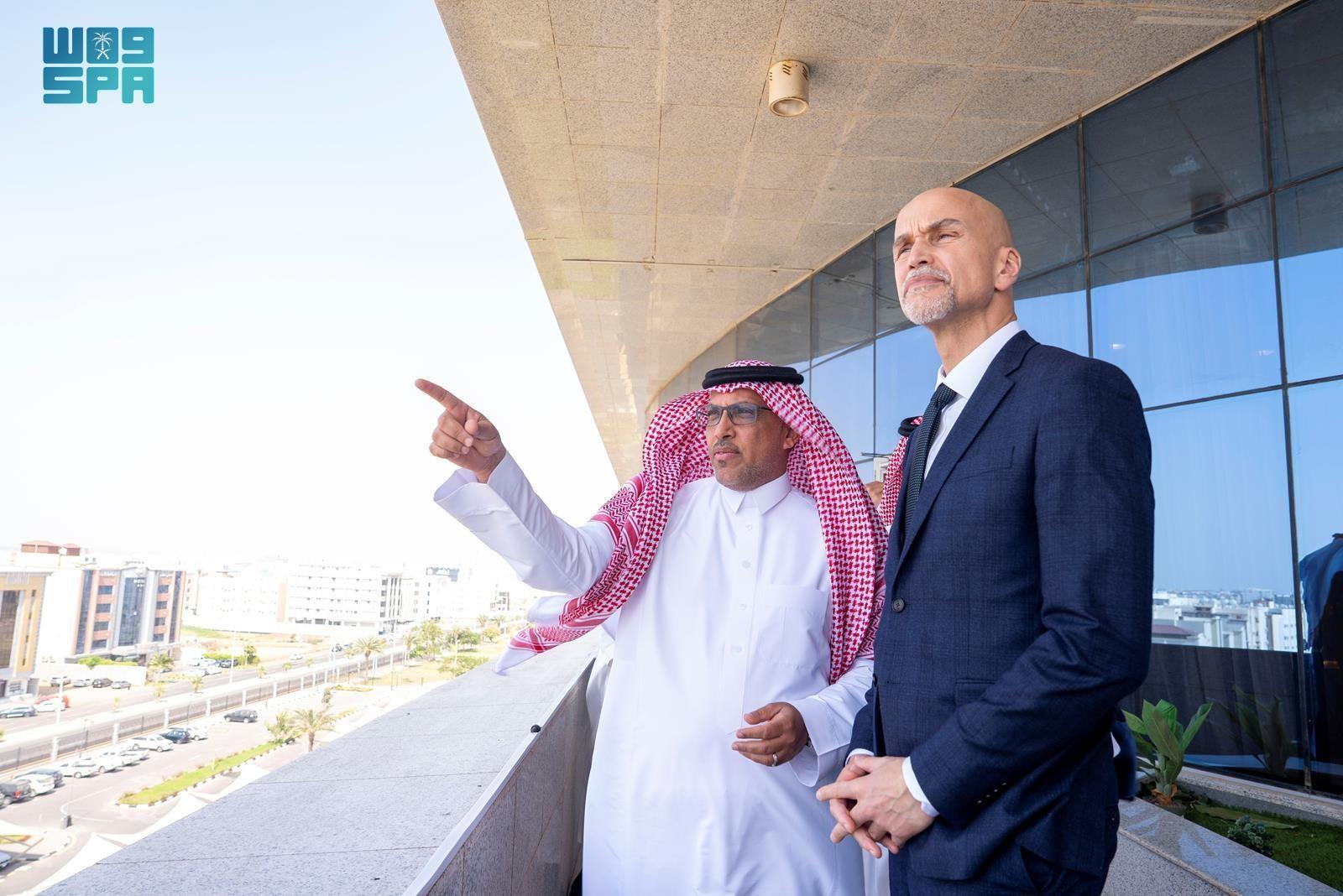

The recent strategic consultations between Jazan’s municipal leadership and French diplomatic representation underscore a structural realignment in how subnational Saudi industrial hubs are mobilizing institutional foreign direct investment. Jazan, anchored by its deep-water port, designated special economic zone, and downstream petrochemical infrastructure, has been systematically upgraded from a peripheral logistics node into a core pillar of the Kingdom’s non-oil export strategy. This engagement signals an explicit pivot toward channeling European sovereign and quasi-sovereign capital into localized hard infrastructure, particularly in grid modernization, automated port logistics, and cross-border supply chain resilience. For institutional allocators, the region’s evolving regulatory architecture—backed by state risk mitigants through sovereign development vehicles—offers a calibrated entry point into Saudi industrial decentralization, reducing execution risk while aligning with national diversification mandates and long-term capital appreciation targets.
Beyond traditional infrastructure financing, the diplomatic-economic dialogue establishes clear conduit channels for venture capital deployment into secondary Gulf technology ecosystems. French corporate venture arms and sovereign-linked accelerators are increasingly targeting Tier-2 Saudi clusters for early-stage allocation in maritime logistics software, industrial IoT, advanced desalination telemetry, and digital trade compliance platforms. Jazan’s special economic status enables sandboxed regulatory environments conducive to piloting AI-driven customs clearance, automated freight settlement, and industrial fintech solutions. Successful venture-backed deployments within the zone would likely catalyze regional spillover effects, positioning Jazan as a scalable testbed for MENA digital trade protocols and creating structured exit pathways for institutional investors seeking exposure to high-multiple, industrial-adjacent technology assets with built-in sovereign demand.
The broader MENA implication is structural: secondary Saudi cities are transitioning from capital-receiving beneficiaries to standalone investment jurisdictions capable of structuring direct bilateral partnerships and co-investing alongside Gulf sovereign wealth syndicates. Capital deployment velocity will remain contingent on harmonized commercial arbitration frameworks, streamlined cross-border permitting, and robust public-private co-investment models that align European industrial standards with localized execution timelines. Institutional portfolios must price residual operational friction against the asymmetric upside of securing early-mover advantages in jurisdictions offering preferential fiscal regimes, guaranteed power capacity, and explicit state prioritization. This engagement exemplifies a maturation in Gulf subnational finance, where targeted sovereign, venture, and infrastructure capital converge to fund export-oriented industrial capacity while reinforcing regional macroeconomic resilience and long-term portfolio yield optimization.