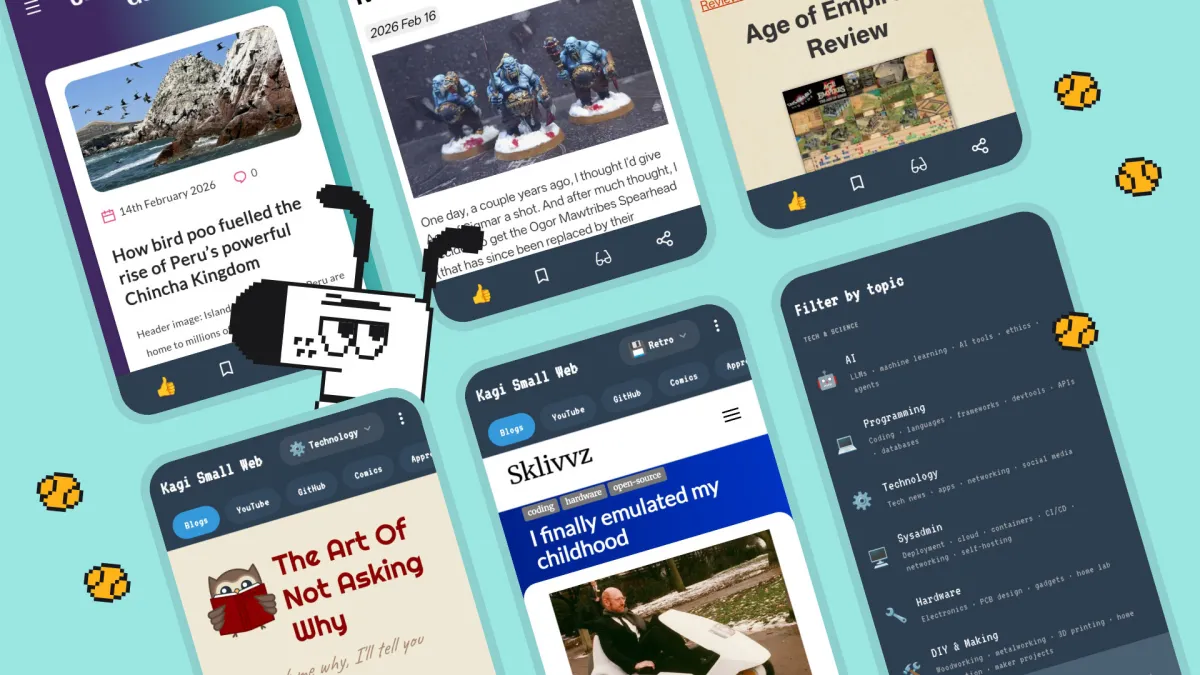

Kagi’s rollout of “Small Web” mobile applications for iOS and Android marks a tangible step toward preserving a human‑curated layer of the internet amid proliferating AI‑generated content. By surfacing more than 30,000 independently authored sites—personal blogs, webcomics, code repositories, and niche forums—through category‑filtered discovery and a distraction‑free reader, the platform offers a premium, ad‑free alternative to mainstream search engines. For the MENA region, where governments are actively pursuing digital sovereignty and seeking to reduce reliance on foreign‑controlled information pipelines, such a model aligns with strategic objectives to foster locally relevant, transparent knowledge ecosystems.
From a business‑impact perspective, sovereign wealth funds and regional venture capital firms are likely to view the Small Web initiative as a low‑cost, high‑signal entry point into the broader “open‑web” investment thesis. Capital could be directed toward regionalizing the index—adding Arabic‑language sites, integrating with local content creators, and building mirror nodes on domestic cloud infrastructures—to satisfy data‑residency mandates while capturing a growing user base seeking trustworthy, non‑commercial information. Moreover, the premium subscription model that underpins Kagi’s core search product provides a replicable revenue template for MENA‑based startups aiming to monetize niche discovery tools without resorting to invasive advertising or data‑harvesting practices.
Infrastructure considerations are equally salient. Deploying Small Web mirrors at edge locations operated by incumbent telecoms (e.g., STC, e&, Ooredoo) would reduce latency for Arabic‑speaking users and enhance resilience against external network disruptions. Integration with national broadband initiatives and smart‑city platforms could further amplify usage in educational and civic contexts, reinforcing the region’s broader goal of cultivating a knowledge‑driven economy. Policymakers should therefore consider incentivizing public‑private partnerships that support open‑web indexing, Arabic language processing, and sovereign‑grade hosting environments, thereby converting Kagi’s experimental model into a scalable component of MENA’s digital infrastructure stack.