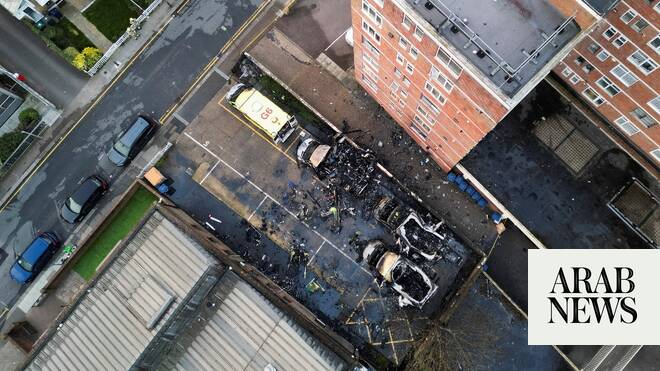

The overnight arson of four Hatzola ambulances in north London, claimed by an Iran‑aligned militant group, underscores a sharp escalation in antisemitic violence that has reverberated across Europe since the October 2023 Hamas attacks. While no casualties were reported, the explosion of onboard cylinders shattered windows in a residential block and prompted a rapid response from the London Fire Brigade and Metropolitan Police, highlighting the growing vulnerability of community‑service assets to politically motivated attacks.
For sovereign investors, particularly the Gulf Cooperation Council’s wealth funds that maintain sizable allocations to UK real estate, infrastructure, and public‑service contracts, the incident introduces a material reputational and operational risk premium. Analysts expect a short‑term reassessment of exposure to British social‑impact projects, with potential reallocation toward safer havens such as the UAE, Saudi Arabia, and Qatar, where sovereign capital is increasingly directed toward domestic resilience and security‑focused infrastructure.
Venture capital activity linking London’s fintech and health‑tech ecosystems to Israeli and MENA start‑ups may also face headwinds. The attack amplifies concerns over the safety of cross‑border talent movements and the stability of joint R&D initiatives, prompting investors to demand enhanced security clauses and possibly redirect early‑stage funds toward regional hubs like Tel Aviv, Abu Bahrain, and Cairo’s emerging tech corridors, where governments are offering incentives to attract diaspora expertise.
From an infrastructure perspective, the episode signals a growing need for hardened emergency‑response fleets and elevated security spend on public‑service assets across Europe—a trend that MENA‑based engineering firms and security‑technology providers are well positioned to capture. Anticipated upgrades to vehicle hardening, real‑time threat monitoring, and rapid‑deployment capabilities could stimulate new public‑private partnership opportunities, aligning with the broader strategic push by GCC states to export expertise in urban resilience and critical‑asset protection.