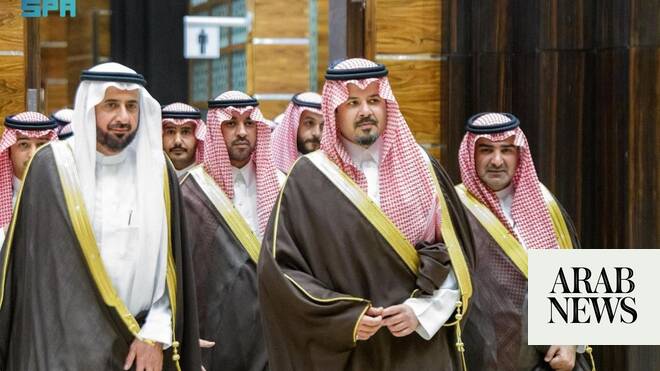

MADINAH — The third Umrah and Ziyarah Forum, organized by Saudi Arabia’s Ministry of Hajj and Umrah and the Pilgrim Experience Program, underscores the Kingdom’s strategic pivot toward economic transformation through high-impact sectoral integration. With over 150 exhibitors, 50 workshops, and 5,000 signed agreements, the event has emerged as a critical node in Saudi Vision 2030’s efforts to diversify its economy by leveraging religious tourism as a catalyst for infrastructure investment, sovereign capital mobilization, and venture capital-driven innovation. The record influx of 18 million external Umrah pilgrims in 2025—surpassing 2022 levels by 214%—reflects both the Kingdom’s growing clout in religious tourism and its ability to attract international capital flows, positioning Umrah and Ziyarah as linchpins in Saudi Arabia’s quest to reduce oil dependency and establish itself as a global hub for technology-enabled pilgrimage management.
The launch of the Nusuk app, boasting 51 million users, exemplifies the Kingdom’s aggressive deployment of fintech and digital infrastructure to enhance pilgrim services while creating scalable models for public-private partnership frameworks. Developed by the Ministry of Hajj and Umrah, the app’s digitization of 130+ services—ranging from Umrah permits to AI-driven crowd management—aligns with Saudi Arabia’s broader push to position itself as a leader in sovereign-backed technological innovation. This initiative not only elevates service efficiency but also opens avenues for venture capital investment, as startups and regional tech firms seek to integrate into the Kingdom’s expanding digital ecosystem. Moreover, the collaboration between the Ministry, the General Authority of Civil Aviation, and international logistics firms highlights a trend in sovereign-backed infrastructure projects, where state resources de-risk large-scale investments in transportation and hospitality.
Central to the forum’s economic narrative is the Rua Al-Madinah project’s naming initiative, which merges cultural preservation with urban development—a microcosm of Saudi Arabia’s dual focus on heritage and futurism. By reviving historically documented names for neighborhood and street development, the project attracts sovereign capital aimed at enhancing pilgrimage site competitiveness while fostering regional identity. This strategic placemaking complements the 2025 milestone in Al-Rawdah Al-Sharifah visitation and the expansion of historical sites, reflecting a sovereign-driven imperative to strengthen the Middle East and North Africa’s cultural infrastructure as a pillar of economic recovery. The event’s emphasis on cross-sectoral stakeholder engagement—spanning real estate, AI, healthcare, and sustainability—furthers the Region’s integration into a unified economic bloc, accelerating capital flows into high-tech solutions that balance tradition with innovation.
The Umrah and Ziyarah Forum’s record-level partnerships and funding commitments signal a paradigm shift in how religious economies are incentivized globally. As Saudi Arabia consolidates its position as a sovereign investor via initiatives like the Nusuk app and Rua Al-Madinah, it sets a precedent for other MENA nations to monetize cultural assets through institutionalized private-sector collaboration. By framing pilgrimage management as both a service industry and a strategic economic tool, the Kingdom not only enhances pilgrim experiences but also validates its vision of transforming religious tourism into a high-value, tech-driven engine of growth—a model likely to reshape the region’s capital allocation and venture capital landscapes for decades.