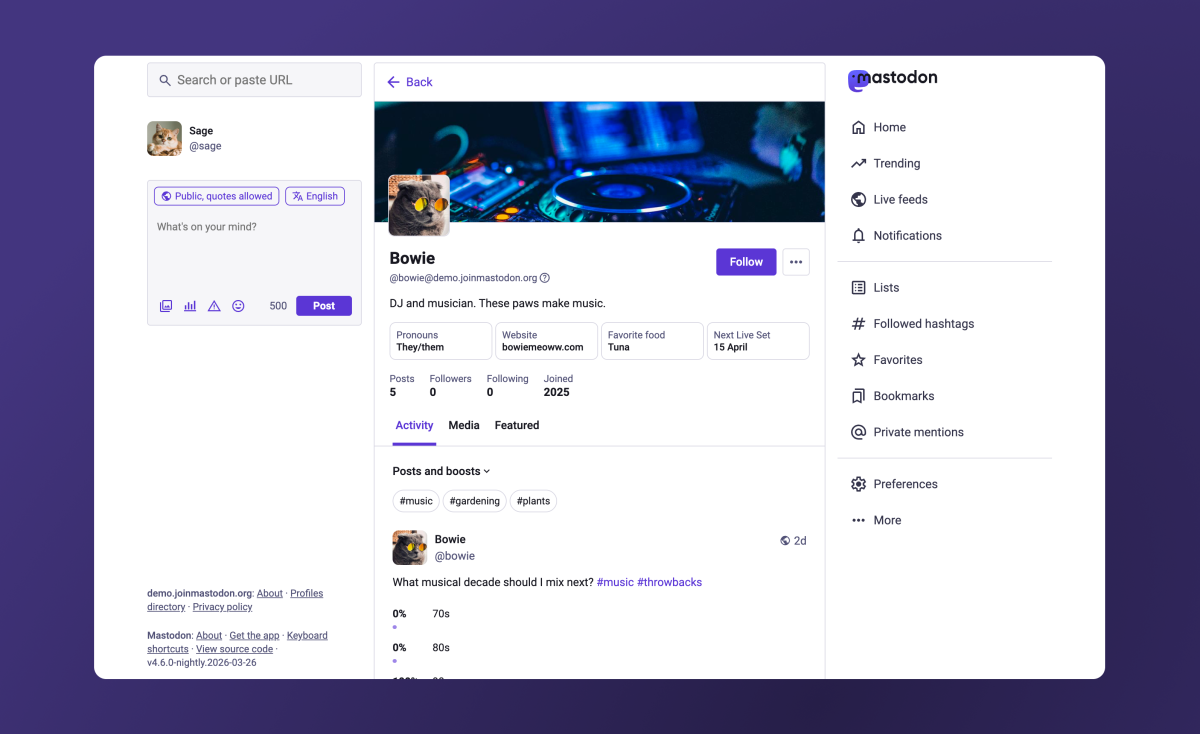

Mastodon’s profile redesign is more than a cosmetic update; it signals a strategic inflection point for decentralized social platforms with direct ramifications for MENA’s digital economy. Sovereign wealth funds, particularly in the Gulf Cooperation Council, are closely monitoring such protocols as potential tools for advancing digital sovereignty—reducing algorithmic dependency on Western platforms while cultivating region-controlled information ecosystems. The redesign’s focus on organizational profiles and simplified interface directly addresses barriers to entry for state-affiliated media, sovereign-owned enterprises, and regional NGOs seeking secure, moderated environments, aligning with national visions like Saudi Vision 2030 and the UAE’s digital government mandates that prioritize data localization and controlled digital public spheres.
The business impact for MENA corporations is substantive. By streamlining profile management—consolidating settings, enhancing link verification, and clarifying handle structures—Mastodon lowers operational friction for brands aiming to establish credible presences in fragmented markets. This could catalyze adoption among regional telecoms, financial institutions, and media conglomerates wary of platform volatility, offering a controlled channel for customer engagement and narrative shaping. However, the platform’s modest 800,000 active user base, down from its peak, necessitates that regional businesses weigh this against entrenched networks; the redesign’s success hinges on whether it can drive sufficient user migration to justify investment in community management and content strategy within MENA’s high-growth, mobile-first landscape.
Sovereign capital implications extend to infrastructure development. MENA governments, investing heavily in national data centers and cloud sovereignty projects (e.g., Saudi Arabia’s NEOM Tech & Digital Hub), may now consider federated server hosting as a complementary layer to state-backed digital infrastructure. Mastodon’s decentralized model allows for region-specific instances governed by local moderation policies—a feature that could attract sovereign investment in server clusters across Egypt, the UAE, or Morocco, thereby keeping regional data within jurisdictional boundaries and supporting compliance with emerging laws like the UAE’s Data Protection Law. This shift could redirect part of the estimated $50 billion in MENA digital infrastructure spend toward decentralized protocols, fostering a hybrid ecosystem where sovereign and private networks interoperate.
For MENA venture capital, the redesign validates the maturation of decentralized social tech as an investable segment. Funds such as STV, BECO Capital, and the Qatar Investment Authority’s tech arm will scrutinize whether these usability gains translate into scalable monetization—through enterprise-tier services, federation fees, or analytics tools tailored for regional markets. The introduction of features like custom fields and hashtag filtering suggests pathways for premium offerings, yet VCs will demand clarity on user acquisition cost economics in a region where platform adoption is often tied to mobile penetration and social media habits dominated by global players. Ultimately, Mastodon’s trajectory will test whether MENA’s VC ecosystem can back open-source protocols that balance ideological decentralization with the revenue imperatives necessary to attract sustained capital inflows.