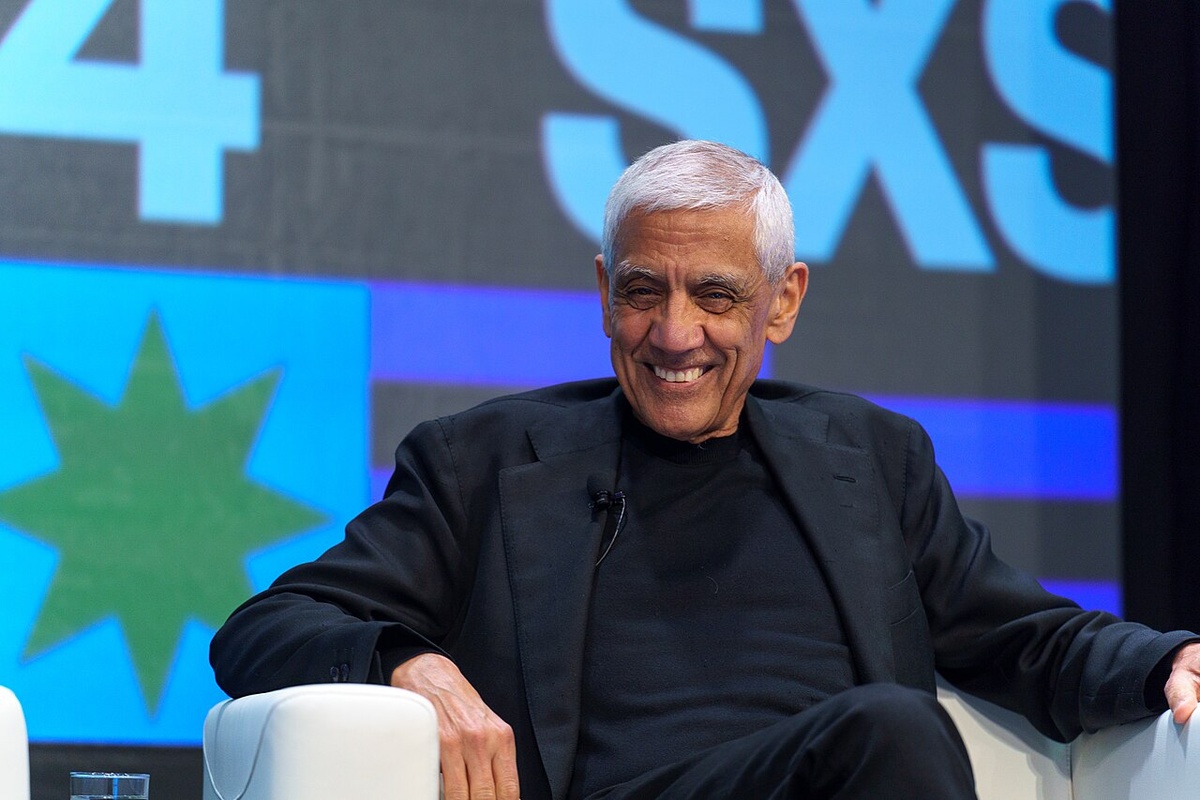

Vinod Khosla’s proposed US tax reform, aimed at addressing AI-driven labor displacement, underscores a broader macroeconomic recalibration that could reshape investment paradigms in the Middle East and North Africa (MENA). By advocating for a shift from labor to capital taxation, Khosla’s framework highlights a growing global recognition of AI’s potential to automate up to 80% of tasks in 80% of jobs within a quarter-century. For MENA nations, this underscores a strategic imperative to modernize their investment ecosystems. Sovereign capitals in the region, already prioritizing digital transformation, may need to expedite policies that incentivize venture capital (VC) flows into AI-driven sectors while mitigating risks of capital outflows from traditional industries. The burden of reconciling labor market fragmentation with asset-driven growth could compel MENA governments to explore hybrid tax models, balancing fiscal stability with the need to attract high-impact VC funding. Such a shift could also trigger a recalibration of regional infrastructure investments, prioritizing digital infrastructure—data centers, 5G, and AI-ready grids—to support a future where capital, not labor, drives economic output.
The implications for sovereign capital are profound, as MENA’s reliance on traditional hydrocarbon revenues begins to intersect with tech-driven GDP growth models. Countries like the UAE and Saudi Arabia, which have aggressively diversified via Vision 2030 and NEOM, may face pressure to align their sovereign wealth funds (SWFs) with global trends favoring capital intrapreneurism over labor-centric economies. Khosla’s proposal for equalizing capital gains taxes with ordinary income could inspire MENA’s financial regulators to revisit policies that currently favor asset-heavy investments, potentially stifling innovation in AI startups. For VC ecosystems, the region’s nascent but expanding tech scene—bolstered by MENA-focused funds and global players like Khosla’s SoftBank—could see a bifurcation: increased capital for frontier AI ventures in areas like fintech and agtech, but diminished returns in legacy sectors. This dynamic necessitates a nuanced approach to sovereign-driven VC policies, where governments might co-invest in proof-of-concept projects to de-risk AI adoption while preserving private-sector appetite for high-risk, high-reward ventures.
Regionally, infrastructure development must evolve in tandem with these capital shifts. MENA’s digital infrastructure, though nascent compared to global standards, is critical for fostering an AI-enabled economy. Khosla’s warnings about the erosion of labor-centric tax bases align with MENA’s ongoing efforts to bridge the digital divide, requiring massive investments in smart cities, cloud computing, and cybersecurity. For instance, Saudi Arabia’s Sovereign Investment Authority (SIA) and the UAE’s Digital Economy Council are already prioritizing data sovereignty and AI R&D, but Khosla’s framework suggests a need to accelerate these initiatives to attract global capital. Moreover, the region’s youth demographic, often positioned as a competitive advantage, may require reskilling programs funded through sovereign-backed tech incubators. Failure to align infrastructure and policy with the capital-intensive demands of AI could lead to a “digitaldivide” within MENA, where only a subset of nations—those with robust state-backed tech strategies—thrive in a post-labor economy. Ultimately, Khosla’s vision, while U.S.-centric, offers a lens through which MENA must assess its trajectory in the AI age, balancing sovereign interests with the imperatives of a capital-driven future.”