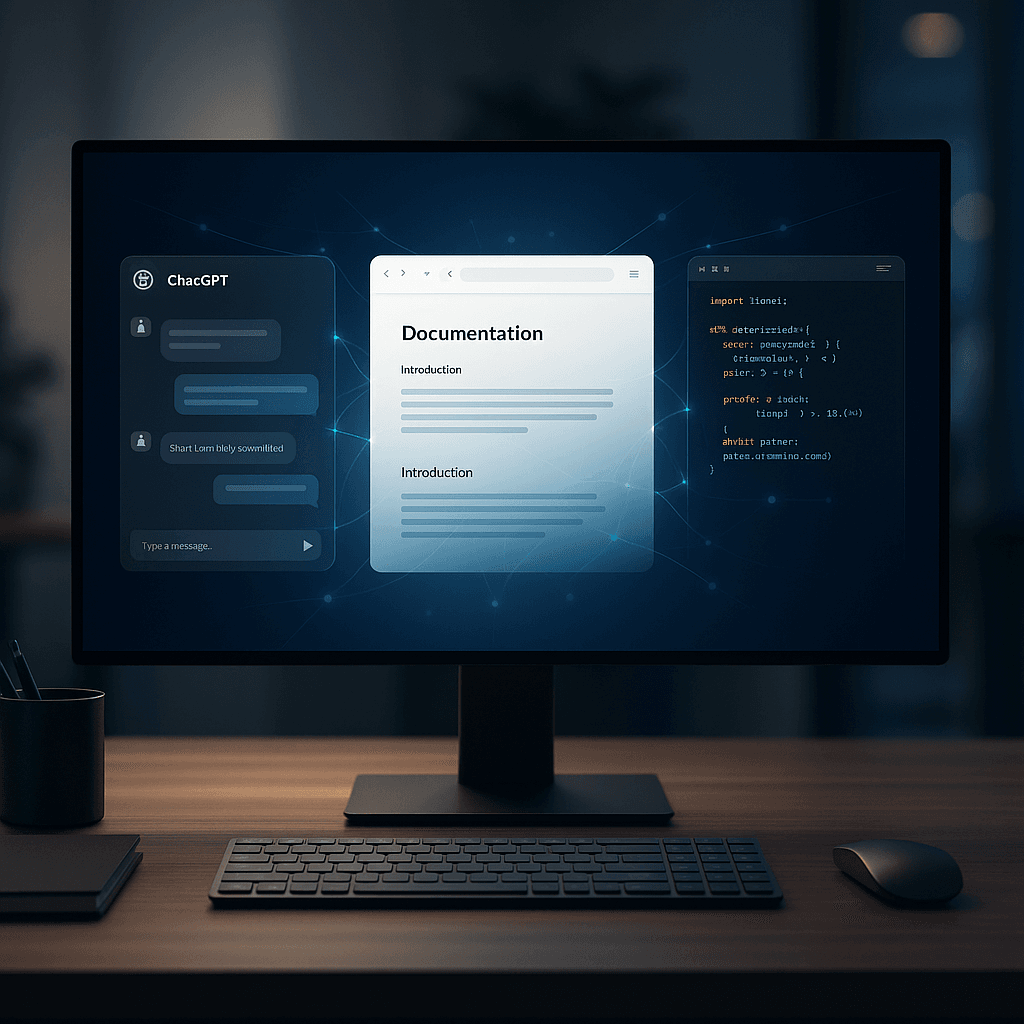

The announcement that OpenAI is consolidating ChatGPT, a web browser, and Codex into a unified desktop super app represents a pivotal strategic shift with profound implications for capital allocation and technological sovereignty in the Middle East and North Africa. For sovereign wealth funds and state-backed investment entities—from Abu Dhabi Investment Authority and Saudi Arabia’s Public Investment Fund to Qatar Investment Authority—this move crystallizes a critical inflection point. These institutions, which have deployed tens of billions into global AI and big tech equities, now face concentrated exposure to an escalating platform war. The consolidation strategy elevates OpenAI from a tool provider to a direct infrastructure competitor, threatening to render existing productivity stacks obsolete and forcing a rapid recalibration of portfolio theory around platform dominance versus分散化 bets on enablers like semiconductors and cloud infrastructure.
From a venture capital perspective, the super app blueprint redefines the exit landscape and product roadmap imperatives for the MENA startup ecosystem. Regional VCs, from Dubai-based BECO Capital to Riyadh’s Raed Ventures, must now assess whether their portfolio companies in productivity software, developer tools, and enterprise SaaS are building features for someone else’s moat or viable standalone platforms. The integration of browsing and coding fundamentally alters the unit economics of customer acquisition and stickiness for local alternatives. Furthermore, this consolidation will intensify the competition for top engineering talent across the region, as OpenAI’s unified workspace could become a primary recruitment channel, directly challenging the value propositions of regional tech hubs like Egypt’s knowledge parks and Morocco’s offshore development centers.
The infrastructure stakes are equally material. A successful super app rollout, processing vast volumes of interactive queries, code generation, and real-time browsing, will require unprecedented scale in low-latency compute and data storage. This directly accelerates the commercial case for MENA’s burgeoning data center clusters, particularly in hyperscale-friendly jurisdictions like Saudi Arabia’s Sudair and Oman’s Duqm, which boast significant renewable energy capacity and geographical advantages for cooling. Cloud providers with regional footprints—whether AWS, Oracle, or local champions like Saudi Telecom’s solutions—will see surging demand for managed AI infrastructure services. The strategic imperative for governments is no longer merely to attract data centers but to secure upstream capabilities in GPU clusters and fiber optic resilience to avoid becoming a mere consumption market for this new compute paradigm.
Ultimately, this maneuver by OpenAI transcends product development; it is a sovereign-grade challenge to the MENA region’s digital transformation blueprints. Nations pursuing AI-centric economic diversification, such as the UAE’s National AI Strategy 2031 and Saudi Vision 2030’s tech pillars, must now contemplate accelerated sovereign AI projects and strategic partnerships to maintain agency. The region’s comparative advantage in sovereign capital deployment and energy infrastructure could be parlayed into co-developing localized, sovereign-aligned AI workspaces to mitigate platform dependency. The next phase of the region’s tech policy will be defined not by incubating the next app, but by securing a stake in—or building an alternative to—the foundational digital workspace itself.