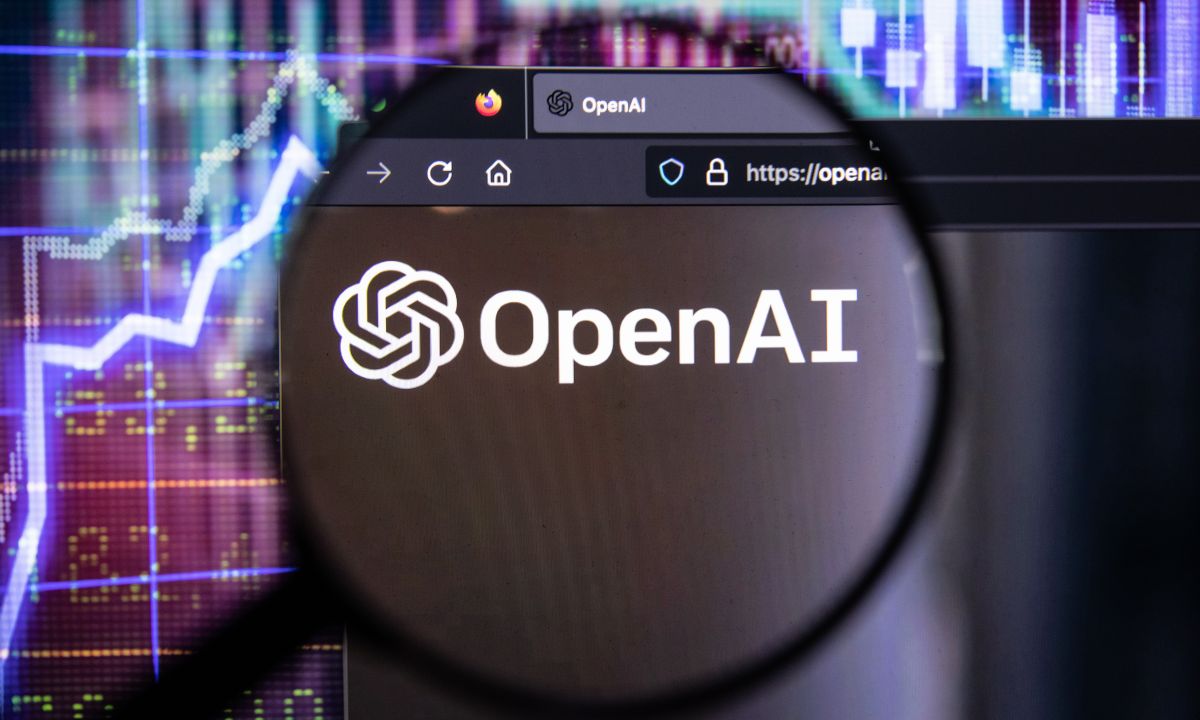

The announcement of OpenAI’s $122 billion funding round, valuing the company at $852 billion and anchored by Amazon, Nvidia, and SoftBank, transcends a mere corporate milestone. For the MENA region, this crystallizes a new paradigm of strategic capitalization in frontier technology. The sheer scale, dwarfing all prior Silicon Valley financings, signals that the capital required to compete in foundational AI is now the exclusive domain of sovereign-wealth-sized balance sheets and trillion-dollar tech conglomerates. Regional sovereign investors, such as the Public Investment Fund (PIF), Mubadala Investment Company, and the Abu Dhabi Investment Authority (ADIA), who have already deployed significant capital into global tech giants and regional digital infrastructure, will view this as a definitive benchmark. Their subsequent allocations—whether direct, co-investment, or through the expanded ETF ecosystem cited by OpenAI—will be a critical indicator of whether the Gulf’s capital is transitioning from portfolio-level exposure to strategic, controlling stakes in the AI stack itself.
OpenAI’s reported path to $2 billion in monthly recurring revenue and the projected parity between its enterprise and consumer segments by year-end underscore a swift monetization of the AI model layer. This has direct implications for MENA’s largest corporates and its state-backed “national champions” in sectors like finance, energy, and logistics. The pressure to adopt—or risk obsolescence—will intensify, driving demand not just for API access but for bespoke, secure, and potentially on-premise or regionally-hosted AI deployments. This, in turn, creates a mandate for regional cloud and data center infrastructure. The stated growth rate, quadrupling that of internet-era pioneers, suggests the economic addressable market for AI is expanding at a pace that renders traditional digital transformation timelines obsolete, forcing MENA governments to accelerate their own sovereign AI and compute initiatives to avoid dependency.
The venture capital landscape across MENA faces a recalibration. With the cost barrier to entry in base model development now effectively insurmountable, regional VC will logically pivot from attempting to replicate such models to specializing in applied AI, vertical-specific agentic workflows, and the tooling ecosystem that sits atop these monolithic platforms. Success will be defined by the ability to leverage unique regional data assets—in fintech, logistics, and Arabic-language processing—to build defensible applications. The participation of long-term partners like Microsoft, coupled with the inclusion in major ARK ETFs, integrates OpenAI’s equity story directly into global indices, ensuring regional institutional portfolios are already tangentially exposed; the strategic question is how to achieve direct ownership in the next tier of enablers and applications.
Finally, OpenAI’s stated development of a “unified AI superapp” presents a competitive challenge to the region’s own super-app ambitions. Entities aligned with sovereign capital, such as STC Pay in Saudi Arabia or regional telecom conglomerates, must consider whether their future value propositions will be augmented or obviated by a globally-dominant, agentic AI interface. This accelerates the regional infrastructure debate around high-performance computing, specialized AI talent pipelines, and regulatory frameworks that balance openness with data sovereignty. The financing magnitude itself—a private round exceeding most sovereign wealth fund annual budgets—serves as a stark reminder: the core of the next computing platform is consolidating in the U.S., and for MENA, the business imperative is no longer about building a rival, but about securing a indispensable role within its orbit and ensuring its vast capital deployments translate into tangible, localized economic and technological leverage.