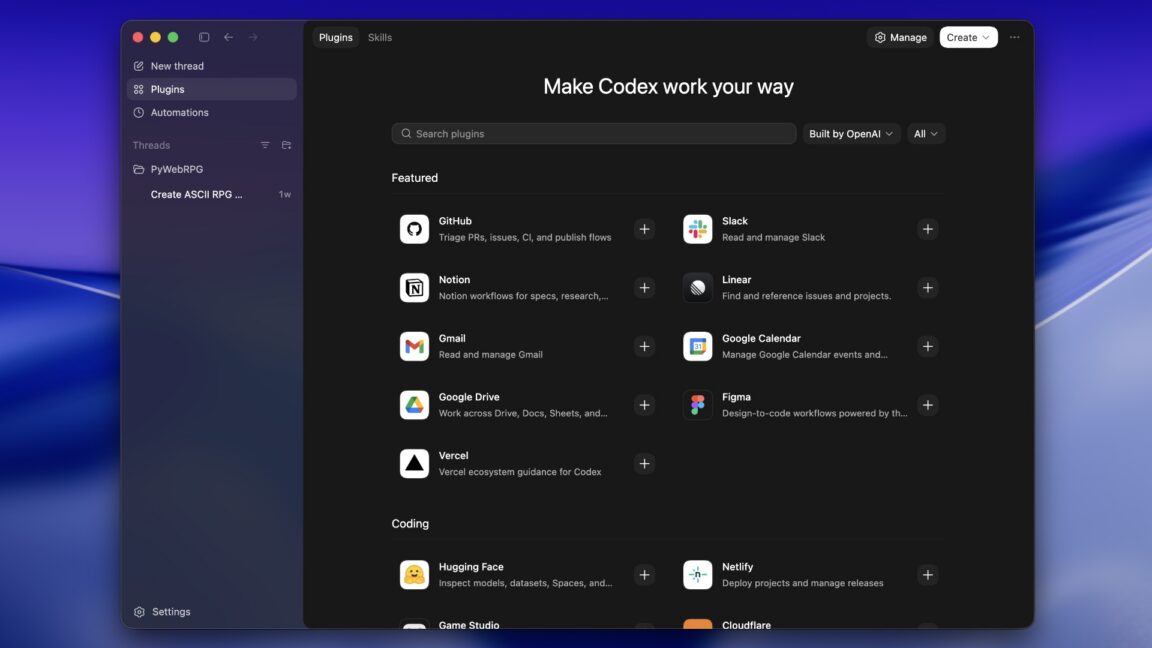

OpenAI’s recent rollout of plugin support within its Codex coding assistant represents a strategic maneuver with significant implications for the burgeoning AI ecosystem across the Middle East and North Africa. While superficially appearing as a competitive response to offerings from rivals like Anthropic and Google, the introduction of these “plugins”—essentially pre-packaged skillsets and application integrations—underscores a broader trend toward modular AI development. From a business perspective, this shift facilitates rapid deployment of specialized AI capabilities within organizations, a critical factor for accelerating digital transformation initiatives currently underway in sectors like finance, logistics, and energy across the region. The ability to seamlessly connect Codex to platforms such as GitHub, Gmail, and Cloudflare directly addresses a key pain point for regional businesses seeking to automate workflows and improve operational efficiency.
The sovereign wealth funds and increasingly sophisticated private equity firms operating within the MENA region are keenly observing this development. Investment in AI, particularly generative AI tools, is no longer viewed solely through the lens of pure technological advancement; it’s increasingly tied to demonstrable ROI and competitive advantage. The simplified deployment offered by OpenAI’s plugins – essentially a “one-click” installation – dramatically lowers the barrier to entry for organizations previously hampered by the technical complexity of custom integrations. This will likely spur increased venture capital activity focused on AI-powered solutions tailored to regional needs, particularly in areas like smart city development, fintech innovation, and supply chain optimization. We anticipate a surge in demand for specialized AI consultants capable of navigating this evolving landscape.
However, the impact extends beyond immediate business applications. The proliferation of these plugins necessitates a concurrent investment in regional infrastructure. Reliable and high-bandwidth internet connectivity, a persistent challenge in certain parts of the MENA, is paramount to the effective utilization of these integrated AI tools. Furthermore, data security and privacy considerations – already a significant concern – will become even more critical as Codex interacts with external services. Governments across the region, particularly those actively promoting digital economies, will need to establish clear regulatory frameworks to govern the use of AI plugins and ensure responsible data handling practices. The successful adoption of this technology hinges on a coordinated approach between technology providers, regulatory bodies, and regional infrastructure developers.
Ultimately, OpenAI’s plugin architecture isn’t a revolutionary leap, but rather a refinement of existing capabilities. Its value lies in the democratization of AI integration – making sophisticated functionality accessible with unprecedented ease. This shift will undoubtedly accelerate the adoption of AI tools across the MENA, driving innovation and reshaping industries. The long-term success, however, will depend on the region’s ability to simultaneously bolster its digital infrastructure, establish robust regulatory oversight, and cultivate a skilled workforce capable of harnessing the transformative potential of these increasingly interconnected AI systems.