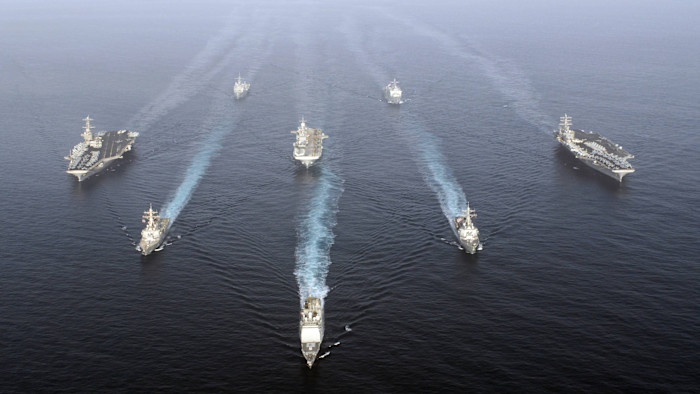

The recent US announcement of deploying 2,500 Marines to the Gulf, while symbolically significant, is unlikely to alter the strategic calculus surrounding the Strait of Hormuz, a critical chokepoint for global energy flows. This perspective, articulated by Andreas Krieg of King’s College London, underscores a broader realization: military posturing alone cannot address the complex geopolitical and economic interdependencies that govern regional and global energy markets. For the MENA region, where sovereign capital is increasingly tied to hydrocarbon exports and venture capital ecosystems are nascent but strategic, the inability to secure reliable maritime access poses a direct threat to financial stability. The Strait’s closure would amplify energy price volatility, erode export revenues for oil-producing states, and deter foreign direct investment—particularly in regions where sovereign wealth funds are pivoting toward diversification amid resource volatility. Such a scenario would also stifle regional infrastructure development, as projects reliant on consistent trade corridors would face heightened risk.
The implications for sovereign capital in MENA are profound. Countries in the region have long leveraged oil revenues to fund infrastructure, social programs, and foreign policy initiatives. A prolonged disruption to Hormuz would destabilize this financial model, compelling governments to accelerate budget reallocations or seek alternative revenue streams. This could divert sovereign funds from long-term projects—such as renewable energy transitions or digital infrastructure—to short-term stabilization measures. Conversely, for venture capital in the region, the lack of maritime security could dampen appetite for early-stage investments in energy tech or logistics startups, which often depend on stable supply chains. Investors may prioritize markets with clearer geopolitical risk profiles, potentially redirecting capital flows toward Gulf Cooperation Council states or international offshore funds. The strategic leverage of hydrocarbon exporters would also be tested, as they face dual pressures to maintain fiscal discipline while managing international relations.
Regional infrastructure implications extend beyond immediate energy concerns. The Strait’s instability could delay or derail projects tied to MENA’s growing digital and transportation networks, where connectivity to global markets is paramount. For instance, investments in port modernization, cross-border logistics hubs, or even fintech ecosystems could face funding gaps if energy-dependent economies experience revenue shocks. Moreover, the military deployment’s failure to open Hormuz might reinforce perceptions of external dependencies, undermining regional confidence in international partnerships. This could slow progress on critical infrastructure deals, such as those involving major oil majors or tech giants investing in MENA-based digital platforms. The long-term lesson for policymakers is clear: maritime security is not merely a military issue but an economic imperative that demands coordinated regional and global solutions.