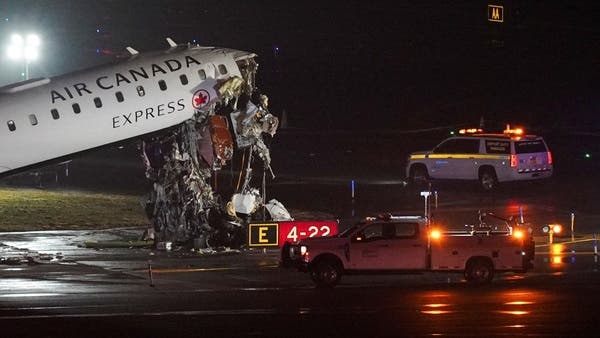

The collision of an Air Canada Express regional jet with a fire truck at New York’s LaGuardia Airport serves as a stark reminder of the systemic operational risks inherent in complex, high-density global aviation networks. For sovereign wealth funds and institutional investors from the Gulf Cooperation Council (GCC) with significant stakes in international airport infrastructure—such as Qatar Investment Authority’s holdings in European hubs or the Abu Dhabi Investment Authority’s diversified transport portfolio—such incidents underscore the critical importance of rigorous safety oversight and operational resilience as core components of long-term asset value. The event, occurring amidst pre-existing U.S. air traffic control staffing challenges, immediately triggers reviews of safety protocols among major airport operators worldwide, directly impacting valuation models and risk assessments for assets held by MENA-based sovereign capital.
This incident is poised to accelerate venture capital deployment into aviation safety and air traffic management technology, a trend already gaining momentum in the MENA region. Sovereign innovation vehicles, including Saudi Arabia’s The Saudi Technology Development and Investment Company (TAQNIA) and the UAE’s AirspaceX initiatives, will likely prioritize funding for startups developing AI-driven runway incursion prevention systems, enhanced ground vehicle tracking, and predictive safety analytics. The clear demonstration of a ground-vehicle/aircraft conflict—a scenario central to GCC mega-projects like Saudi Arabia’s NEOM Bay and the massive expansions at Dubai International (DXB) and Hamad International (DOH)—will sharpen focus on integrating cutting-edge surface movement guidance and control systems (SMGCS) from the design phase, transforming a U.S. accident into a regional investment catalyst.
For the broader MENA aviation ecosystem, the LaGuardia closure and ensuing global schedule disruption highlight the region’s strategic vulnerability to external operational shocks despite its own robust safety record. The region’s ambition to capture a larger share of global passenger and cargo flows—through projects like Egypt’s new capital airport, Algeria’s new Constantine terminal, and Morocco’s ongoing Marrakech expansion—depends on an unblemished safety perception to attract airline partnerships and premium route allocations. Consequently, regulatory bodies such as the GCC Civil Aviation Authority (GCAAR) and the Egyptian Civil Aviation Authority will face intensified pressure to demonstrate compliance with and leadership in International Civil Aviation Organization (ICAO) safety standards, using such incidents abroad to advocate for harmonized, high-bar regional frameworks that protect their growing infrastructure investments.