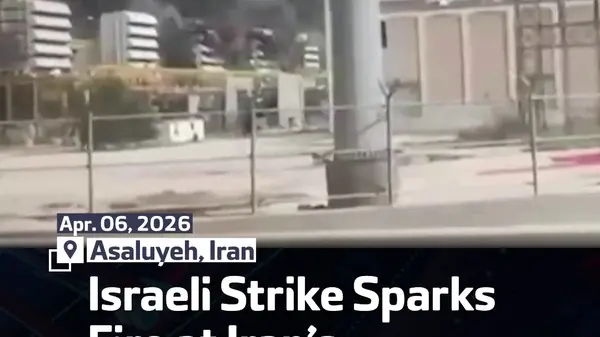

Israel’s recent airstrike on Iran’s Fajr Petrochemical Complex in the southern city of Ahvaz has triggered a blaze that halted production at one of the region’s largest downstream facilities. The outage is expected to remove roughly 2 million tonnes of hydrocarbon derivatives from the market for the next 30‑45 days, tightening feedstock supplies for downstream manufacturers in the Gulf and North Africa. For sovereign investors, the disruption underscores the fragility of regional petrochemical supply chains that underpin a sizable share of GCC export revenues and highlights the strategic premium placed on resilient, locally‑sourced capacity.
Iran’s state‑run oil company, NIOC, is already seeking to offset the loss by accelerating output from its aging western complexes, while the government is in talks with Asian petrochemical firms to secure alternative feedstock arrangements. The incident is likely to spur Gulf sovereign wealth funds and sovereign‑linked banks to re‑evaluate exposure to Iranian assets, accelerating de‑risking moves that have already redirected capital towards more secure, downstream‑integrated projects in Saudi Arabia’s NEOM and Abu Dhabi’s ADNOC‑in‑Venture platform.
From a venture‑capital perspective, the volatility created by the strike is sharpening investor focus on technology that can insulate regional production from geopolitical shocks. Start‑ups developing modular, low‑emission cracking units and AI‑driven supply‑chain analytics are attracting heightened interest from the UAE’s Mubadala, Qatar’s Qatar Investment Authority, and a new wave of Saudi family offices. These investors are betting that digitalisation and decentralised processing will become a defensive layer for the MENA petrochemical value chain.
Infrastructure planners across the Middle East are now reassessing the resilience of existing logistics networks. The fire has exposed the need for diversified export routes, prompting accelerated upgrades to rail corridors linking the Persian Gulf to the Red Sea and the development of inland storage hubs in Jordan and Egypt. In the longer term, the episode may catalyse deeper public‑private partnerships aimed at building cross‑border petrochemical clusters that can withstand future disruptions, positioning the region to maintain its role as a global chemicals hub despite heightened geopolitical risk.