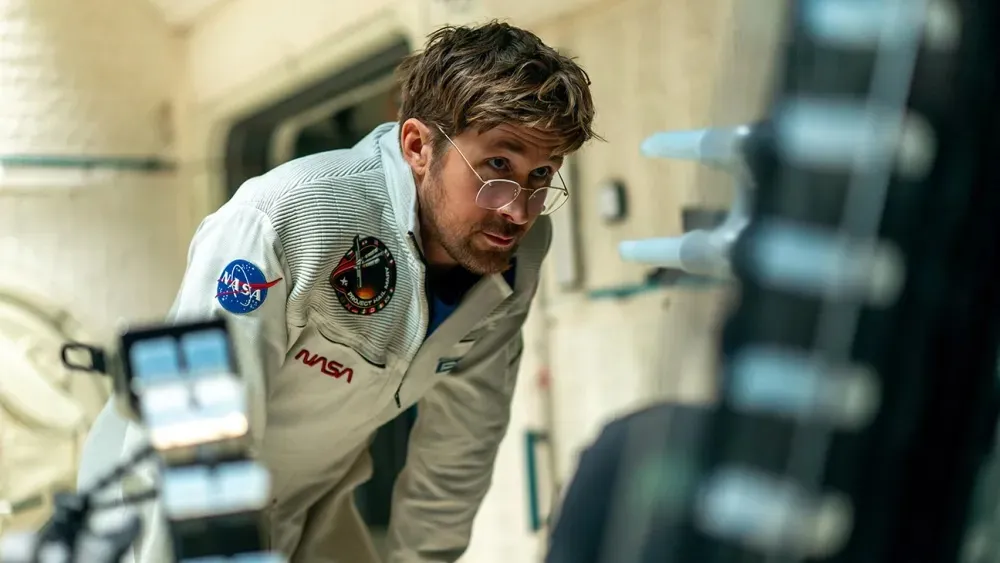

Amazon’s unprecedented success with “Project Hail Mary” underscores a pivotal shift in content monetization strategies, demonstrating the viability of high-budget, non-franchise films as commercial assets. The $200 million investment in the film, which has already generated over $300 million globally within its first two weekends, highlights Amazon MGM Studios’ ability to leverage intellectual property and star power to drive box-office returns. This success not only validates Amazon’s doubling down on theatrical releases but also sets a precedent for global streaming platforms to prioritize theatrical partnerships, potentially reshaping revenue models in an era of declining streaming subscriber growth. For the MENA region, where entertainment infrastructure remains underdeveloped, such a case study could catalyze renewed interest in high-quality content creation, attracting sovereign capital to subsidize local production ecosystems.
The film’s performance also signals a strategic pivot for Amazon’s sovereign capital allocation, exemplifying how large-scale bets on creative content can yield outsized returns. With historical precedents like “The Martian” proving that non-franchise storytelling resonates globally, the $200 million gamble on “Project Hail Mary” reflects a calculated risk aligned with Amazon’s broader ambition to dominate premium entertainment markets. For MENA sovereign wealth funds, this narrative offers a compelling playbook: redirecting capital from traditional sectors like oil and gas toward diversified portfolios that include entertainment and media. Such a shift could mirror the UAE’s recent investments in MTN Group or Saudi Arabia’s Vision 2030 initiatives, where sovereign capital seeks to future-proof economies through technology and creative industries.
Venture capital dynamics in the region may also be recalibrated by Amazon’s success. The acquisition of MGM for $8.5 billion, coupled with the greenlighting of 14 annual theatrical releases, establishes a template for VC firms to underwrite high-risk, high-reward content ventures. In the MENA context, where venture capital remains concentrated in fintech and proptech, the film industry’s commercial potential—now validated by Amazon’s return—could unlock new investment avenues. This may trigger a ripple effect, with regional VCs emulating Amazon’s model to fund local film productions or acquire IP rights, leveraging the UAE’s tax-free environment to attract global talent and distributions.
Finally, “Project Hail Mary” highlights the infrastructural requirements for a region to capitalize on global entertainment demand. Successful theatrical runs demand robust distribution networks, advanced VFX studios, and co-production partnerships—resources currently sparse in MENA. The film’s technical and narrative complexity, reliant on seamless integration of human and CGI elements, underscores the need for sovereign-backed investments in regional tech infrastructure. As the UAE and Saudi Arabia prioritize artificial intelligence and digital media hubs, parallels may emerge: co-producing blockbusters could become a cornerstone of their digital transformation agendas, aligning with broader goals to attract global talent and boost cultural soft power.