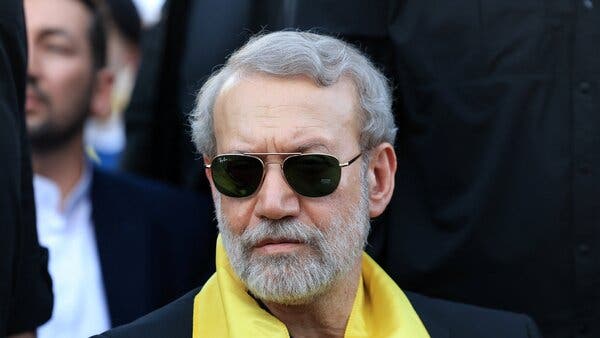

The confirmed death of Iranian Supreme National Security Council Secretary Ali Larijani following an Israeli airstrike presents a multifaceted challenge to the geopolitical and economic landscape of the Middle East and North Africa. Larijani, a veteran of Iranian foreign policy for decades, played a key role in navigating complex regional conflicts and shaping the country’s strategic direction. His demise will likely trigger a reassessment of Iran’s security posture and its engagement with regional actors, potentially impacting ongoing negotiations regarding its nuclear program and broader international relations. The immediate business impact could include increased volatility in energy markets, given Iran’s significant oil and gas reserves and its role in supplying global energy demand.
From a sovereign capital perspective, Larijani’s death may not immediately trigger significant shifts in Iranian financial markets. However, the broader geopolitical ramifications could influence investor sentiment, potentially leading to increased risk premiums on Iranian assets and a slowdown in foreign direct investment. The impact on regional infrastructure projects, particularly those involving Iranian participation, is also a concern. Projects in countries like Syria, Iraq, and Oman, where Iran maintains significant influence, could face delays or restructuring as regional power dynamics realign. A key consideration will be how the Iranian government responds to this event, and whether it escalates tensions with Israel or adopts a more conciliatory approach.
The venture capital ecosystem in the region could also experience indirect effects. Iran, despite facing sanctions, has a burgeoning tech sector with significant potential. Increased instability stemming from Larijani’s death might deter foreign VC investment and hinder the growth of Iranian startups. Furthermore, the broader regional uncertainty could impact cross-border technological collaborations and innovation hubs. Regional governments will likely need to reassess their investment strategies in the technology sector to mitigate potential risks and capitalize on emerging opportunities in a more volatile environment. The long-term implications for the development of a regional digital economy remain uncertain.
The regional infrastructure ambitions, particularly those linking the East and West, carry heightened risk. Iran’s involvement in initiatives such as the North-South Transport Corridor, designed to enhance trade connectivity, could be jeopardized by the increased geopolitical fragility. Furthermore, the security situation in countries bordering Iran, already strained by various conflicts, could further complicate infrastructure development efforts. The incident underscores the critical interplay between regional security and economic development, highlighting the need for robust risk management strategies and diversified investment approaches to ensure the continuity of vital infrastructure projects across the Middle East and North Africa. Increased diplomatic efforts to de-escalate tensions will be crucial for safeguarding regional economic stability and facilitating future infrastructure investments.