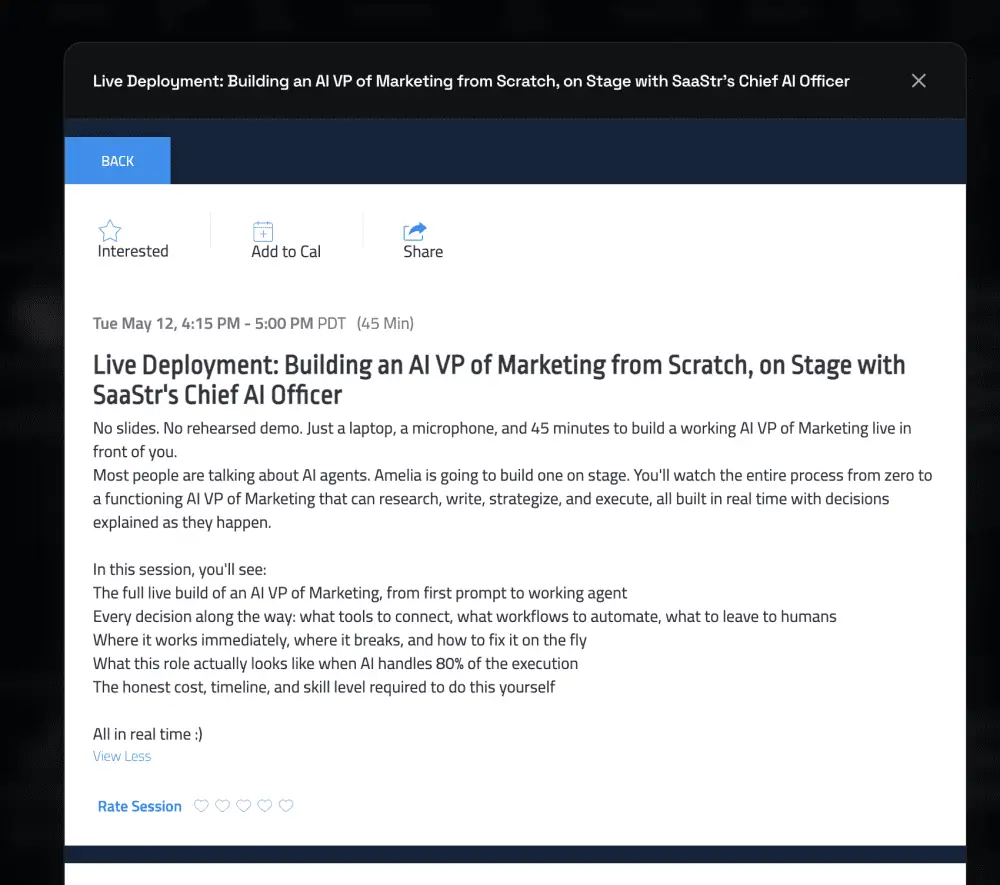

The transition from experimental artificial intelligence pilots to production-grade autonomous agents represents the most material capital allocation shift in the Middle East and North Africa’s technology sector over the past three years. As sovereign wealth funds in Riyadh, Abu Dhabi, and Doha deploy multi-billion-dollar tranches into localized compute infrastructure, liquid cooling data centers, and region-specific foundation models, the venture capital thesis has decisively pivoted from speculative model development to enterprise deployment and agentic workflow integration. Portfolio operators and corporate venture arms are explicitly demanding verifiable return on implementation, prioritizing systems that compress headcount ratios, accelerate revenue realization, and demonstrate resilient unit economics. The industry has moved decisively past the era of curated, pre-recorded demonstrations; institutional allocators now require unscripted deployment transparency, deterministic latency metrics, and rigorous failure-mode analysis before committing growth-stage capital.
The business impact of successfully operationalizing autonomous agents across commercial functions carries direct implications for MENA’s regional infrastructure baselines and corporate profitability structures. When agentic systems assume responsibility for customer acquisition, content orchestration, and competitive intelligence, the traditional SaaS and services margin model undergoes structural realignment, favoring lean architectures that scale at near-zero marginal cost without proportional OpEx expansion. This paradigm necessitates hardened, data-sovereign cloud environments, standardized API orchestration, and enterprise-grade compliance frameworks that Gulf hyperscalers and regional system integrators are actively standardizing. However, the delta between proof-of-concept environments and transactional readiness remains the primary execution bottleneck. Institutions that successfully bridge this gap will capture compounded advantages in customer acquisition cost, working capital velocity, and operational resilience, while those relying on fragmented, vendor-locked solutions risk capital misallocation and technological debt that cannot withstand real-world commercial friction.
For the region’s executive and investment leadership, the trajectory of agentic adoption will be dictated not by technological novelty but by institutional deployment discipline and balance sheet alignment. Capital markets are beginning to price organizations on their capacity to embed autonomous workflows directly into revenue generation pipelines, treating AI agents as depreciable capital assets rather than discretionary technology expenditures. As regulatory frameworks across the GCC mature around algorithmic accountability, cross-border data flows, and sovereign compute mandates, the competitive premium will accrue to firms that pair localized infrastructure investments with auditable, live-deployment methodologies. The next cycle of venture funding, corporate restructuring, and regional M&A will unequivocally favor operators who approach agentic integration as a core fiscal optimization strategy, directly linking technological architecture to institutional scale, operational efficiency, and sovereign capital deployment objectives.