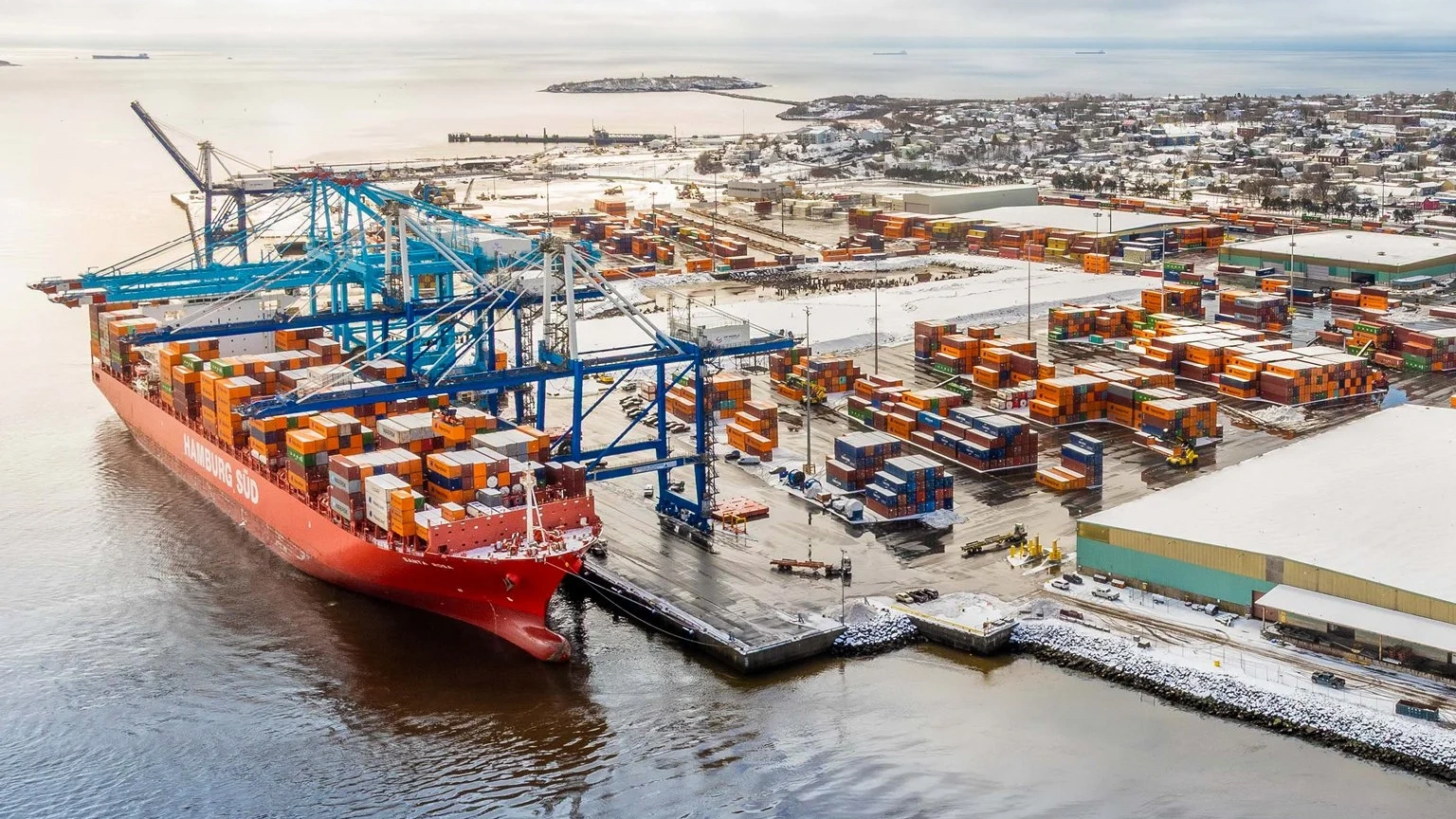

The Port of Saint John’s reported 29.4% year-on-year increase in TEU volume, reaching 239,364 in 2025, signals a noteworthy shift in North American east coast logistics. While not a systemic disruption to global trade lanes, this performance – a 175.2% cumulative increase since 2021 – demonstrably illustrates the impact of strategic infrastructure investment and efficient terminal operations. The $247 million public-private investment, coupled with DP World’s operational expertise, has demonstrably enhanced berth productivity and capacity, attracting increased service commitments from major carriers including Maersk, Hapag-Lloyd, MSC, and CMA CGM. This success provides a compelling case study for port authorities across the MENA region contemplating similar modernization efforts to enhance competitiveness.
From a sovereign capital perspective, the Saint John model highlights the potential for attracting foreign direct investment (FDI) through well-structured public-private partnerships (PPPs). The MENA region, actively seeking to diversify economies and bolster non-oil revenue streams, could replicate this approach to modernize port infrastructure in key hubs like Jeddah, Dammam, and Tanger Med. Successful implementation requires not only capital allocation but also a commitment to regulatory frameworks that incentivize private sector participation and ensure operational efficiency. Furthermore, the enhanced rail connectivity – facilitated by NB Southern Railway and linkages to CPKC, CN, and CSX – underscores the critical importance of integrated inland logistics networks. This is particularly relevant for MENA nations investing in cross-border rail projects aimed at facilitating regional trade and reducing reliance on maritime transport for intra-regional cargo flows.
Venture capital interest in port-adjacent technologies – including automation, digital logistics platforms, and predictive analytics – is likely to increase as ports like Saint John demonstrate the value of data-driven operational improvements. The MENA region has witnessed growing investment in logistics tech, but further scaling requires a supportive ecosystem encompassing regulatory sandboxes, access to talent, and strategic partnerships between startups and established logistics providers. The Saint John example also reinforces the importance of ‘last mile’ connectivity. MENA governments must prioritize investments in warehousing, drayage capacity, and digital freight matching platforms to fully capitalize on increased port throughput and avoid creating new bottlenecks in the supply chain.
Ultimately, the Saint John case offers valuable lessons for the MENA region. The gains are not merely about increasing container volume; they represent a tangible improvement in supply chain reliability and cost-effectiveness. This translates to enhanced competitiveness for regional exporters and reduced costs for importers. While the scale of the North American market differs significantly, the underlying principles – strategic investment, operational excellence, and integrated logistics networks – are universally applicable. Regional port authorities and sovereign wealth funds should closely analyze the Saint John model as they formulate long-term infrastructure development strategies and seek to position their ports as key nodes in the evolving global trade landscape.