
Saudi Arabia’s logistics sector represents a calculated strategic pivot for the region, transitioning from a commodity transit corridor to a value-added trade ecosystem. This evolution is a direct function of sovereign capital deployment, primarily through the Public Investment Fund (PIF), which is systematically re-architecting the Kingdom’s economic foundations away from oil dependency. The sector’s projected growth to $54.35 billion by 2034, driven by Vision 2030’s explicit target for logistics to contribute 6-10% of GDP, is not merely organic expansion but a state-directed capitalization on geographic centrality. For regional investors, this signals a secular shift where sovereign balance sheets are underwriting infrastructure that will, in theory, attract commensurate private venture capital and corporate investment into adjacent services—from warehousing technology to last-mile delivery platforms—creating a new asset class within MENA markets.
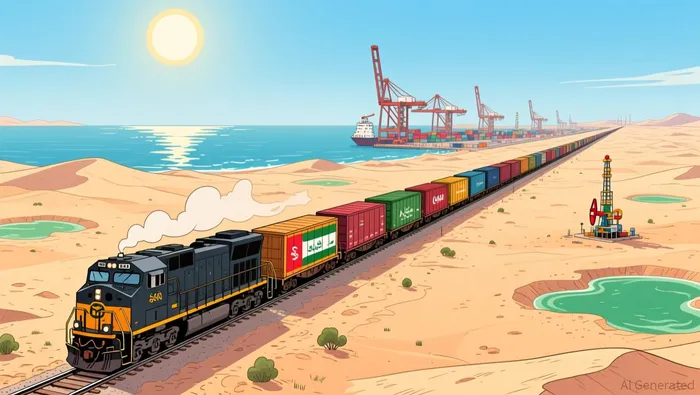
The $7 billion Saudi Landbridge Project is the physical embodiment of this strategy and a critical piece of regional risk-mitigation infrastructure. By creating a direct rail link between the Red Sea and the Arabian Gulf, it addresses the systemic vulnerability exposed by Houthi attacks in the Red Sea, effectively offering shippers a sovereign-guaranteed alternative to chokepoint-dependent maritime routes. This project’s near-term commercial validation—with heavy industrial users already reserving 2026 capacity—demonstrates how state-led infrastructure can de-risk and accelerate private sector logistics planning. The regional implication is profound: it positions the GCC as a unilateral trade corridor, potentially drawing cargo flows traditionally routed through Egypt or the Levant. This will catalyze venture capital into specialized fintech for trade finance and supply chain visibility startups across the wider MENA region, as the volume of goods requiring digital documentation, tracking, and customs clearance is set to rise exponentially.
For a dominant player like SAL Saudi Logistics, the business impact is twofold: it is both a beneficiary of and a barometer for this sovereign-led transformation. Its dual-segment model—air cargo handling and integrated logistics—provides the essential, recurring-revenue foundation that sovereign and institutional investors seek in a capital-intensive sector. However, its performance is inextricably linked to the execution velocity of projects like the Landbridge and the broader GCC railway network. The current market valuation, reflecting a 20.59% decline in market cap amid sector rotation, masks the underlying strategic importance of such entities to national economic diversification plans. The 11.18% dividend increase, while signaling cash flow resilience, also underscores the high capital return burden placed on these state-adjacent champions to satisfy a growing domestic investor base on the Tadawul.
The overarching risk for the MENA region lies in the potential mismatch between infrastructure supply and sustainable economic demand. The logistics boom is predicated on the successful diversification of Saudi and GCC non-oil GDP, particularly in manufacturing and e-commerce. A slowdown in this diversification agenda would leave significant rail and port capacity underutilized, transforming a growth narrative into a stranded asset concern. Consequently, venture capital and private equity deployment into the broader logistics tech stack must accelerate in parallel with brick-and-mortar projects to ensure ecosystem viability. The investment thesis for the region, therefore, hinges not on the construction of infrastructure alone, but on the velocity of private sector innovation that can populate it with high-margin, scalable services—a far more complex and uncertain endeavor than sovereign capital allocation.