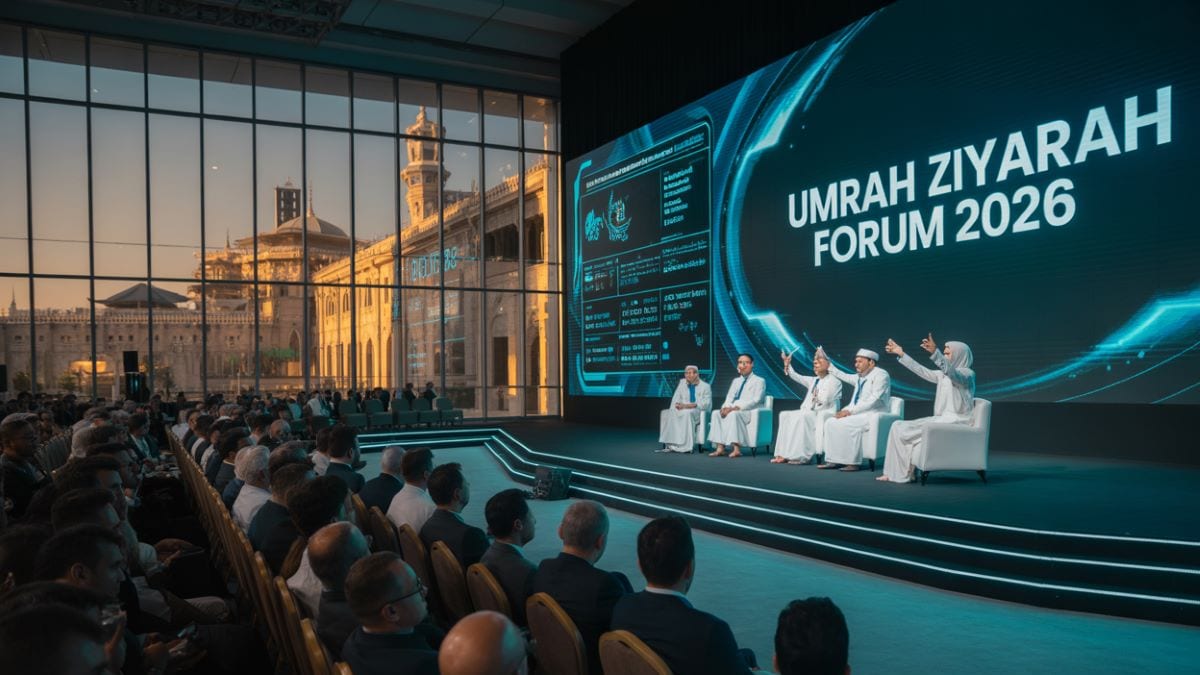

The Kingdom’s strategic pivot toward religious tourism technology exemplifies a calculated effort to transform spiritual journeys into a data-driven economic engine, with the Umrah Ziyarah Forum 2026 serving as both incubator and advertisement for Saudi Arabia’s ambitious de-risking of private sector participation in sacred site management. By positioning Madinah as a living laboratory for frictionless pilgrim experiences, the government is not merely upgrading logistics but fundamentally redefining the financing architecture of religious tourism through sovereign-backed public-private partnerships (PPPs)—a model that could catalyze upstream investments in regional hospitality tech and downstream integration with global fintech ecosystems.
Technological innovation remains the linchpin of this transformation, with AI-powered demand forecasting tools and blockchain-enabled visa processing systems emerging as critical infrastructure investments that converge sovereign capital deployment with venture capital appetites. Early-stage startups embedded within the Nusuk platform ecosystem—offering real-time crowd analytics and multilingual virtual concierges—are already attracting cross-border VC interest, while government-sponsored innovation challenges offer de-risked pathways for institutional investors to co-fund solutions that address bottlenecks in transport, payments, and crowd behavior monitoring. This bifurcation of risk—public sectors absorbing regulatory and compliance burdens, private players capturing operational upsides through revenue-sharing agreements—creates a replicable framework for MENA region religious tourism modernization.
The Rua Al Madinah infrastructure project’s 2026 completion timeline underscores Saudi Arabia’s capacity to scale hospitality logistics in tandem with digital service layers, a dual investment approach that mitigates sovereign liquidity risks while establishing ambulatory benchmarks for regional cities. By mandating interoperability between smart city grids, transit networks, and pilgrim service platforms, the initiative demands unprecedented coordination between municipal authorities, fintech intermediaries, and cybersecurity experts—creating a high-demand “middleware market” that venture capitalists and asset managers are beginning to map for future MENA stakes. Meanwhile, partnerships with GCC peers to harmonize pilgrim service standards across borders suggest broader economic integration vectors that could attract regional sovereign wealth funds to infrastructure REITs and traveltech platforms.