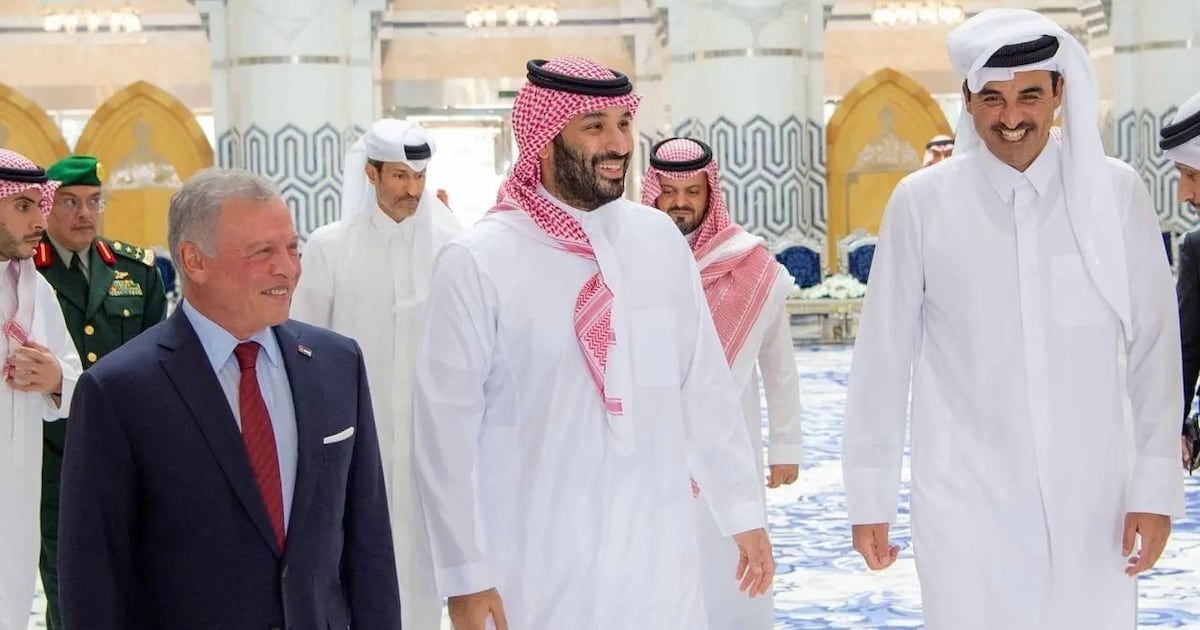

The convening of Saudi Crown Prince Mohammed bin Salman, Qatar’s Emir Sheikh Tamim bin Hamad Al‑Thani and Jordan’s King Abdullah II in Jeddah reflects a coordinated sovereign response to Iran’s unprecedented drone and missile campaign. By framing the conflict as an economic as well as a security threat, the trio signaled a deliberate pivot toward “joint Arab action” that will marshal regional capital to mitigate exposure to energy price volatility and supply chain disruptions.
From a business perspective, the attacks have already curtailed Qatari LNG exports from the Ras Laffan facility, pulling forward a three‑to‑five‑year disruption horizon and pressuring Aramco’s output forecasts. Jordan’s emergency fuel‑stockpiling ban and parallel energy‑conservation measures underscore the fiscal strain on smaller Gulf economies, compelling governments to recalibrate budgetary allocations and reassess sovereign debt sustainability in the face of fluctuating hydrocarbon revenues.
In response, Gulf sovereign wealth funds are poised to channel additional liquidity into diversification initiatives, with a marked acceleration of venture‑capital deployments toward clean‑energy, digital infrastructure and resilient logistics platforms. This capital re‑allocation is expected to catalyze private‑sector participation in next‑generation utility grids, modular shipping assets and alternative pipeline projects designed to bypass the Strait of Hormuz and secure Red Sea transit corridors.
Finally, the strategic discourse surrounding collective Gulf defence is reshaping regional infrastructure roadmaps. Accelerated investments in hardened energy terminals, diversified export pipelines and integrated customs‑clearance networks will not only blunt the economic fallout of Iran‑originated hostilities but also reinforce the Middle East’s emergence as a stabilized hub for global trade and technology‑driven growth.