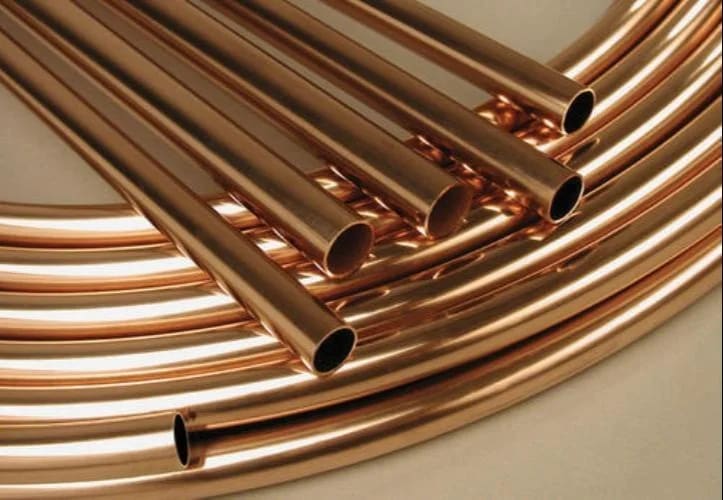

The Middle East and North Africa (MENA) region stands at a pivotal juncture as it recalibrates its economic blueprint under the ambitious framework of Vision 2030. In this transformative era, the copper pipes and tubes market has emerged as a vital pillar, interweaving directly with the Kingdom’s national development narrative. The projected trajectory of copper consumption—rising from 48,000 tons in 2025 to an anticipated 62,100 tons by 2034—reflects not merely an increase in volume, but a fundamental shift in strategic value. This expansion is not isolated; it is inextricably linked to the broader ambition of diversifying the economic base, reducing dependency on hydrocarbons, and positioning the region as a global manufacturing and technological hub.
Saudi Arabia’s foray into high-performance copper applications underscores its understanding of material science in an era where durability, corrosion resistance, and efficiency dictate success. From data centers in NEOM to desalination plants underpinning vital water security initiatives, copper is no longer a commodity but a critical asset. Sovereign capital flows are increasingly directed into infrastructure corridors that drive construction, digitalization, and energy transitions, all of which will amplify demand across plumbing, HVAC, telecommunications, and renewable energy sectors. These developments are creating a synergistic ecosystem, where every capital allocation is scrutinized for long-term resilience.
The regional impact extends beyond economic metrics to include profound infrastructural realignment. The government’s push for greener cities and building codes is accelerating the need for copper piping in sustainable construction, while the push for local manufacturing under Vision 2030 is not only domesticizing supply chains but also embedding domestic expertise and value. As market forces and state objectives converge, the MENA copper market is poised to become a regional linchpin—its performance serving as a barometer for the economic maturity, innovation capacity, and strategic foresight of the entire North African and Arabian Peninsula economies.
This evolving dynamic mandates a recalibrated perspective from global investors and policymakers alike. Institutional capital must recognize not just the present value of copper in infrastructure, but the long-term leadership prospects it affords in a rapidly modernizing MENA landscape. The direction here is clear: those who harness this momentum strategically will emerge as the dominant players in shaping the region’s material future.