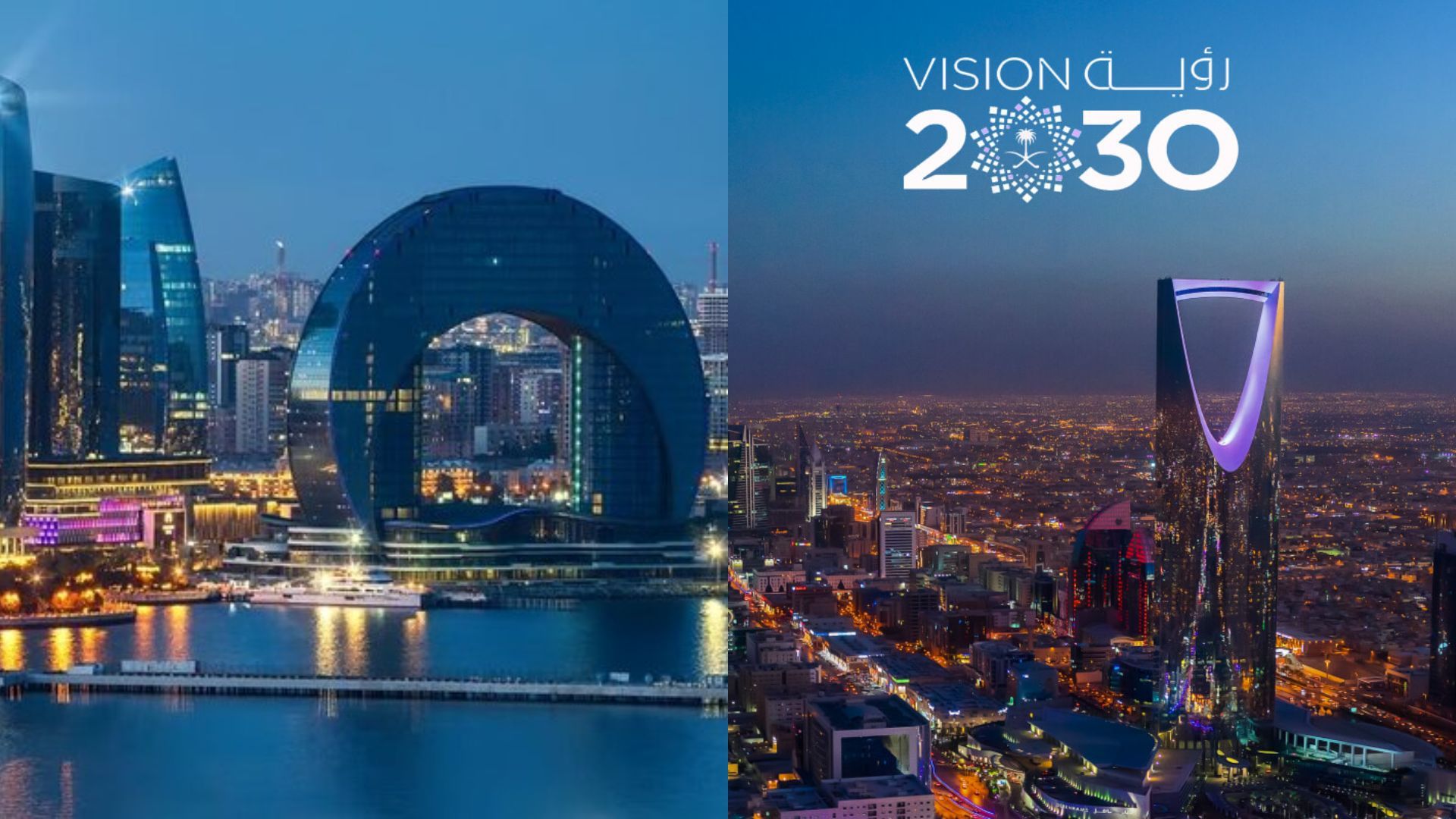

Saudi Arabia’s strategic rollout of its “Project HQ” policy, mandating foreign firms operating in the Middle East to relocate regional headquarters to Riyadh, represents a calculated sovereign attempt to centralize capital flows, foster local industrial ecosystems, and reduce dependency on transnational logistics networks dominated by the UAE. By tying access to lucrative government contracts to HQ relocation, the Kingdom is leveraging its status as the Gulf’s largest hydrocarbon producer—and largest utilities market—to compel international operations to embed within its territory. This move aims to accelerate job localization via the updated Nitaqat system, which penalizes firms with low Saudi hiring ratios, while offering tax breaks, expedited permit approvals, and lucrative procurement advantages. Though the immediate impact remains unclear, the policy signals a broader shift in regional power dynamics, positioning Saudi Arabia as a first-mover in redefining corporate interdependence within the GCC, potentially disrupting the UAE’s entrenched role as the logistical and financial hub of industrial innovation.
The sovereign-led industrialization drive under Vision 2030, backed by Public Investment Fund initiatives, hinges on channeling sovereign capital into mega-projects—ranging from NEOM’s $500+ billion smart city to renewable energy clusters—to create a self-sustaining value chain for global firms. With a target of $1.6 trillion in foreign direct investment by 2030, the Kingdom is betting on equity stakes in strategic sectors like hydrogen, minerals, and offshore wind, while using state-owned entities (e.g., STC, Aramco’s subsidiaries) to anchor supply chains. However, Sovereign capital alone cannot bridge infrastructural gaps; the National Center for Industrial Development highlights Saudi Arabia’s nascent manufacturing base, which still relies on UAE-based fabrication for oil & gas equipment and heavy machinery. This paradox underscores a critical bottleneck: regional infrastructure appears operationalized for extraction, not industrial production, necessitating unprecedented private-sector collaboration to scale.
Venture capital dynamics in the region are reflecting Saudi’s aggressive pivot toward ecological modernization. As the UAE and Qatar lag in renewable capacity expansion, Saudi’s $130 billion Green Minerals strategy—targeting 50% global share by 2030—resonates with ESG-driven funders. Concurrently, the logistics sector is witnessing a bifurcation: traditional asset-heavy NutCo operations (e.g., APM Terminals, Adam Logistics) are consolidating mega-hubs, while agile joint ventures like Al Khaldi-Bertling and Bollore-Bahri are exploiting Saudi’s proximity to African and Asian energy markets. These partnerships signal a hybrid model where foreign venture capital complements sovereign infrastructure subsidies, enabling localized production hubs that undercut Gulf rivals. Crucially, Saudi’s $33 billion Feadship Fund and PIF-backed fintech initiatives further integrate financial rails into logistics pillars, aligning with GCC cross-border payment digitization mandates.
Infrastructure investments are redefining regional trade calculus. NEOM’s Line—a 170km linear smart city—will integrate AI-driven transportation and vertical factories, while the Red Sea Global Industrial Zone (launched in 2021) targets 500,000 sqm of solar-panel factories. Such projects anchor Saudi’s shift from oil-centric logistics to clean energy corridors, reducing its reliance on Dubai’s Europort and Hamriya for transit. Conversely, the UAE’s recent focus on free-trade logistics economics—via Dubai Industrial City’s tax-free zones and Khalijat_EQUALERS_2.0—aims to retain project cargo dominance through price arbitrage. Yet Saudi’s control of the world’s second-largest crude reserves and its push for integrated transportation networks (e.g., Jeddah-Damascus railway, Riyadh Jeddah Line) could eventually nullify Dubai’s geographic advantage. As GAC’s Ganesan notes, the Kingdom’s growth rate—outpacing Dubai’s by 1% annually in freight—reflects a tipping point: by 2033, Saudi Arabia’s logistics sector, optimized for renewable supply chains, may eclipse its neighbor’s legacy infrastructure.