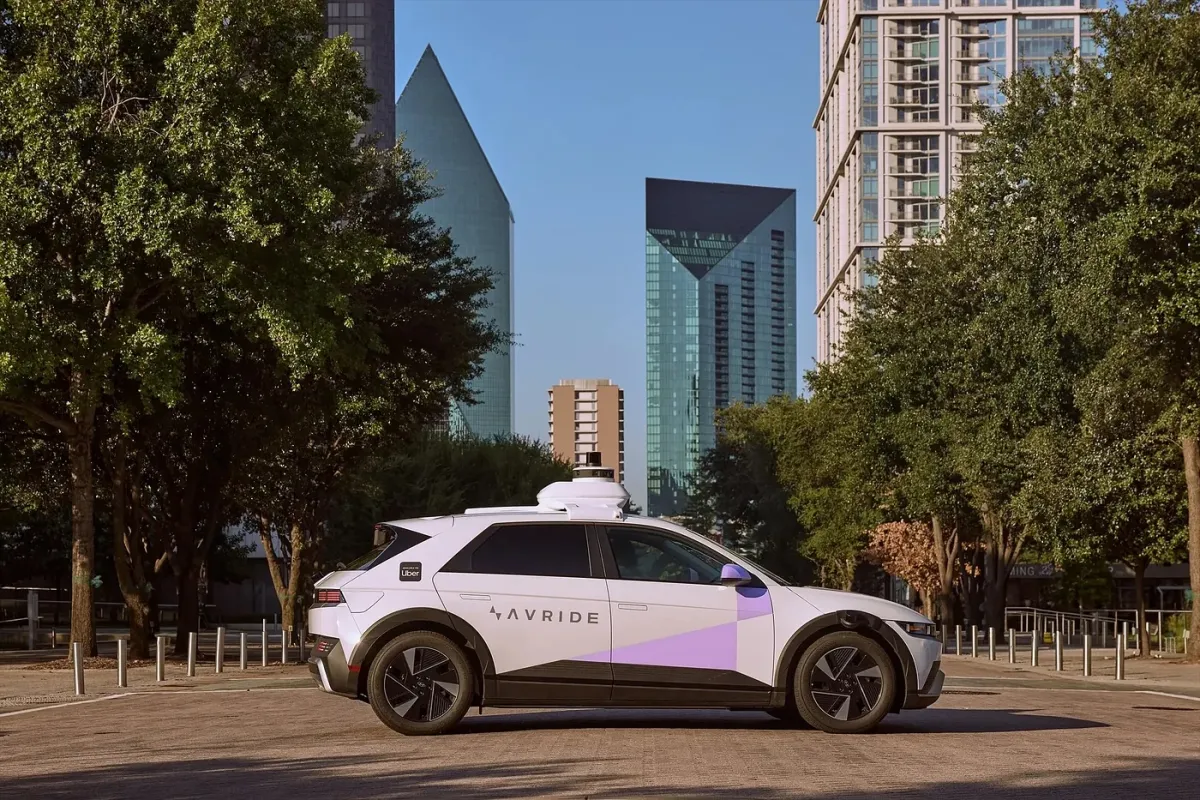

Autonomous vehicle incidents, while often framed as localized anomalies, carry strategic implications for regions prioritizing intelligent mobility as part of sovereign economic diversification. The Austin duck incident underscores a critical tension in autonomous mobility deployment: the interplay between algorithmic precision and public trust, a dynamic with profound relevance to Middle East and North Africa (MENA) jurisdictions advancing mobility modernization agendas. In regions where sovereign capital is increasingly directed toward smart city infrastructure and last-mile connectivity solutions, such events risks stalling public acceptance, a prerequisite for scaling deployments that depend on both technological readiness and societal adaptation. MENA’s venture capital ecosystem, already laser-focused on fintech and agritech, may face cross-sector hesitancy as investors reassess risk profiles for speculative autonomous vehicle (AV) startups amid high-profile safety controversies.
Businesses navigating MENA’s fragmented regulatory landscapes must weigh operational adjustments against the existential calculus of profitability. Austin’s case reveals how localized grievances can cascade into broader market concerns, particularly in jurisdictions where public sector endorsement often legitimizes emerging technologies. For sovereign entities investing in AV-enabled infrastructure—such as smart toll systems or platooning corridors—incidents like this amplify pressure to implement robust accountability frameworks. This could manifest in accelerated investments in simulation testing, as Avride’s internal pivots toward controlled environments suggest, or in the adoption of “trust by design” protocols to preempt regulatory blowback. The parallel with MENA’s nascent drone regulatory frameworks—whereemerging rules were shaped by early incidents—highlights the sector’s evolving risk management playbook.
Regional infrastructure planning faces an acute divide: countries with legacy road networks ill-suited for mixed human-machine traffic confront compounded challenges. Avride’s retreat from specific Austin corridors mirrors MENA urban planners’ struggles with retrofitting existing roadways for AV integration, a process estimated to require $80-120 billion in infrastructure upgrades across GCC smart city initiatives. Sovereign wealth funds channeling capital into autonomous mobility projects—such as Saudi Arabia’s Vision 2030-linked investments—must now factor in heightened operating costs for liability insurance and retraining logistics. Meanwhile, VC-backed AV ventures may face liquidity strains as insurers and city governments demand proof-of-concept rigor before committing to public-private partnerships, potentially sidelining smaller entrants.
The Austin episode also illuminates the global power struggle over mobility data governance, a battleground where MENA’s strategically positioned jurisdictions can leverage their geopolitical relevance. By positioning themselves as neutral data-sharing hubs for AV testing, countries like Bahrain or Morocco could negotiate favorable terms in international AI alliances, securing regulatory influence over technologies poised to reshape urban economies. Such maneuvers align with broader MENA imperatives to transform from fuel-dependent exporters to innovation hubs, where sovereign capital and venture risk are now inextricably linked to the success of ecosystem-wide reliability metrics.