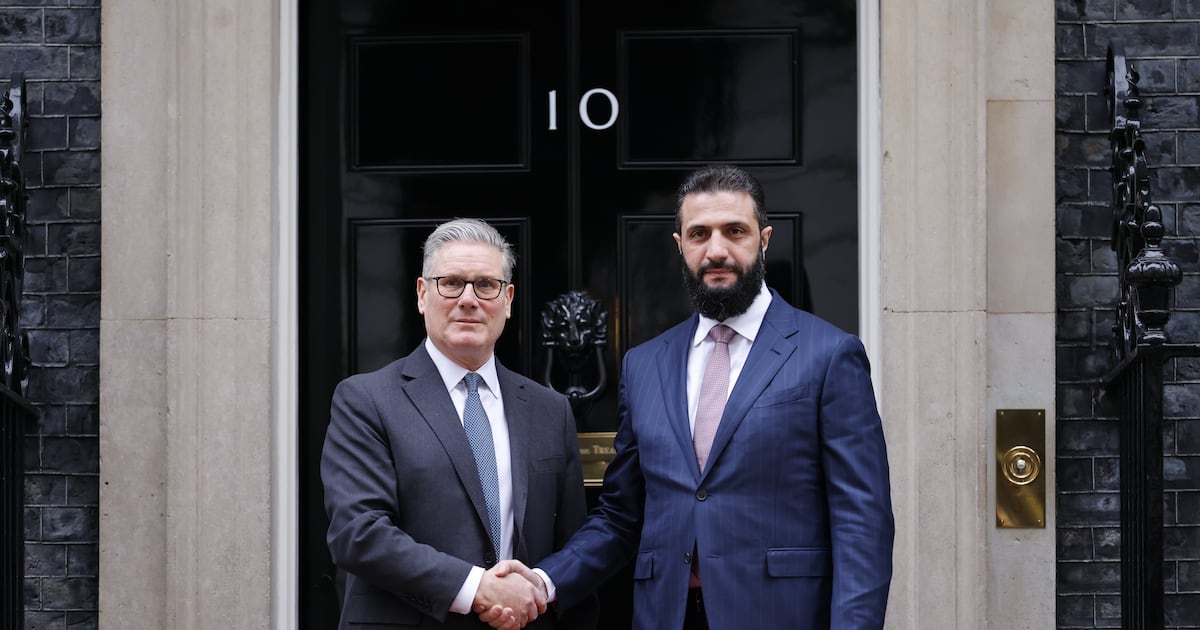

The diplomatic rehabilitation of Syria under President Ahmad Al Shara represents a calculated recalibration of regional economic geography, with immediate implications for sovereign wealth fund allocations and cross-border infrastructure investment corridors. The London and Berlin engagements signal a coordinated Western approach to stabilizing a critical node in Middle Eastern trade and energy logistics, particularly regarding the Strait of Hormuz—a chokepoint whose prolonged closure would trigger systemic risk across global supply chains and commodity pricing. For Gulf sovereign capital, notably from Abu Dhabi and Doha, this creates a conditional opportunity: reconstruction finance and energy transit concessions will be tethered to verifiable political normalization and security guarantees, potentially unlocking a new tier of public-private partnership vehicles that blend development finance with strategic resource control.
From a venture capital perspective, the discourse surrounding the Syrian diaspora—numbering over one million in Europe alone—frames a unique non-dilutive capital pool for the nascent MENA tech ecosystem. The deliberate emphasis on “structured engagement with the Syrian diaspora” by consortium leaders suggests an emerging model for pre-seed and Series A funding in sectors like agritech, healthtech, and fintech, which bypasses traditional fund structures. This diaspora capital, coupled with anticipated World Bank and European Investment Bank reconstruction lines, could establish Damascus as a secondary hub for early-stage tech scaling, particularly in Arabic-language SaaS and regional logistics optimization. The stated British interest in “regeneration of infrastructure” directly correlates to smart city and IoT deployment opportunities for firms with existing GCC portfolios.
The broader sovereign capital strategy is a multi-vector play to re-anchor the Levant within a Gulf-centric economic sphere. By securing agreements on migration returns and border security, European partners are effectively subsidizing the labor-cost side of Syria’s reconstruction equation, making projects more bankable for regional development banks and impact investors. The implicit understanding that Syria may serve as an energy “conduit to European markets” positions it as a complementary—rather than competitive—asset to existing GCC pipelines and LNG terminals. This could accelerate Abu Dhabi’s and Riyadh’s investments in regional grid interconnectors and desalination infrastructure, using Syrian stabilization as a geopolitical hedge against Iranian overreach in the northern Gulf.
Ultimately, this diplomatic tour is less about immediate trade deals and more about de-risking a fractured state for long-term capital allocation. The inclusion of British businesses in “several sectors” will likely be mediated through offshore entities and joint ventures with established UAE-based contractors, maintaining an arms-length compliance posture. The true test for MENA’s financial architecture will be the syndication of Syria’s sovereign debt and the securitization of future energy transit fees—instruments that will require pristine credit enhancement from Gulf sovereign wealth funds. The re-establishment of full consular services in London is a critical infrastructural step, facilitating the cross-border movement of talent and capital that underpins the entire venture reconstruction thesis.