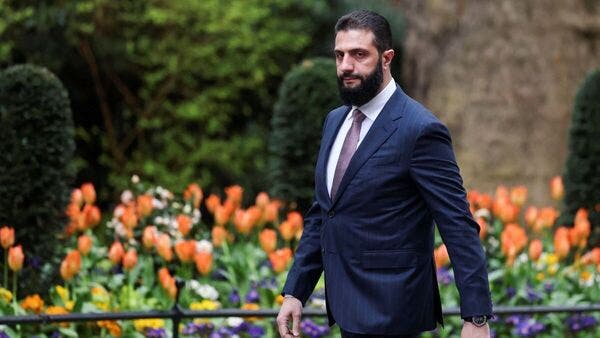

The leadership of Damascus has publicly reasserted its position of strategic neutrality regarding the intensifying US-Israeli confrontation with Tehran, signalling that Syria will not be drawn into regional military engagements unless targeted directly. This statement, delivered during a Chatham House address in London, reflects a recalibrated foreign policy aimed at avoiding further destabilization for a state still grappling with the aftershocks of a nearly decade-and-a-half internal conflict. By distancing itself from active involvement, Damascus appears to be prioritizing national consolidation over bloc alignment, a move that may appeal to Western partners seeking predictability in an already volatile Middle East security architecture.
Economically, Syria’s posture carries significant implications for regional integration and reconstruction financing. The government has explicitly expressed its intent to cultivate “ideal relationships” with regional neighbors—including Lebanon, Iraq, Turkey, and Saudi Arabia—and global powers such as the UK, France, Germany, and the US. These overtures align with a broader strategy to unlock much-needed sovereign capital flows and position Syria as a viable candidate for multilateral reconstruction initiatives. While immediate large-scale investment remains unlikely, the diplomatic reset could unlock private-sector interest and multilateral development bank engagement over the medium term, provided geopolitical stability holds and institutional reforms progress.
Infrastructure development and Gulf-backed ventures remain central to Syria’s economic revival plans. The country’s stated desire to build a “strategic relationship network” is a tacit acknowledgement that inclusive regional integration is foundational to long-term growth and stability. Gulf sovereign wealth vehicles and pan-Arab development funds have historically demonstrated appetite for post-conflict recovery projects, and Syria’s cautious approach may present an incremental pathway to such financing, contingent on gradual trust-building and risk mitigation. For technology and fintech sectors, the reestablishment of predictable state-to-state relations with tech-forward economies like Saudi Arabia and the UAE could facilitate cross-border venture capital flow and digital infrastructure projects, essential for jump-starting modern economic diversification.
The calculus for foreign investors and stakeholders remains nuanced. Syria’s balancing act between neutrality and diplomatic outreach underscores an effort to reposition itself as a prerequisite to unlocking comprehensive capital inflows. Nonetheless, persistent security concerns and the shadow of previous sanctions mean that meaningful engagement will likely be gradual. Ultimately, Damascus’ declared intent to avoid further military entanglement—paired with its pursuit of positive economic diplomacy—could form the foundation for a broader recalibration of relations with both regional and global financial centers, contingent upon durable political stability and nurturing market access safeguards.