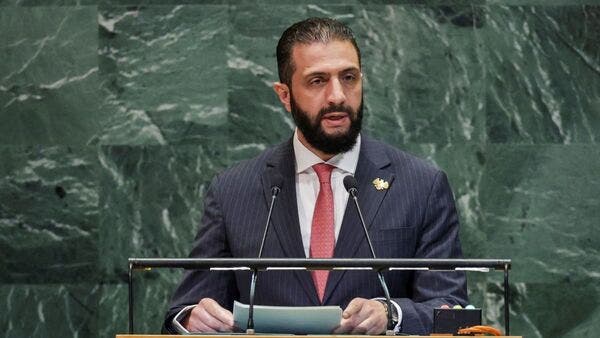

Syrian President Ahmed al-Sharaa’s inaugural visit to Berlin on March 30, 2026, marks a pivotal moment in the normalization of Syria’s post-conflict economic and diplomatic trajectory, underscoring its reintegration into global capital markets. The high-level talks with German Chancellor Friedrich Merz, a proponent of strategic Eurasian engagement, signal Berlin’s willingness to explore Syria’s reconstruction needs and investment opportunities amid shifting regional geopolitics. The economic forum co-hosted by Syrian and German officials—featuring “high-ranking business and government representatives”—will serve as a test case for Syria’s ability to attract sovereign and private capital, particularly in reconstruction-driven sectors such as infrastructure, energy, and manufacturing. This engagement occurs against a backdrop of Syria’s dire economic collapse, with its GDP per capita stagnating at 40% of pre-war levels and 85% of its population surviving on less than $2 per day, creating an urgent demand for foreign direct investment (FDI) and technical expertise.
From a sovereign capital perspective, the visit highlights Syria’s precarious position in accessing international funding. The lifting of EU, UN, and U.S. sanctions following the collapse of Bashar al-Assad’s regime has opened a narrow aperture for Syrian authorities to negotiate debt restructuring, bond issuance, and IMF-style stabilization programs. However, Germany’s cautious approach—coupled with contingent conditions tied to governance reforms and anti-corruption measures—reflects broader European hesitancy to jeopardize leverage over actors like Russia or Iran, which retain indirect influence over Syrian governance. The forum’s focus on “economic recovery” will likely prioritize debt-for-development swaps or sovereign-backed green bonds, instruments tailored to post-conflict economies. Germany, as the EU’s largest economy, may also advocate for multilateral arbitration mechanisms to resolve border disputes with Turkey and govern cross-border energy infrastructure projects, critical for stabilizing Syria’s fragile grid and attracting energy-intensive industries.
For venture capital ecosystems, the trip underscores Abu Dhabi and Dubai’s dominance in regional startup incubation, but Syria’s Ministry of Trade and Industry has quietly positioned itself as a frontier opportunity for digital transformation and agri-tech ventures. Discussions with Merz’s industrial council, led by CEOs from Siemens and BASF, signal interest in Syria’s untapped labor market—a pool of 15 million unemployed workers—and its strategic location as a logistics node between the Mediterranean and Caspian corridors. However, venture capitalists caution against premature exposure, citing risk premiums exceeding 18% annually and a lack of enforceable intellectual property frameworks. Germany’s participation in the forum could catalyze technical partnerships with Syrian universities and Dutch strategic firms like Royal DSM, though this hinges on assurances of stability from Damascus’ security apparatus, still aligned with Russia’s defense ties.
The broader regional infrastructure implications are profound. Syria’s reconstruction plan, estimated at $250 billion over a decade, will strain Western and Gulf balance sheets, particularly as Gulf states prioritize Yemen’s port modernizations. German engineering firms and ECB-backed infrastructure funds may emerge as primary creditors for rebuilding Aleppo’s industrial zones and rehabilitating Damascus-Beirut highway corridors, ties that could enhance Syria’s connectivity to Turkey’s Mersin port—a critical node in the Baku-Ceyhan-Türk Şeyhpaşa gas pipeline network. This convergence of sovereign capital needs and regional infrastructure bottlenecks positions Syria as a potential, if risky, beneficiary of cross-MENA economic diversification efforts, contingent on Germany’s ability to reconcile its energy diplomacy with Eurasian competition. The stakes extend beyond Syria: a sustainable Syria could stabilize Lebanon’s reconstruction and counter Iranian influence in competition for Syrian supply chains, reshaping the MENA’s sovereign credit profiles overnight.