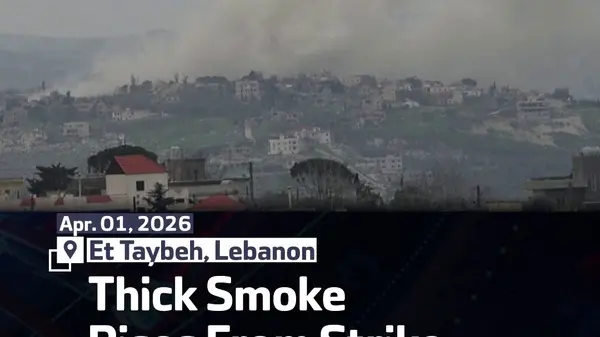

An escalation in hostilities along Lebanon’s southern border, evidenced by significant plumes of smoke observed at strike sites, introduces a acute bout of geopolitical risk aversion into MENA markets. This event directly challenges the region’s recent narrative of stabilisation and growth, triggering an immediate flight-to-safety dynamic among institutional investors. Sovereign wealth funds and large asset managers in the Gulf are likely to enact tactical portfolio rebalancing, diverting capital from higher-risk equities in Levant markets toward perceived safe havens such as UAE sovereign bonds and gold. The spike in risk premia will pressure regional bourses, particularly in markets with leveraged exposure to Lebanon’s economy, and could stall the nascent momentum in cross-border capital flows within the region.
The incident serves as a stark reminder of the persistent non-economic risks that shadow sovereign capital deployment strategies across the MENA region. For entities like Saudi Arabia’s Public Investment Fund (PIF) and Abu Dhabi’s Mubadala, which are executing complex, long-term diversification mandates, such instability reinforces the strategic logic of concentrating new ventures within the Gulf’s more secure institutional ecosystems. We anticipate a visible contraction in direct investment commitments to projects or economies perceived to be within the conflict spillover zone, with due diligence cycles lengthening for any Lebanese or Jordanian-facing ventures. This recalibration will see a higher proportion of the region’s vast sovereign capital channelled into domestic mega-projects like NEOM and domestic technology scale-ups, at least in the short to medium term.
Venture capital and private equity activity, particularly in early-stage tech, will experience a pronounced chill. The regional VC ecosystem, which has relied on a narrative of boundless opportunity spanning from Morocco to the UAE, now faces a new calculus regarding tail-end geopolitical risk. Limited partners, including many family offices and sovereign-adjacent funds, will demand steeper discounts for any investment thesis with tangential exposure to Levantine instability. This will disproportionately affect Beirut’s already diminished startup scene and slow the cross-pollination of talent and capital between Dubai, Cairo, and Beirut. Consequently, the deal pipeline for the region’s VC hubs may narrow, with a greater focus on domestic markets and sectors deemed geopolitically insulated, such as fintech and enterprise SaaS serving Gulf corporations.
On the infrastructure front, the event injects uncertainty into multinational and consortium-led projects that depend on regional connectivity and stability. Broad strategic initiatives, from GCC railway integration to trans-Maghreb fibre optic corridors, are predicated on a low-conflict environment. Perceived degradation of the security perimeter raises insurance premiums and project finance costs, potentially delaying final investment decisions. The business case for hub-and-spoke models centred on Beirut or even Amman is weakened, accelerating the consolidation of logistics and digital infrastructure around the more stable Gulf ports and smart cities. This may, perversely, intensify the bifurcation of the region, with capital accelerating towards the “ islands of stability” while peripheral markets face a deficit of both project finance and entrepreneurial risk capital.