
Halter: A Paradigm Shift in Global Livestock Management and its Implications for MENA Sovereign Investment and VC Strategy
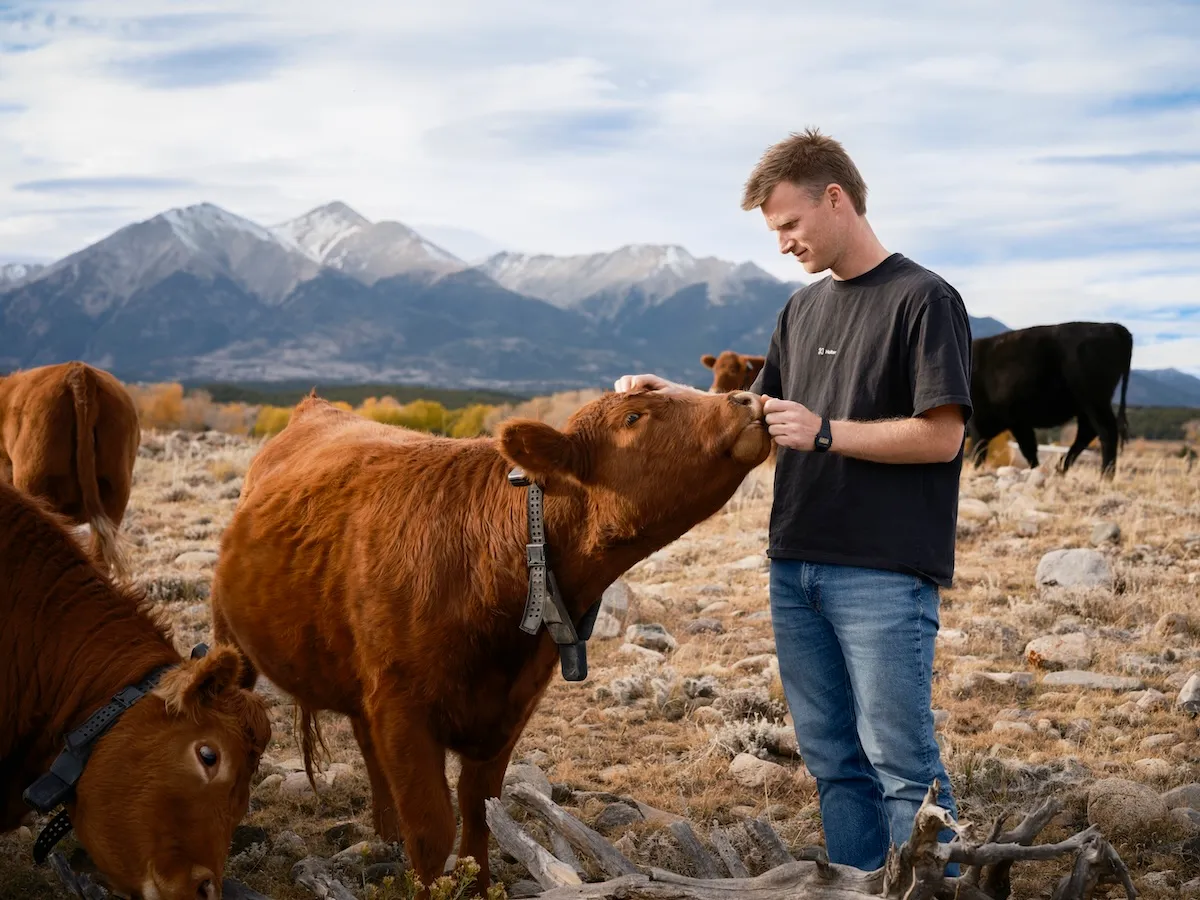
Halter’s Series E funding round, spearheaded by Founders Fund and elevating its valuation to $2 billion, represents far more than a capital injection for a smart cattle collar maker. It signifies the validation of a technology addressing an immense, globally distributed problem with profound implications for agricultural productivity, operational efficiency, and supply chain resilience. By enabling virtual fencing and real-time animal monitoring, Halter directly enhances land productivity, a critical economic driver. The potential uplift of 20% in land output underscores the system’s capacity to deliver substantial, risk-adjusted returns, a metric that resonates strongly with sovereign wealth funds and institutional VC looking for scalable infrastructure plays. This investment model, combining deep technical engineering (proven through nine years of relentless refinement) with demonstrable financial ROI, offers a blueprint for MENA sovereign funds exploring strategic bets in critical infrastructure sectors where technology can overcome inherent regional challenges like labor scarcity and resource optimization.
Venture Capital’s Strategic Alignment and Infrastructure Opportunity
Halter’s trajectory highlights a pivotal evolution in agtech VC strategy: the shift towards ventures solving fundamental, hardware-intensive problems rather than purely software or AI-focused solutions. The capital required for rigorous reliability testing (the “nine nines” uptime benchmark achieved in New Zealand) and global infrastructure deployment (network towers and smartphone integration) demands significant, patient capital, aligning with the risk appetite of deep-pocketed VCs and sovereign investors. This model underscores the necessity for VC ecosystems to support hardware-intensive startups through prolonged, capital-intensive phases before achieving scalable software margins. For MENA, this presents a unique opportunity. Sovereign funds could strategically partner with or co-invest alongside leading global VCs in regional agtech startups, leveraging their own capital deployment mandates and deep local market understanding to de-risk early-stage hardware development. This approach could accelerate the adoption of technologies like Halter’s collar, directly enhancing regional food security and agricultural competitiveness against a backdrop of climate vulnerability.
Infrastructure Imperatives and Regional Scalability Challenges
The success of Halter’s low-frequency network infrastructure, crucial for reliable cattle monitoring in vast, remote areas, illuminates significant infrastructure dependencies that will shape future agtech deployment across the MENA region. Scalability here necessitates robust, low-latency connectivity – both terrestrial and potentially satellite – and substantial power infrastructure (solar integration being key). MENA governments are already prioritizing digital connectivity and renewable energy as core infrastructure components. Strategic alignment between sovereign funds, telecom operators, and agtech startups could optimize network rollouts and power solutions tailored to arid, sparsely populated regions, reducing the cost and complexity of deployment. Furthermore, the collar’s proven reliability in harsh environments offers a template for deploying similar monitoring solutions for other critical assets – water infrastructure, livestock for export, or even renewable energy assets – amplifying the value proposition for sovereign investors seeking multi-purpose infrastructure resilience.
Conclusion: Sovereign Capital, VC Strategy, and the MENA Horizon
Halter’s narrative, from niche problem-solving to multi-billion dollar valuation, provides a compelling case study in unlocking value through deep technical expertise and relentless focus on operational economics. For MENA sovereigns, the lessons are clear: significant, patient capital directed at infrastructure-enabling agtech can yield substantial dividends in food security and economic diversification. For VC, it signals the critical need for dedicated funds and strategic partnerships capable of navigating the lengthy, capital-intensive hardware development cycle essential for tackling real-world, regional-scale challenges. The potential for Halter’s model, or similar innovations, to transform livestock management across arid landscapes like MENA’s – improving productivity, reducing waste, and enhancing animal welfare – represents a vast, untapped opportunity. The convergence of sovereign capital deployment, specialized VC, and robust infrastructure development holds the key to unlocking this potential, positioning the region not just as a consumer of agtech, but as a strategic innovator in the global agricultural technology frontier.