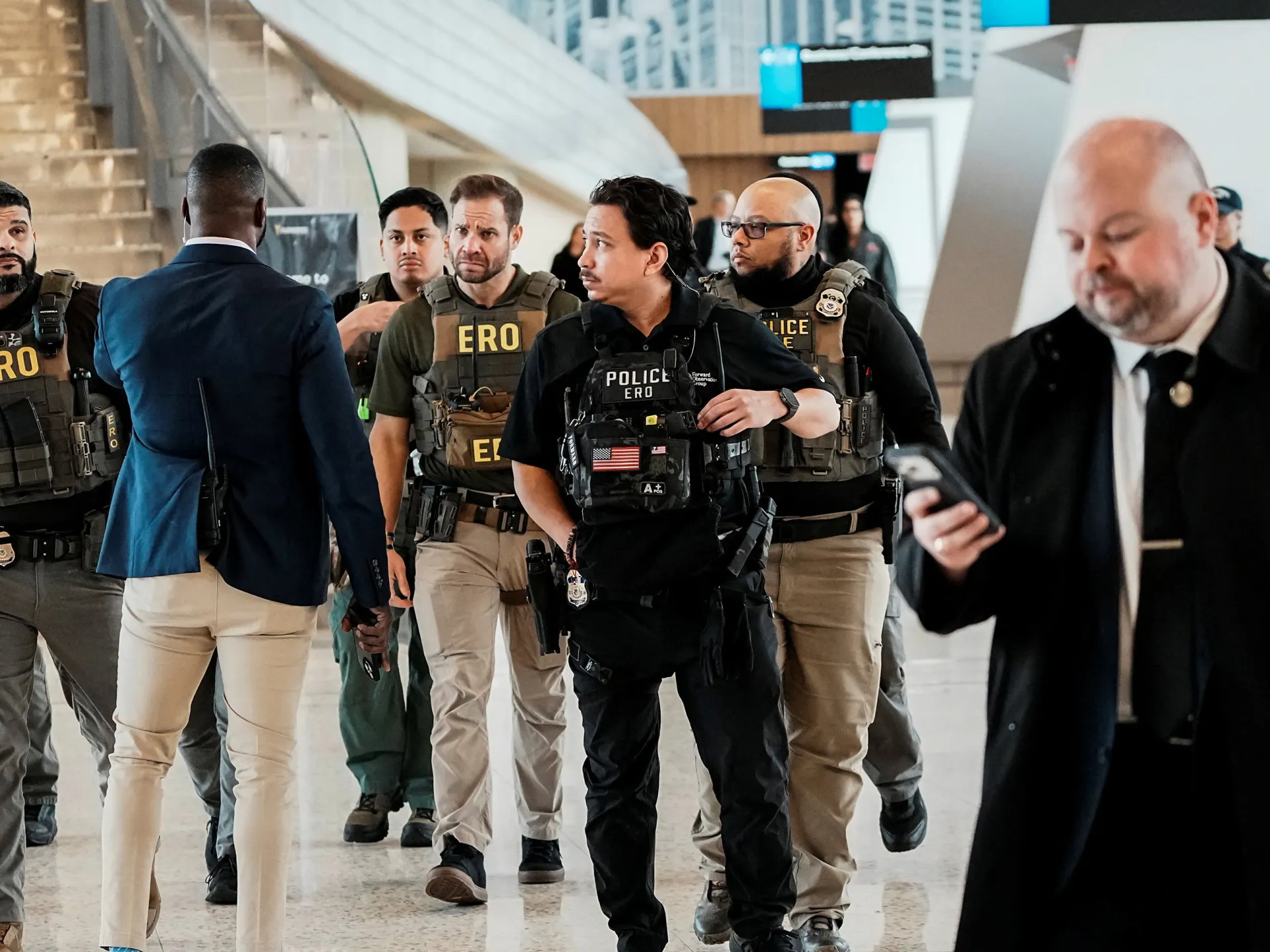

The recent deployment of ICE personnel atU.S. airports underscores a broader tightening of immigration enforcement that reverberates far beyond domestic labor markets. For the Gulf Cooperation Council states and North Africa, the move serves as a barometer of heightened geopolitical risk, prompting sovereign wealth entities to recalibrate exposure to U.S.-linked assets and re‑evaluate the cost of capital in transatlantic financing channels.
Concurrently, venture‑capital ecosystems centered on Dubai International Financial Centre, Abu Dhabi’s ADGM and Morocco’s Techno Park are experiencing a subtle but measurable contraction in deal flow. The perceived escalation of regulatory friction in the United States has amplified risk premiums for Middle Eastern and North African (MENA) founders seeking U.S. market entry, while regional funds increasingly prioritize capital preservation over aggressive expansion into North American ecosystems.
Infrastructure mega‑projects—ranging from Saudi Arabia’s NEOM and Morocco’s Atlantic coastal railway to Egypt’s Suez Canal expansion—remain anchored in sovereign capital, yet they are now being framed within a more resilient, inward‑oriented financing architecture. Sovereign investors are diversifying funding sources toward regional bond markets and public‑private partnerships that mitigate exposure to external policy shocks, reinforcing domestic capital markets as strategic pillars of economic sovereignty.
Overall, the confluence of stricter U.S. immigration enforcement and shifting sovereign capital strategies is reshaping the MENA investment landscape, accelerating the transition from reliance on global talent pipelines to home‑grown innovation clusters and reinforcing infrastructure projects as a cornerstone of regional economic stability.