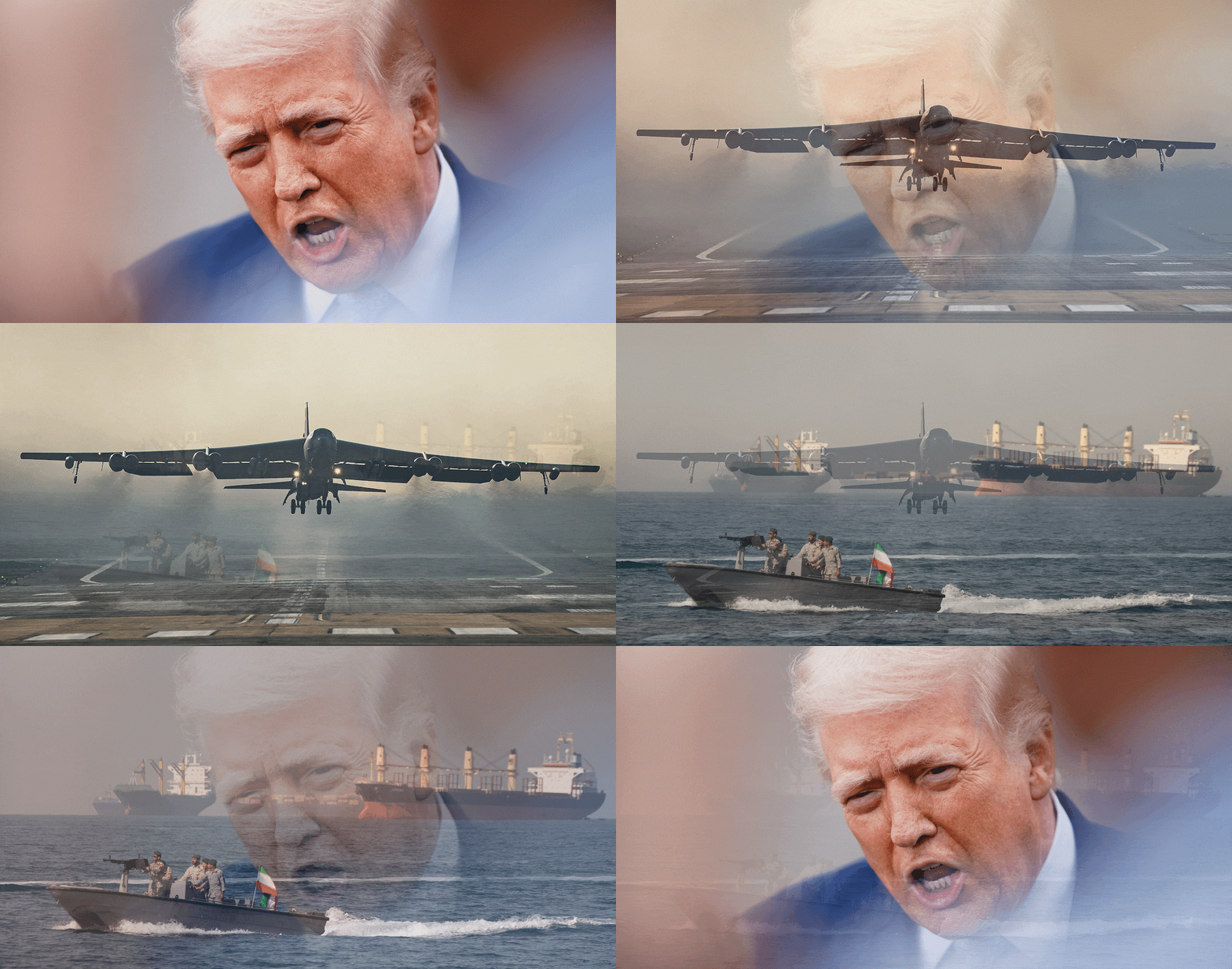

The recent announcementby President Donald Trump that productive talks with Tehran have led to a five‑day postponement of strikes on Iranian power plants and energy infrastructure has immediately steadied volatile oil markets, which had reacted sharply to his earlier 48‑hour ultimatum to reopen the Strait of Hormuz. With roughly a fifth of global oil and liquefied natural gas transiting the waterway, any sustained closure threatens to disrupt supply chains for GCC importers and exacerbate fiscal pressures on sovereign wealth funds that rely on hydrocarbon revenues. The indication of “major points of agreement” and the prospect of joint US‑Iran control of the strait suggest a possible de‑escalation that could restore pre‑conflict shipping lanes, thereby reducing the risk premium embedded in regional energy contracts and stabilizing cash‑flow forecasts for state‑owned oil companies.
From a business‑perspective standpoint, the de‑escalation scenario carries significant implications for sovereign capital allocation and venture‑crisk appetite across the MENA region. Gulf sovereign investors, already re‑balancing portfolios amid energy transition pressures, may accelerate diversification into non‑oil infrastructure—particularly port logistics, renewable energy grids, and digital connectivity projects that enhance Hormuz resilience. Simultaneously, venture‑capital firms operating in Saudi Arabia, the UAE, and Qatar are likely to reassess the risk‑adjusted returns of fintech, logistics tech, and energy‑efficiency startups; a stabilized maritime corridor would lower operational risk for supply‑chain innovations and encourage cross‑border investment flows that have been muted by heightened geopolitical uncertainty.
Looking ahead, the success of any negotiated framework will hinge on the credibility of the proposed joint‑control mechanism and the ability of regional mediators—principally Oman—to enforce safe‑passage assurances. Should the strait remain open, MENA economies can expect a gradual rebound in freight volumes, improved liquidity for trade‑finance facilities, and a revival of investor confidence that could unlock delayed sovereign‑wealth‑fund earmarked for mega‑infrastructure projects such as the Neom logistics hub and the UAE’s Abu Dhabi Ports expansion. Conversely, a breakdown in talks would prolong elevated insurance premiums, constrain credit lines for energy‑intensive industries, and compel VC funds to adopt a more defensive stance, redirecting capital toward domestically focused, low‑exposure sectors until macro‑risk subsides.