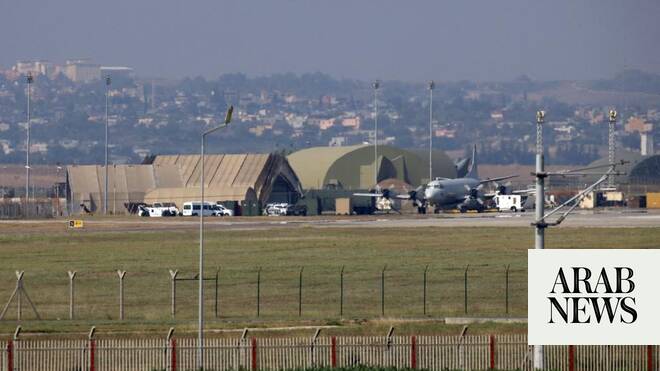

The recent interception of a third Iranian ballistic missile near Turkiye’s Incirlik air base underscores a rapidly escalating geopolitical risk within the broader Middle East conflict, presenting significant operational and strategic challenges for the region’s financial and technological landscape. Ankara’s stated priority of avoiding entanglement in the war – coupled with the deployment of Patriot missile defense systems – signals a calculated, albeit defensive, posture aimed at mitigating direct exposure. However, this response has immediate and far-reaching implications for sovereign capital flows and regional investment strategies. Increased volatility in the geopolitical environment is already prompting a reassessment of risk profiles across the MENA region, with investors likely to prioritize capital preservation over speculative growth, particularly in sectors reliant on stable political conditions.
The incident highlights the critical role of Incirlik as a NATO asset and the associated vulnerabilities. The US troop presence, including the reported storage of tactical nuclear weapons, elevates the base’s strategic importance and consequently, its potential for escalation. Furthermore, the deployment of enhanced missile defense capabilities, coupled with the US consulate closure in Adana, reflects a hardening of security protocols and a potential disruption to existing logistical networks. This necessitates a re-evaluation of supply chains and operational resilience for businesses operating within the southeastern Turkish corridor, impacting sectors like defense technology, logistics, and potentially even energy, where infrastructure security is paramount. Sovereign wealth funds and institutional investors are likely to scrutinize investments in Turkiye’s defense industry and related technologies with heightened caution.
Venture capital activity within the MENA region is also poised for a period of recalibration. While the overall investment climate remains attractive, the heightened geopolitical risk is likely to dampen enthusiasm for high-growth, long-term investments. Focus will shift towards sectors demonstrating immediate strategic value – cybersecurity, critical infrastructure resilience, and advanced materials – mirroring Turkiye’s defensive posture. Regional infrastructure projects, particularly those involving cross-border connectivity and defense-related logistics, will face increased scrutiny and potentially require significant upgrades to meet heightened security standards. The potential for further escalation necessitates a more conservative approach to capital allocation, favoring projects with demonstrable geopolitical stability and robust risk mitigation strategies.
Finally, the situation underscores the interconnectedness of regional security dynamics and the broader technological landscape. The utilization of advanced radar systems, such as those operating near Kurecik, and the deployment of missile defense assets represent a significant investment in technological capabilities. However, as demonstrated by the incident, these systems are not impervious to escalation and require constant vigilance. The potential for miscalculation or unintended consequences necessitates a coordinated regional approach to security, emphasizing de-escalation and diplomatic engagement. Turkiye’s actions, while prioritizing its own security, will undoubtedly shape the strategic calculus of other regional actors, impacting investment decisions and potentially accelerating the development of alternative security architectures within the Middle East.