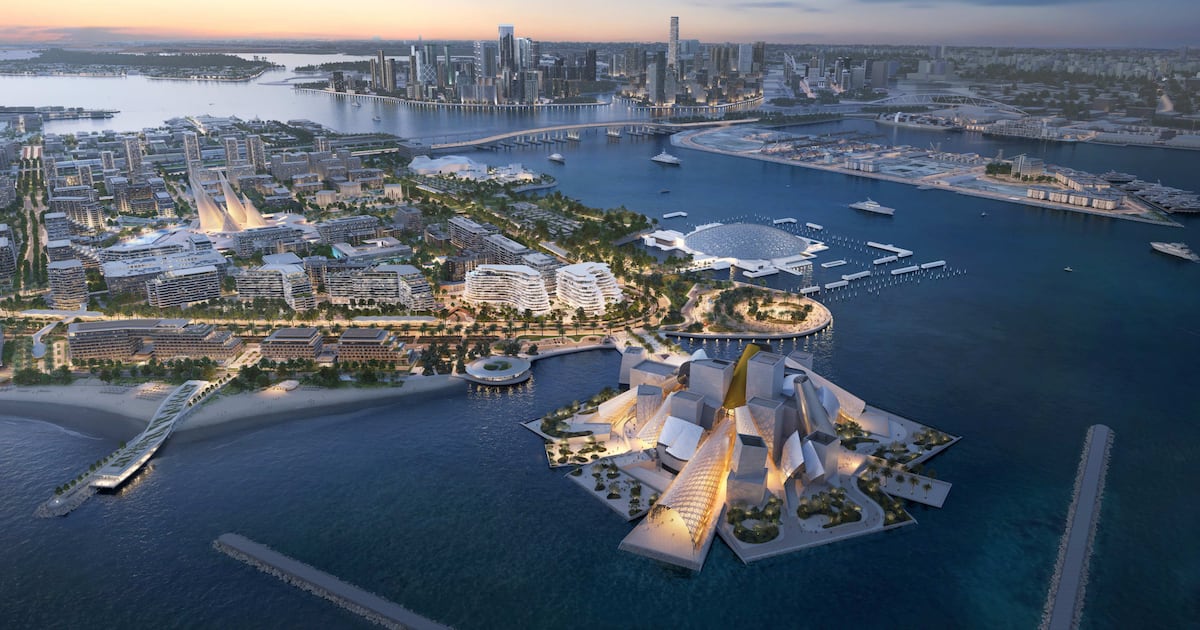

The emergence of cultural districts in the UAE represents a pivotal economic and geopolitical strategy, redefining how sovereign wealth and soft power are deployed across the Middle East. Whereas Western counterparts increasingly face retrenchment in public funding, Emirati cultural infrastructure benefits from substantial state-backed capital—Saadiyat Island’s master-planned development exemplifies a coordinated investment model where institutions like the Guggenheim Abu Dhabi, Louvre Abu Dhabi, and Zayed National Museum function as interdependent anchors within a singular ecosystem. This aggregation model, supported by long-term sovereign capital, creates economies of scale that individual institutions in Europe and North America can no longer replicate.
The UAE’s cultural expansion carries tangible implications for regional venture capital flows. By clustering institutions within Saadiyat’s integrated framework, the Emirates foster adjacent creative industries, tech-enabled art platforms, and tourism-linked services—sectors historically underserved in MENA but now positioned for acceleration. Similarly, Alserkal Avenue in Dubai demonstrates an alternative path, where organic growth among galleries and creative enterprises attracts international curators and collectors, spurring demand for high-end real estate and support services. These models provide templates for other Gulf states seeking to diversify away from hydrocarbons into knowledge-based and cultural economies, with Saudi Arabia’s Royal Arts Complex already mirroring this dual-investment approach.
Yet institutional success now hinges on audience development as much as investment capital. Emirates’ leaders recognize that global prestige must be matched by local engagement, investing in programming, festivals, and educational outreach to build cultural fluency among residents. This recalibration—from imported spectacle to co-created experience—deepens community buy-in and stabilizes long-term viability. For MENA’s sovereign funds, cultural infrastructure increasingly serves as both diplomatic leverage and a platform for nurturing indigenous creative industries, positioning the region not simply as cultural importers but as co-producers within a reimagined global cultural economy.