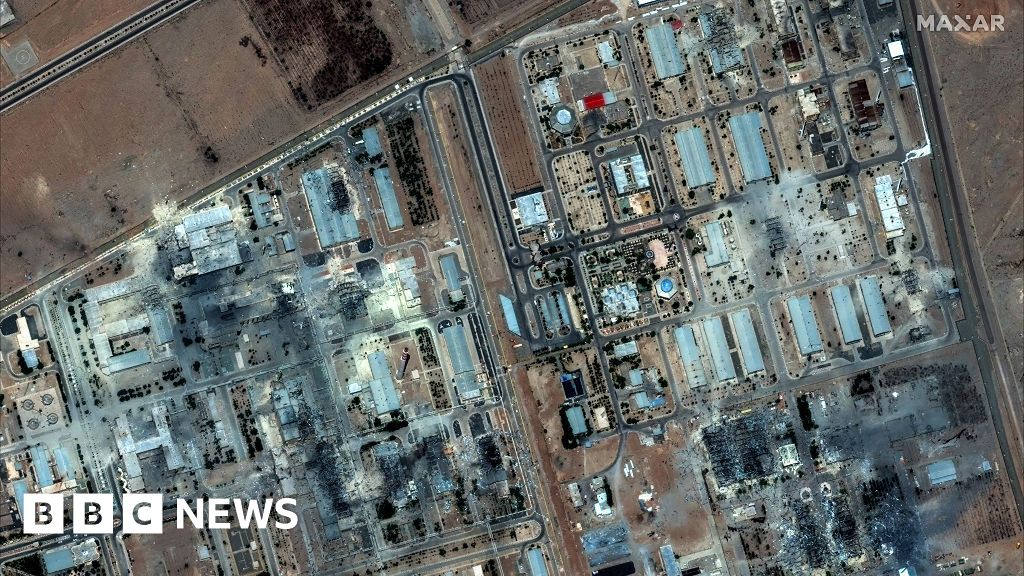

The landscape of the Middle East and North Africa remains profoundly shaped by the evolving financial and technological ecosystems that underpin sovereign capital flows and investment strategies. As geopolitical tensions intensify, the region faces a pivotal juncture where policy decisions reverberate beyond immediate security mandates into the core operations of global markets. Jonathan Ruhe’s insights from his analyses underscore a stark reality: any deviation from Iran’s nuclear status—particularly the on-site modification of highly enriched uranium—marks a watershed moment in both regional diplomacy and the broader financial architecture. This scenario demands a recalibration of risk assessments for sovereign investors, who must now weigh not only the political calculus but also the cascading economic repercussions for capital structures across the Gulf and broader Persian Gulf economies.
The implications of such developments extend far beyond theoretical discussions, directly impacting the trajectory of sovereign wealth funds and state-backed capital initiatives. The region’s sovereign capital, long reliant on stable investment environments, now confronts an environment where uncertainty is compounded by the specter of strategic interventions. For instance, potential modifications to Iran’s nuclear infrastructure necessitate rapid reassessment of long-term financial commitments from global investors, who must factor in both mitigation strategies and exposure limitations. Venture capital ecosystems in this context are similarly challenged, as access to high-growth markets becomes contingent on navigating a volatile political terrain. The interplay between public sentiment, policy action, and private sector confidence will decisively determine the resilience of investment pipelines across the MENA framework.
Regional infrastructure development stands at a crossroads, with the United States and allied actors reevaluating the contours of engagement in light of shifting U.S. priorities. The prospect of on-site uranium dilution—or any equivalent strategic maneuver—underscores a broader imperative for the Middle East to leverage regional infrastructure investments as long-term stabilizers. Infrastructure projects, from energy efficiency to digital connectivity, are no longer purely economic endeavors; they are strategic tools that signal governance stability and project capacity. By aligning economic development initiatives with enhanced security assurances, governments and private stakeholders can attract renewed sovereign and venture capital flows. However, the window for such investments is narrowing, requiring a decisive approach that integrates fiscal prudence with forward-looking vision to sustain momentum in an increasingly bifurcated global landscape.