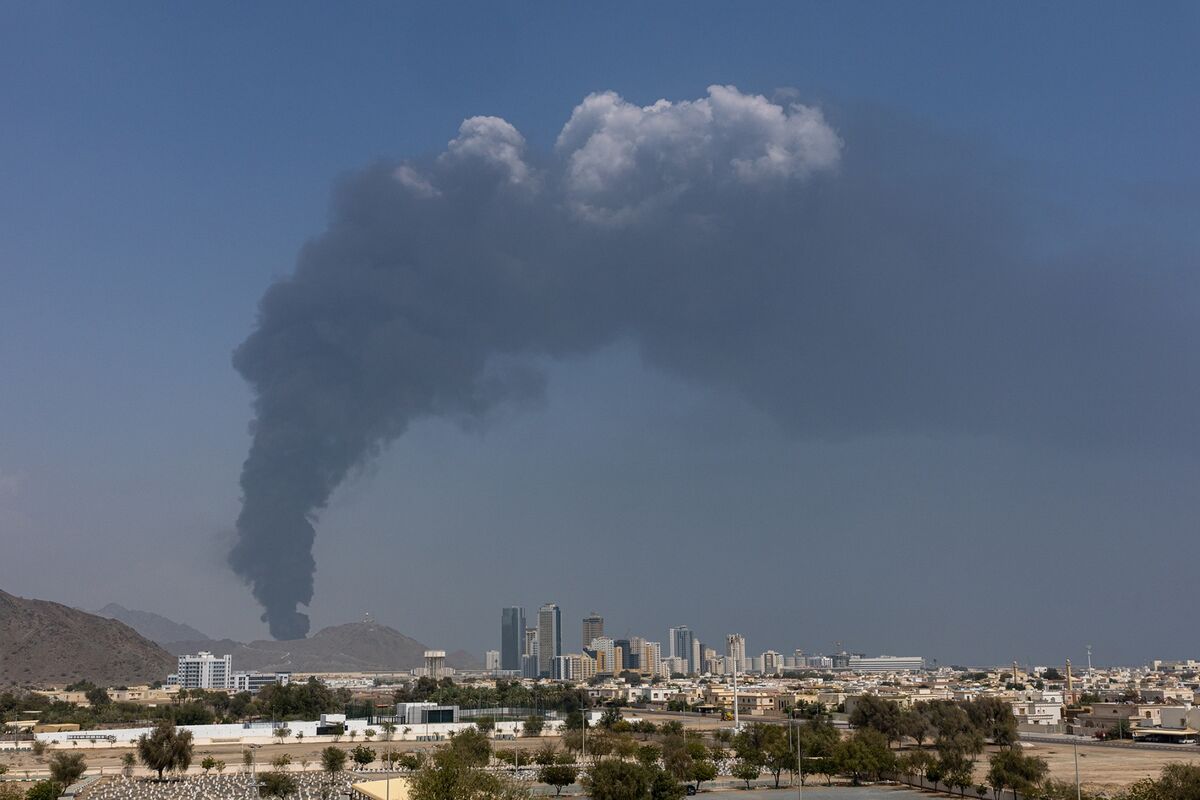

The ongoing conflict between Iran and the United States-Israeli coalition has evolved from a regional security crisis into a direct assault on the economic infrastructure pillars of the Gulf Cooperation Council (GCC), with immediate and severe implications for sovereign wealth fund portfolios, regional energy security, and the broader investment climate. The explicit threat by Iran to show “zero restraint” against energy facilities, following the verified strike on Qatar’s Ras Laffan LNG terminal—a facility responsible for approximately 17% of global supply—transforms geopolitical tension into quantifiable asset impairment. This is not merely a supply disruption; it is a calibrated attack on the revenue base of Gulf monarchies, where hydrocarbons fund over 60% of government budgets and underwrite massive sovereign wealth funds such as Qatar Investment Authority (QIA) and Abu Dhabi’s Mubadala. The estimated $20 billion annual revenue loss from Ras Laffan and a projected 9% GDP hit for Qatar underscore a direct materialization of political risk that will recalibrate regional growth forecasts and capital allocation strategies for years to come.
For venture capital and private equity investors, the conflict introduces an unprecedented layer of systemic risk across the MENA innovation ecosystem. The reported infiltration attempts by Iran-linked networks into the UAE’s economic landscape, using business fronts, signal a new front in hybrid warfare targeting the region’s diversification capital. This undermines the foundational premise of Gulf economic transformation plans like Saudi Vision 2030 and the UAE’s Operation 300bn, which rely on secure channels for foreign direct investment and the free movement of entrepreneurial talent and capital. Sovereign investors, now facing direct threats to their primary asset class—energy—will likely divert planned VC commitments toward domestic military and cyber-security infrastructure, starving nascent technology sectors of risk capital. The spillover effect will be a sharp contraction in early-stage funding rounds across the region, as limited partners globally reassess mandates for MENA-focused funds amid unhedgeable geopolitical volatility.
The strategic chokepoint of the Strait of Hormuz, through which 20% of global oil transits, remains the central fulcrum of economic vulnerability. French President Macron’s urgent consultations on a post-conflict navigation framework highlight the recognition among European powers that their energy security is hostage to this instability. The immediate market response—sharp increases in UK and European gas prices and the first $2-per-litre fuel in Zimbabwe—demonstrates the conflict’s capacity to transmit inflationary shocks to global supply chains. The U.S. Treasury’s consideration to “unsanction” Iranian crude and tap strategic reserves is a temporary price-suppressing measure, not a solution. It acknowledges that sustained disruption to GCC exports would trigger a recessionary spiral in energy-dependent European and Asian economies, thereby constraining the coalition’s operational freedom and creating a fundamental tension between military objectives and global macroeconomic stability.
Long-term, this escalation mandates a profound reassessment of regional infrastructure as both a strategic asset and a target. The integration of energy, water, and port facilities—exemplified by the European Council’s moratorium call—will now be framed through a defense-in-depth lens, dramatically increasing the capital cost of all future projects. For GCC sovereigns, the imperative is a dual-track strategy: accelerating domestic defense-industrial partnerships (a bonanza for U.S. and European defense contractors) while strategically hedging by fast-tracking renewable energy and hydrogen projects less vulnerable to kinetic attack. The Netanyahu administration’s signaling of a potential “ground component” extends the conflict’s timeline, ensuring a prolonged period of elevated risk premiums on MENA sovereign debt and a sustained outflow of portfolio investment. The era of treating Gulf stability as a given for global energy investments is over; institutional capital will now price in a permanent conflict risk overlay, fundamentally reshaping the region’s cost of capital and its attractiveness for non-strategic foreign investment.