
The rapid scaling of generative AI and autonomous agent workflows across the MENA region is exposing a critical divergence between technological ambition and capital discipline. As Gulf sovereign wealth funds and state-backed investment vehicles allocate tens of billions toward localized compute infrastructure and public-sector digitalization, the strategic mandate must pivot from capability acquisition to rigorously gated deployment. Regional enterprises and sovereign-backed transformation offices are increasingly deploying multi-vendor, token-intensive automation pipelines that resolve marginal friction points while inflating systemic failure rates and operational overhead. For institutional allocators, funding thresholds must be recalibrated toward strict unit economics and demonstrable productivity uplift, ensuring sovereign and family office capital targets vertical-specific, high-ROI applications rather than subsidizing novelty-driven workflows with negative marginal returns.
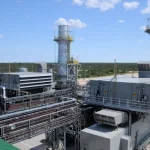
This automation overhang directly threatens the commercial viability of the MENA venture ecosystem and the physical scalability of its critical infrastructure. AI startups embedding continuous inference and agentic orchestration into core platforms routinely obscure the compounding cost structure of compute consumption, API licensing, and middleware dependencies, structurally compressing future gross margins before commercial scale. Simultaneously, the region’s $30 billion-plus data center expansion—concentrated across Saudi Arabia, the UAE, and Egypt—faces binding constraints on grid capacity, cooling water allocation, and national decarbonization pathways. Scaling low-value, inefficient AI workloads across this footprint elevates megaton-level CO₂ intensities and strains sovereign energy transition roadmaps, forcing regulators and project financiers to demand explicit workload-tiering frameworks that reserve hyperscale capacity for economically justified, high-throughput demand.