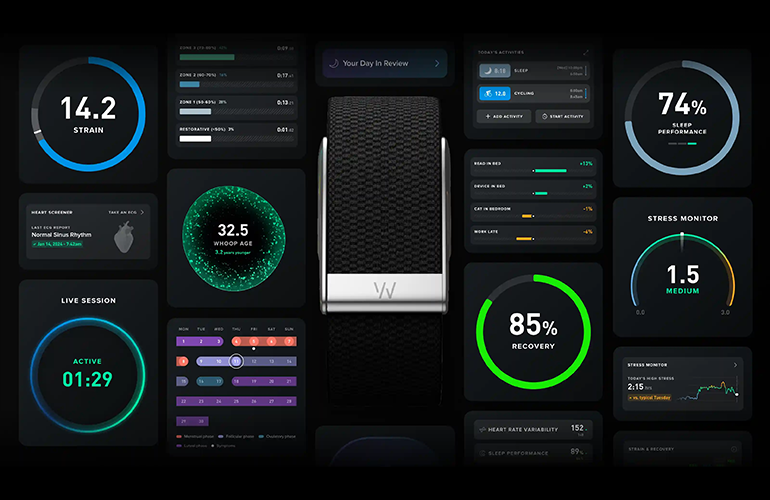

Abbott’s strategic participation in Whoop’s $575 million Series G financing marks a structural inflection point where continuous biometric monitoring crosses into institutional medical utility, a paradigm Gulf Cooperation Council and North African health authorities are rapidly operationalizing. For MENA capital allocators, this transaction establishes a new underwriting benchmark for digital health platforms capable of bridging consumer adoption with clinical-grade telemetry. Regional procurement frameworks are pivoting from fragmented hardware purchasing to integrated, enterprise-wide diagnostic ecosystems, positioning this funding architecture as a direct precursor to large-scale public health and corporate wellness contracting. The involvement of a legacy medtech incumbent de-risks commercial deployment, providing regional regulators with a validated template for integrating continuous physiological data streams into national healthcare infrastructure.
Sovereign wealth funds and institutional venture arms across the basin will recalibrate their digital health allocations in direct response to this capital formation, treating precision health infrastructure as a core macroeconomic dividend rather than a discretionary technology exposure. MENA-based venture syndicates, anchored by state capital pools from the UAE, Saudi Arabia, and Qatar, are accelerating late-stage deployment toward platforms demonstrating proven interoperability with sovereign cloud environments and algorithmic localization for regional demographic profiles. The strategic capital stack deployed in this round signals that regional venture models must transition from consumer growth metrics to closed-loop clinical data networks generating defensible revenue through B2B and government channels. Expect tightened co-investment mandates where international healthtech operators align with SWF-backed portfolio companies to capture high-value chronic disease management and occupational safety mandates.
Execution across the MENA corridor will now be governed by data localization frameworks, cybersecurity compliance, and the rapid deployment of resilient clinical telemetry networks. Countries advancing smart-city and longevity initiatives require secure, low-latency data pipelines rather than standalone retail hardware, necessitating immediate capital expenditure on regional health-data exchanges, edge-computing diagnostic nodes, and regulated research zones. This funding cycle will act as a catalyst for infrastructure spending on localized algorithm training facilities and regulatory sandboxes designed to fast-track CE-certified continuous monitoring devices. Financial sponsors and corporate operators should prepare for a regional consolidation phase where market dominance is secured through strategic integration with sovereign-backed health grids, shifting the risk-return profile from retail volatility to long-term institutional contracting and public-private infrastructure yields.