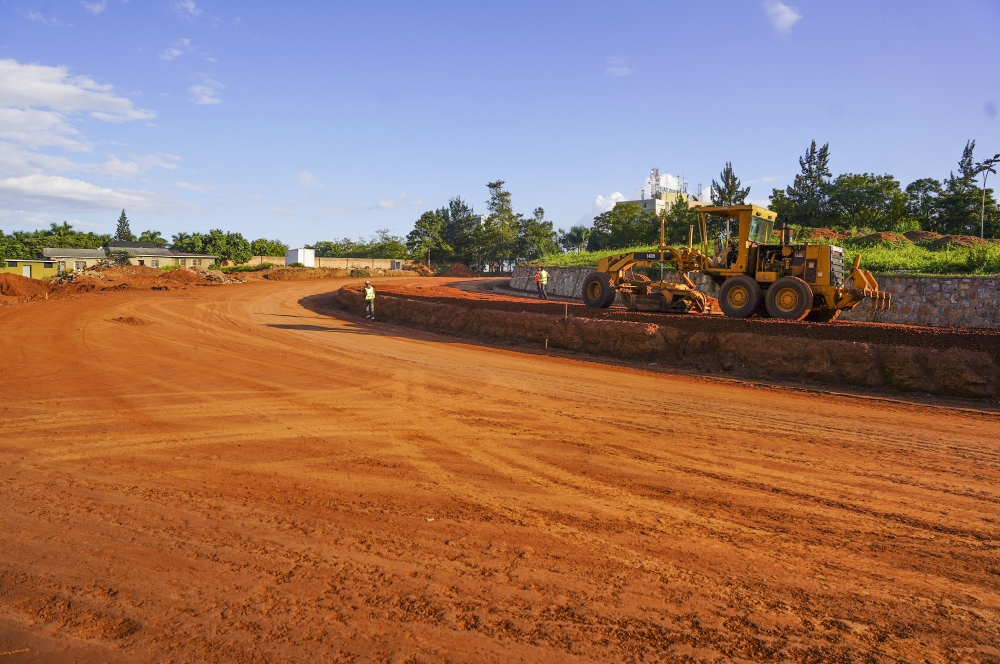

The Masaka–Bugesera Airport road project in Rwanda underscores the transformative role of strategic infrastructure in catalyzing economic growth across the Middle East and North Africa (MENA) region. By linking the DP World-managed Kigali Logistics Platform to the upcoming international airport in Bugesera, this $139 million initiative exemplifies how sovereign-driven infrastructure investments can streamline supply chains, reduce logistics costs, and unlock cross-border trade. For MENA, where fragmented trade corridors and outdated transport networks hinder competitiveness, such projects could serve as a blueprint for regional integration. The redevelopment of the road, spanning four key stretches and incorporating modern amenities like bicycle lanes and smart urban nodes, mirrors the shift toward multimodal infrastructure that aligns with Africa’s Agenda 2063 and the UAE-backed Belt and Road Initiative. These upgrades are poised to lower transportation costs by up to $50 million annually in Rwanda, a figure that resonates with MENA’s own imperatives to reduce logistics inefficiencies and position itself as a global trade intermediary.
Sovereign capital deployment in megaprojects like this highlights MENA’s evolving fiscal strategies to balance public investment with private-sector growth. The Rwandan government’s $3 billion compensation fund for displaced residents, alongside World Bank financing, reflects a regional trend where state actors are increasingly critical in de-risking infrastructure investments. In MENA, where sovereign wealth funds (e.g., Saudi Arabia’s PIF, UAE’s Mubadala) are pivoting toward priority sectors, similar models could finance transit-oriented development hubs like Masaka’s dry port. These projects not only address immediate infrastructure gaps but also act as fiscal multipliers, with ripple effects in property valuations and localized economic clusters—a dynamic evident in Rwanda’s planned trading points and e-commerce hubs along the corridor. However, the success of such initiatives hinges on transparent governance and inclusive compensation frameworks to mitigate social disruption, a lesson relevant to MENA’s ongoing balance between rapid development and social stability.
The project’s potential to attract venture capital and spur ecosystem-driven growth merits scrutiny. By integrating smart logistics hubs and digital trade platforms, Rwanda is positioning itself as a proving ground for technologies that could disrupt MENA’s fragmented digital infrastructure landscape. MENA countries with nascent digital economies, such as Tunisia and Morocco, could leverage similar models to attract risk-tolerant capital into agritech, renewable energy corridors, or mobility-as-a-service platforms. The road’s emphasis on pedestrian and cycling infrastructure further aligns with MENA’s urbanization challenges, offering a template for sustainable urban planning that balances growth with livability. Moreover, the establishment of designated industrial zones near upgraded transit nodes could catalyze startup incubators, fintech ventures, and ESG-focused firms, mirroring Silicon Valley’s symbiotic relationship with infrastructure milestones like the Internet’s backbone.
Ultimately, the Masaka–Bugesera corridor exemplifies how sovereign-state infrastructure plays catalyze private-sector dynamism and regional connectivity—a priority for MENA amid its participation in the African Continental Free Trade Area and aspirations to lead as the “global energy and food cockpit.” By recalibrating its capital allocation toward high-impact infrastructure, MENA can replicate Rwanda’s playbook to decongest trade dynamics, unlock incremental GDP growth, and position itself as a linchpin in both intra-African and Eurasia trade architectures. The world’s ability to scale such initiatives will determine its capacity to meet the dual demands of inclusive growth and geopolitical influence in an increasingly multipolar economic order.