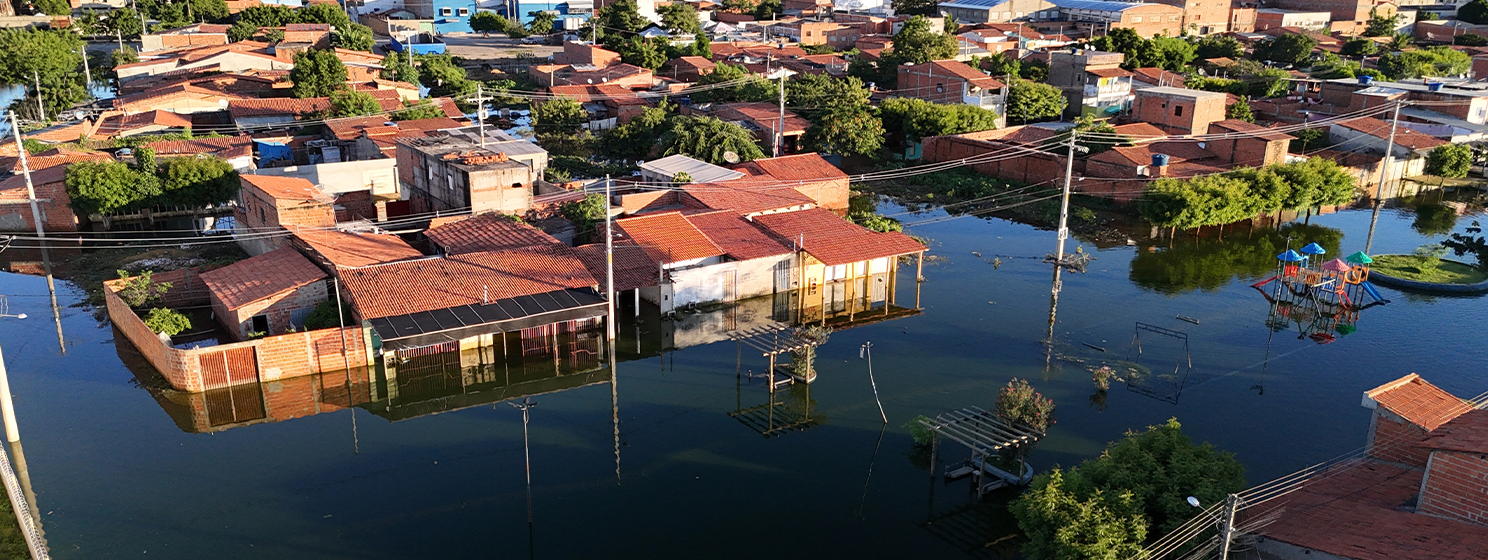

Google’s deployment of its Gemini‑powered Groundsource AI for urban flash‑flood forecasting marks a watershed in climate‑tech commercialization, offering sovereign governments across the Middle East and North Africa (MENA) a data‑driven foundation to recalibrate fiscal priorities around resilience. By delivering 24‑hour predictive alerts for high‑density corridors, the platform enables public‑sector investors to quantify exposure more precisely, informing the allocation of sovereign capital toward targeted hardening of critical infrastructure—drainage augmentation, early‑warning sirens, and retrofitted urban canvases.
The emerging business case is clear: early‑warning services generate measurable risk‑adjustment premiums in insurance markets, while the underlying analytics open ancillary revenue streams for cloud providers, data‑platform operators, and niche AI consultancies. Venture capital firms are already reallocating capital toward flood‑modelling startups that can integrate high‑resolution meteorological feeds with geospatial risk mappings, seeking scalable business models that can be replicated across GCC and Maghreb urban agglomerations.
Regionally, the technology catalyzes a strategic pivot toward integrated climate‑infrastructure ecosystems, compelling ministries of finance and planning to embed AI‑enabled flood risk metrics into long‑term budgeting cycles. This institutionalization of predictive analytics promises to unlock private‑sector co‑investment, especially where public‑private partnership frameworks can channel sovereign guarantees toward resilient network upgrades, thereby mitigating the fiscal drag of recurrent disaster recovery.
Looking ahead, the convergence of AI forecasting, robust blockchain‑anchored data integrity, and sovereign financing mechanisms is poised to redefine infrastructure investment paradigms in MENA. Institutional investors should prioritize portfolios that bridge predictive climate services with capital‑intensive resilience projects, leveraging global AI pipelines such as Google Earth’s Crisis Resilience suite to de‑risk assets and attract higher‑margin venture capital inflows into the region’s climate‑tech pipeline.