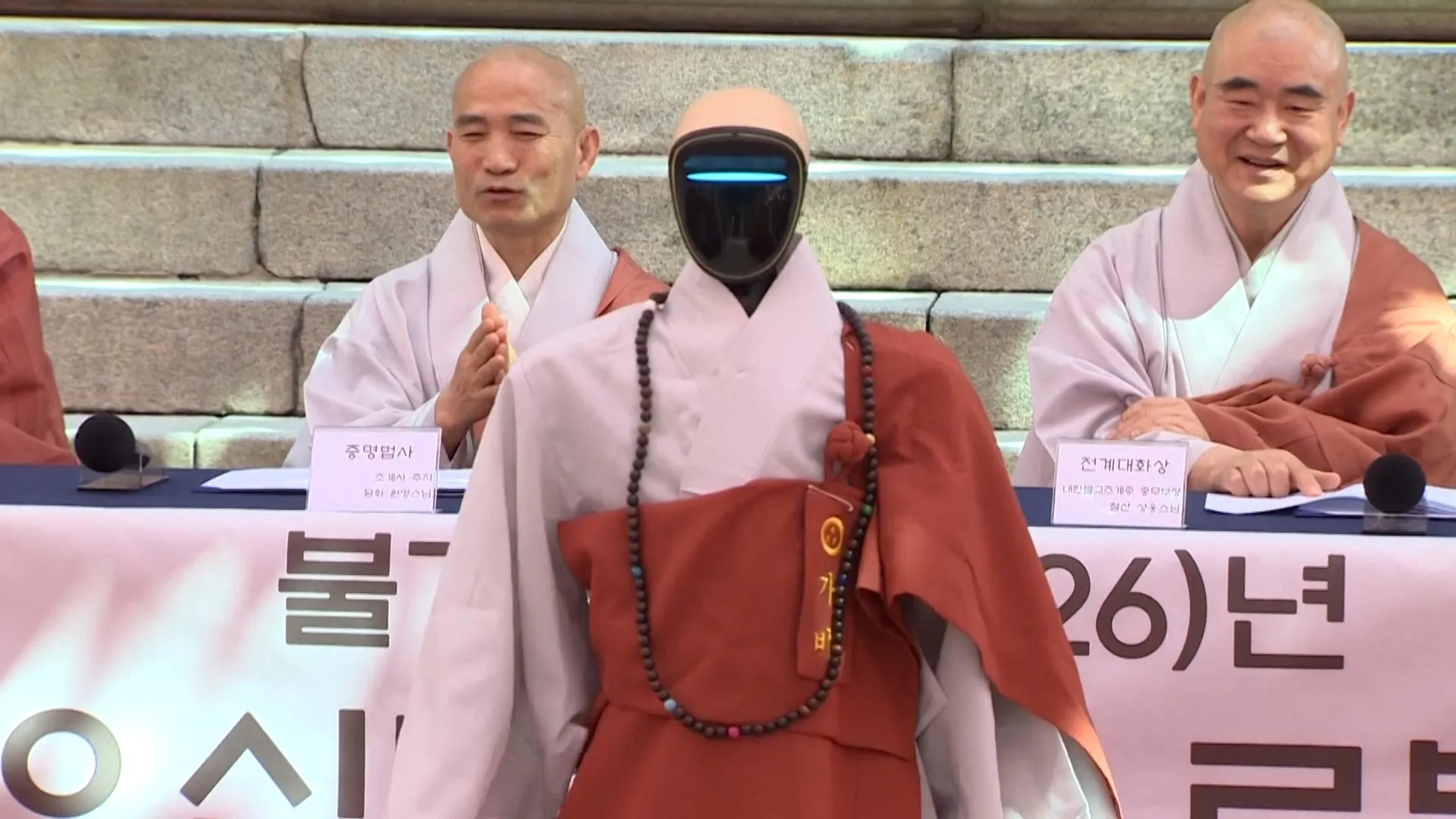

Sovereign wealth funds across the Gulf Cooperation Council are increasingly examining automation and artificial intelligence applications within religious and cultural institutions, drawing inspiration from South Korea’s recent deployment of humanoid robotic monks at Jogye Temple in Seoul. The initiative, featuring the robot “Gabi” during Buddha’s birthday celebrations, represents a proof-of-concept that Gulf investors and state technology entities are closely monitoring for potential adaptation within the region’s own spiritual tourism and religious services sectors.
The business implications extend beyond mere novelty value. Regional infrastructure planners in Saudi Arabia, the UAE, and Qatar recognize that integrating advanced robotics into pilgrimage management, visitor services, and cultural heritage sites could yield significant operational efficiencies. Sovereign capital allocations toward smart city initiatives increasingly incorporate religious and tourism infrastructure as key components of diversification strategies beyond hydrocarbons. The successful deployment of service-oriented humanoid robots in high-traffic spiritual environments provides a template for reducing labor costs while maintaining cultural authenticity in settings where human interaction remains paramount.
Venture capital activity in the MENA region’s robotics and AI sectors stands to benefit from this validation of service-sector automation. Dubai and Abu Dhabi-based venture funds have already begun targeting companies specializing in humanoid robotics, and the Seoul demonstration strengthens investment theses around religious and cultural applications. Regional venture capital deployments in 2025 show a marked increase in robotics-adjacent investments, with particular focus on human-robot interaction systems designed for public-facing institutional roles.
The broader infrastructure question centers on regulatory frameworks and societal acceptance. Gulf states navigating rapid technological modernization while preserving traditional religious and cultural practices face a nuanced implementation challenge. The South Korean model offers a calibrated approach—robots positioned as supplements to rather than replacements for human spiritual guidance. For MENA infrastructure developers, this represents a template for integrating emerging technologies without displacing the human elements central to religious and cultural institutions.