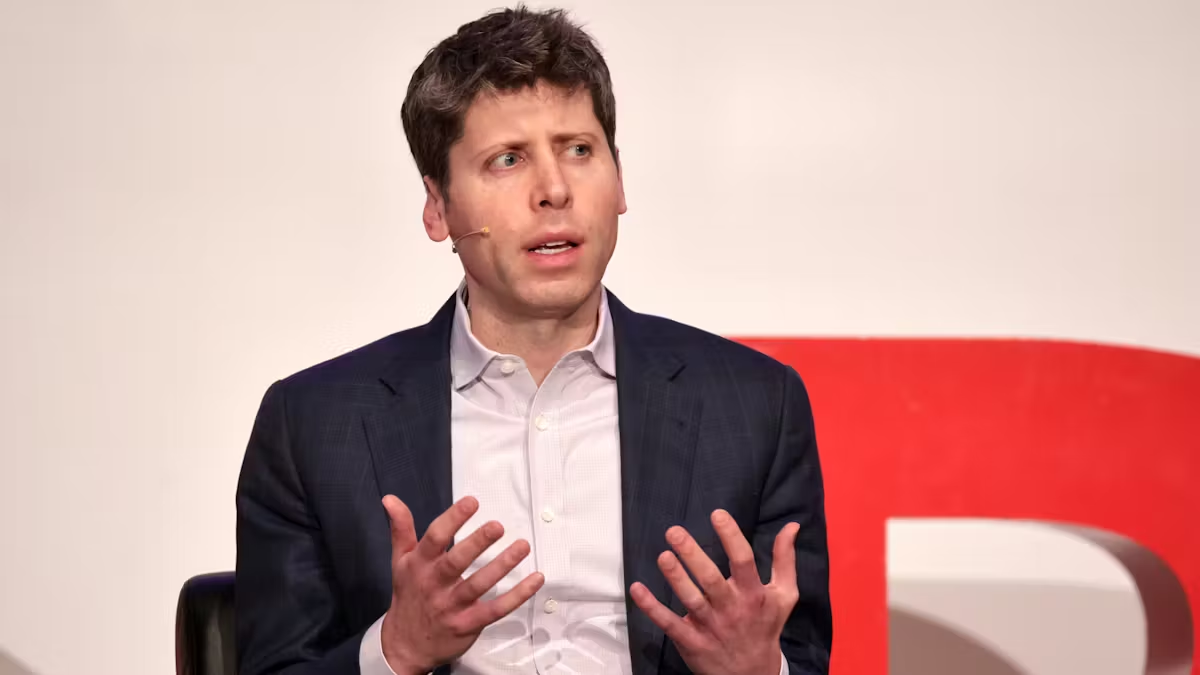

The attack on OpenAI CEO Sam Altman, preceded by the rollout of the company’s “New Deal for AI” framework, underscores the escalating tensions surrounding artificial intelligence development and its intersection with sovereign interests. For the Middle East and North Africa region, this incident carries significant strategic implications as Gulf sovereign wealth funds and regional venture capital entities accelerate their investments in AI technologies. Countries like the UAE, Saudi Arabia, and Qatar have positioned themselves as pivotal players in the global AI ecosystem through substantial capital deployments—through entities such as PIF, Mubadala, and Qatar Investment Authority—yet this development highlights the growing vulnerability of technology leadership positions in the face of geopolitical friction and physical security threats to industry pioneers.
The broader geopolitical ramifications of targeting Altman extend directly to MENA’s infrastructure development ambitions, where countries are constructing AI-ready ecosystems from scratch. Regional governments recognize that AI represents a critical component of economic diversification strategies beyond hydrocarbon dependence, yet the attack on a leading AI executive suggests that the industry faces nascent challenges including ideological opposition and security vulnerabilities. MENA nations must now balance their aggressive technology investment agendas with developing robust security frameworks that protect both physical infrastructure and intellectual capital, potentially accelerating regional partnerships with global technology firms for ecosystem protection while simultaneously advancing indigenous AI capabilities.
For MENA’s venture capital community, the incident serves as a sobering reminder of the need for heightened due diligence in evaluating not only technological merit but also geopolitical positioning and security protocols. Venture capital firms operating in the region—from Wamda Capital to MEVP—must reassess risk frameworks when engaging with AI companies that face ideological or geopolitical backlash. This may redirect capital toward more strategically insulated AI applications or strengthen regional platforms that can serve as incubators for homegrown technology talent and solutions, potentially accelerating the development of sovereign-focused AI capabilities that reduce dependency on Western innovation hubs while maintaining the region’s competitive economic transformation.