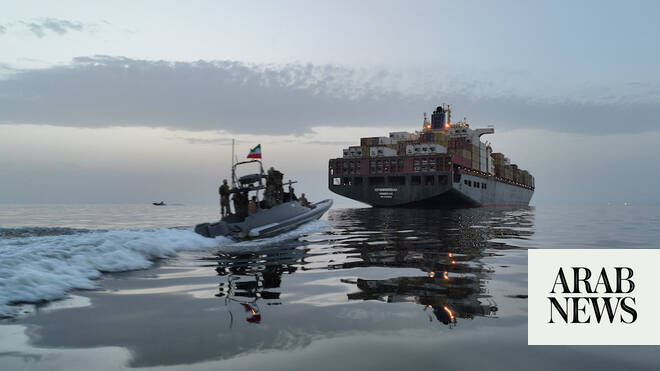

Iran’s latest overture to halt its stranglehold on the Strait of Hormuz, offered via Pakistan, signals a potential pivot in the region’s geopolitical and economic calculus. By tying the removal of the U.S. oil embargo to the cessation of hostilities, Tehran seeks to unlock a significant revenue stream and secure control over one of the world’s most vital energy chokepoints. For Gulf states and other sovereign entities that rely on uninterrupted transit for their export earnings, the prospect of a reopened strait could stabilize oil revenues and mitigate the volatility that has already driven Brent oil to $108 a barrel—a roughly 50 % surge since the conflict’s onset.
From a sovereign capital perspective, the proposal carries weight. A lifting of the U.S. blockade would restore Iran’s ability to export crude and, by extension, its oil‑dependent budget, which underpins public investment and social spending across the Islamic Republic. In return, Iran’s commitment to postponing nuclear negotiations—though it would still need assurances regarding its enrichment programme—could foster an environment conducive to attracting regional investment. The prospect of a Doha‑shaped deal, wherein Iran grants a toll‑collection framework to Oman for transit vessels, introduces a novel revenue‑sharing model that could become a template for other energy corridors struggling with similar geopolitical tensions.
For venture capital flows, the stability implied by a reopened Hormuz corridor would bolster confidence in Middle Eastern tech and infrastructure sectors. Capital that has been diverted to safe‑haven assets due to security uncertainties may now be redirected toward digital infrastructure, renewable energy projects, and fintech ecosystems that are increasingly positioned to digitise trade in the Gulf and North Africa. Moreover, the potential for a renewed dialogue on the nuclear issue, if coupled with robust verification mechanisms, could reduce the risk premium investors attach to the region, easing funding streams for start‑ups and mid‑cap enterprises across the MENA landscape.
Infrastructure implications extend beyond oil logistics. The Strait’s reopening would enable more reliable shipping routes for raw materials and finished goods, directly benefitting MENA’s logistics and supply‑chain sectors. It could also expedite the delivery of essential imports—fertiliser, food, and fuel—whose prices have ballooned due to the blockade, thereby easing inflationary pressures in downstream economies. In sum, the proposed trade‑off underscores a delicate balance: Iran’s economic interests hinge on de‑blockading output, while the U.S. and its Gulf allies aim to preserve security guarantees and an unfettered access to global markets. The resolution of this standoff will, therefore, reverberate through sovereign capital allocation, venture funding confidence, and the broader infrastructural stability of the MENA region.